

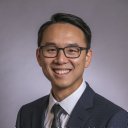
 Leon Yichen Cai
· 2 previous affiliations
- Vanderbilt UniversitySince 2017
- PhD student · Since 2017
- Duke University2013–2017
- Undergrad student · 2013–2017
Research Overview
Leon Yichen Cai focuses on medical image synthesis, diffusion MRI tractography, and the computational challenges of processing high-resolution clinical data. His work spans the development of deep learning models for streamline propagation to strategies for handling gigapixel pathology images. Recently, his research addresses memory constraints and boundary artifacts in large-scale histological image synthesis.
Research Trajectory
In 2023, Cai’s primary research efforts centered on advancing deep learning techniques for diffusion MRI (dMRI) streamline tractography. Traditional tractography relies on voxel-based learning and time-consuming high-angular-resolution dMRI acquisitions to estimate white matter pathways. As first author, Cai investigated methods to model dMRI features in continuous space off the voxel grid using recurrent neural networks (RNNs). This work was detailed in Implementation considerations for deep learning with diffusion MRI streamline tractography, which provided an open-source framework and outlined the technical requirements for approximating deterministic streamline propagators.
Building on these foundational implementation strategies, Cai extended this approach to bypass the need for specialized dMRI data altogether. In Convolutional-recurrent neural networks approximate diffusion tractography from T1-weighted MRI and associated anatomical context, he led the development of a model that learns streamline propagation directly from standard T1-weighted MRI scans. By utilizing anatomical context to guide the synthesis of tractography data, this work contributes to the broader research direction of Anatomical Anchoring for Consistent Medical Image Synthesis, aiming to make advanced white matter analysis more accessible in routine clinical settings where dMRI is unavailable.
Alongside his primary work in neuroimaging, Cai has collaborated on addressing the fundamental hardware bottlenecks associated with high-resolution medical imaging, particularly in computational pathology. Processing gigapixel whole slide images (WSIs) typically exhausts GPU memory, forcing researchers to adopt patch-based methods. As a second author, Cai explored hardware-based solutions to this memory wall in Exploring shared memory architectures for end-to-end gigapixel deep learning. This research evaluated the viability of shared GPU/CPU memory systems to process massive pathological images end-to-end without relying on traditional image partitioning.
When image partitioning remains necessary, it often introduces visible boundaries or "tiling effects" during image synthesis. Cai participated as a contributing author in Alleviating tiling effect by random walk sliding window in high-resolution histological whole slide image synthesis. This project focused on virtual staining—specifically translating multiplex immunofluorescence (MxIF) to hematoxylin and eosin (H&E) stains—and proposed methods to mitigate the artifacts caused by patch-and-stitch strategies. This collaborative effort aligns with several related research themes, including the area of Eliminating Seam Discontinuities in Tiled Image Processing and the broader direction of Seamless Reconstruction of Images from Overlapping Patches.
Current Directions
The most recent papers in the evidence, all published in 2023, indicate a dual focus on neuroimaging tractography and the computational scaling of high-resolution pathology. In neuroimaging, Cai's work addresses the clinical translation of white matter estimation by substituting complex dMRI acquisitions with deep learning models applied to standard structural MRI.
Concurrently, his collaborative work investigates the infrastructural and algorithmic challenges of gigapixel image synthesis. This includes exploring alternative hardware architectures to bypass GPU memory limits and developing techniques within the research theme of Stochastic Grid Shifting for Seamless Reconstruction to ensure that patch-based processing does not compromise the fidelity of synthesized clinical images.
Profile updated
Loading new papers…
Other researchers whose papers cluster into the same research directions — a proxy for overlapping technical interests and shared intellectual neighborhoods.
See something wrong? Report a mistake