

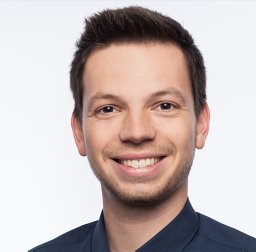
 Leon Sick
· 7 previous affiliations
- Universität UlmSince 2021
- PhD student · Since 2025
- Dr. rer. nat. - PhD, Visual Computing · 2021–2026
- Google (United States)Since 2026
- Student Researcher · Since 2026
- Liebherr (Switzerland)2020–2024
- Doctoral Student · 2021–2024
- Master Thesis Active Learning For Computer Vision · 2021
- Working Student Cloud Applications · 2020–2021
- Master of Science - MS, Business Information Technology · 2019–2021
- ERWIN HYMER GROUP2020
- Working Student R&D Smart Caravan · 2020
- Daimler (Germany)2019
- Internship Charging, Ladesysteme & EQ-Services · 2019
- Hochschule Aalen2015–2019
- Undergrad student · 2015–2019
Research Overview
Leon Sick focuses on self-supervised pre-training, unsupervised segmentation, and the application of Vision Transformers to complex visual environments. His trajectory spans from weakly supervised object detection in biomedical imaging to leveraging 3D geometric priors for 2D scene understanding. Currently, his research emphasizes advancing masked autoencoders and foundational models for robust 3D and video instance segmentation.
Research Trajectory
Sick’s early work explored how self-supervised models can reduce annotation burdens in specialized domains. He contributed to the area of Interactive Refinement of Automated Image Segmentations by developing interactive methods for volume rendering in Leveraging Self-Supervised Vision Transformers for Segmentation-Based Transfer Function Design. This approach utilized Vision Transformers to drastically reduce the time required to segment structures, streamlining transfer function design for complex scientific data. Around the same time, he addressed the grueling manual labor of biomedical image annotation. In Weakly Supervised Virus Capsid Detection with Image-Level Annotations in Electron Microscopy Images, he and his collaborators introduced a distillation method that transforms simple image-level labels into precise bounding boxes. This work, which was also expanded upon in a subsequent preprint Weakly Supervised Virus Capsid Detection with Image-Level Annotations in Electron Microscopy Images, advanced the broader research direction of Trading Label Precision for Dataset Diversity by demonstrating that gradient-based optimization with shrinking Gaussian masks could localize particles effectively without expensive manual bounding boxes.
Building on these efforts to minimize human annotation, Sick shifted focus toward fully unsupervised semantic segmentation. In Unsupervised Semantic Segmentation Through Depth-Guided Feature Correlation and Sampling, he incorporated 3D structural information into the training process, learning depth-feature correlations to improve spatial representations. This integration of 3D priors to solve 2D problems became a recurring theme in his research. To address the challenge of separating overlapping objects in 2D space—a key problem in the area of Disentangling Individual Instances in Semantic Scenes—he introduced CutS3D: Cutting Semantics in 3D for 2D Unsupervised Instance Segmentation. By utilizing point cloud representations to cut semantic masks in 3D, this method successfully resolved 2D instance overlaps that purely semantic approaches struggled to separate.
As foundation models became more prevalent, Sick explored their application to 3D environments and temporal data. He contributed to the direction of Cross-Modal Knowledge Distillation for 3D Point Clouds with TTT-KD: Test-Time Training for 3D Semantic Segmentation Through Knowledge Distillation From Foundation Models. This work proposed adapting pretrained 3D segmentation networks on-the-fly to distribution shifts by distilling knowledge from 2D foundation models like DINOv2.
In the video domain, he developed S2D: Sparse-To-Dense Keymask Distillation for Unsupervised Video Instance Segmentation, a framework trained exclusively on real-world videos rather than synthetic data. By leveraging motion priors to discover high-quality keymasks and propagating them via a specialized temporal loss, the method achieved strong zero-shot performance on major video segmentation benchmarks.
Simultaneously, Sick advanced self-supervised representation learning architectures. In Attention-Guided Masked Autoencoders for Learning Image Representations, he enhanced masked autoencoders by forcing the reconstruction loss to prioritize semantically relevant foreground objects over background noise, significantly improving the quality of the resulting image features for downstream classification tasks. Extending these self-supervised paradigms to 3D geometry, he co-authored Masked Scene Modeling: Narrowing the Gap Between Supervised and Self-Supervised Learning in 3D Scene Understanding. This framework reconstructs deep features rather than raw geometry, yielding highly effective off-the-shelf 3D features and contributing to the broader field of Bridging the Indoor to Outdoor 3D Domain Gap.
Finally, reflecting a broader interest in evaluating complex visual models, he participated in a comprehensive review of text-to-image evaluation methodologies. A Survey on Quality Metrics for Text-to-Image Generation provided a taxonomy of existing metrics, aligning with the research direction of Decoupled Quality Assessment for Generative Media by highlighting the strengths and challenges in assessing modern generative systems.
Current Directions
Recent work investigates the intersection of self-supervised learning and 3D scene understanding, with a particular focus on bridging the performance gap between 2D and 3D foundational models. The most recent papers in the evidence address the development of masked scene modeling techniques that reconstruct deep features rather than raw geometry, enabling robust, off-the-shelf 3D representations. Additionally, his current research explores unsupervised video instance segmentation, utilizing motion priors and temporal distillation to process real-world video data without synthetic supervision. Across these domains, a unifying theme is the drive to eliminate reliance on dense human annotations by leveraging intrinsic structural, temporal, and geometric signals to guide representation learning.
Profile updated
Loading new papers…
Other researchers whose papers cluster into the same research directions — a proxy for overlapping technical interests and shared intellectual neighborhoods.
See something wrong? Report a mistake