

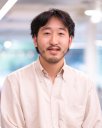
 Leo Zhang
· 2 previous affiliations
- University of OxfordSince 2022
- PhD student · Since 2023
- MS student · 2022–2023
- Imperial College London2019–2022
- Undergrad student · 2019–2022
Research Overview
Leo Zhang focuses on the mathematical foundations of deep generative models and their application to scientific problems, particularly in computational chemistry. His work explores how tools from geometry and statistical mechanics can improve sampling efficiency and structural fidelity in molecular design. Recently, his research emphasizes integrating diffusion models with advanced Markov chain Monte Carlo methods to address complex biochemical challenges.
Research Trajectory
Zhang’s early research focused on adapting generative models to complex, non-Euclidean geometries. In 2024, he contributed to the research direction of Efficient Geodesic Computation for High-Dimensional Data Manifolds by participating in the development of Metric Flow Matching for Smooth Interpolations on the Data Manifold. This work addressed the limitations of standard flow matching techniques, which typically assume linear paths between data points. By formulating methods that respect the curved manifolds inherent in real-world data, the research provided a more accurate geometric foundation for modeling complex transformations, simultaneously advancing the broader area of Scaling Optimal Transport for Massive Datasets.
In 2025, Zhang advanced the intersection of modern generative modeling and classical sampling algorithms. He introduced Generalised Parallel Tempering: Flexible Replica Exchange via Flows and Diffusions, a framework designed to mitigate the computational bottlenecks of standard parallel tempering. By incorporating normalizing flows and diffusion models into the replica exchange process, this approach improved the sampling of high-dimensional and multimodal distributions, increasing the effective sample size and round trip rate for challenging probability landscapes. He also investigated the theoretical underpinnings of diffusion models in The Cosine Schedule is Fisher-Rao-Optimal for Masked Discrete Diffusion Models. This work provided a rigorous mathematical proof that the widely used cosine schedule functions as a geodesic under the Fisher-Rao metric, ensuring a constant rate of movement through probability space during the generative process.
Alongside his work on sampling, Zhang developed new architectures for geometric deep learning. He proposed SymDiff: Equivariant Diffusion via Stochastic Symmetrisation, a method that enables standard, scalable architectures like Transformers to function as equivariant generative models. By utilizing stochastic symmetrisation, this approach bypassed the need for complex, custom-built equivariant layers, offering improvements in speed, memory efficiency, and accuracy for tasks such as 3D molecular generation.
Zhang’s subsequent work in 2026 expanded on these themes, with a strong emphasis on controlling diffusion processes and applying geometric models to computational chemistry. He collaborated on Variance-Tilted Diffusion Models for Diverse Sampling, which introduced an exact sampler for a target distribution explicitly designed to encourage variance in a learned feature space, offering a principled alternative to heuristic methods for sample diversity. He also contributed to Safe Particle Selection for Diffusion Steering, a method utilizing anytime-valid confidence sequences to provide statistical guarantees against the premature pruning of high-value samples during diffusion steering.
To address fundamental instabilities in Transformer architectures, Zhang designed Orthogonal Self-Attention. This mechanism parameterized the attention matrix to be orthogonal via a skew-symmetric mapping, mitigating issues like rank collapse and poorly-conditioned Jacobians to facilitate the training of skipless networks.
Applying these geometric and generative insights to biochemical problems, Zhang co-developed SigmaDock: Untwisting Molecular Docking with Fragment-Based SE(3) Diffusion. This model decomposed ligands into rigid bodies and utilized SE(3) Riemannian diffusion to reassemble them within protein binding pockets. By moving away from complex torsional angle modeling, the fragment-based approach achieved a 79.9% success rate on the PoseBusters benchmark, significantly outperforming prior deep learning and physics-based tools in structural accuracy.
Returning to the enhancement of Markov chain Monte Carlo methods, Zhang introduced Accelerated Parallel Tempering via Neural Transports. This framework utilized neural networks to transport samples between tempered distributions, achieving faster mixing while maintaining rigorous theoretical guarantees. This work significantly advanced the research direction of Neural Proposals for Exact Markov Chain Monte Carlo. Additionally, he participated in the development of CREPE: Controlling diffusion with REPlica Exchange, which applied parallel tempering to steer diffusion models at inference time without retraining. By swapping samples across different noise levels, this approach overcame mode collapse issues common in Sequential Monte Carlo methods and allowed for the on-the-fly refinement of constraints, contributing to the broader area of Parallel Tempering for Sampling Multimodal Posterior Distributions.
Current Directions
The most recent papers in the evidence indicate a continued focus on refining the control, stability, and application of diffusion models and sampling algorithms. Recent work investigates the integration of parallel tempering with neural transports to accelerate Markov chain Monte Carlo methods, as well as the use of replica exchange to steer diffusion models at inference time. Additionally, Zhang is actively exploring the application of geometric deep learning to structural biology, specifically utilizing fragment-based SE(3) diffusion for high-accuracy molecular docking. His ongoing research also addresses foundational architectural challenges in neural networks, such as designing orthogonal attention mechanisms to stabilize skipless Transformers and developing statistically guaranteed methods for diffusion steering.
Profile updated
Loading new papers…
Other researchers whose papers cluster into the same research directions — a proxy for overlapping technical interests and shared intellectual neighborhoods.
See something wrong? Report a mistake