

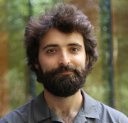
 Leo Kozachkov
· 4 previous affiliations
- Brown UniversitySince 2025
- Assistant Professor · Since 2025
- Postdoc · 2024–2025
- Postdoc · 2022–2024
- PhD student · 2017–2022
- Researcher · 2016–2017
Research Overview
Leo Kozachkov focuses on the modeling of nonlinear dynamical systems, recurrent neural network stability, and the computational role of astrocytes in the brain. His early work applied control theory to understand stable dynamics and memory in biological and artificial circuits. Recently, his research investigates energy-based models, parallelizable sequence modeling, and the mathematical foundations of learning rules.
Research Trajectory
His early research focused on biophysical modeling to understand the origins of brain oscillations. In The Causal Role of Astrocytes in Slow-Wave Rhythmogenesis: A Computational Modelling Study, he developed a constrained computational model demonstrating how astrocytes modulate fast network activity through slow inter-cellular calcium waves, potentially explaining oscillatory imbalances in conditions like Alzheimer's disease and epilepsy. Transitioning to broader questions of stability in neural circuits, he applied control theory to identify mechanisms that maintain consistent states in noisy recurrent neural networks. This work, detailed in Achieving stable dynamics in neural circuits, highlighted how specific unlearning mechanisms can produce stable dynamics.
Between 2022 and 2023, this focus on stability expanded into comprehensive mathematical frameworks for both biological and artificial networks. He introduced approaches to ensure recurrent networks remain stable even as their weights continuously change, as presented in Matrix Measure Flows: A Novel Approach to Stable Plasticity in Neural Networks. Concurrently, he investigated how short-term synaptic plasticity supports memory maintenance between sparse spiking events. By comparing artificial networks with and without this plasticity in Robust and brain-like working memory through short-term synaptic plasticity, he showed that synaptic plasticity yields more robust and biologically plausible working memory.
A major theme of his work involves the research direction of Gradient Instability in Recurrent Neural Networks. He addressed the challenge of scaling stability guarantees to interacting networks in RNNs of RNNs: Recursive Construction of Stable Assemblies of Recurrent Neural Networks, deriving conditions that allow for massive feedback connections and contributing to the area of Compositional Stability via Modular Contraction Theory. Building on this foundation, he explored the broader area of Contraction Theory for Global Stability in Nonlinear Systems by analyzing large-scale modular architectures. In Contraction Properties of the Global Workspace Primitive, he demonstrated how a central hub coordinating specialized sub-networks can achieve robust sequential processing. He further extended these dynamical systems approaches to machine learning theory, linking algorithmic robustness to generalization in Generalization as Dynamical Robustness-The Role of Riemannian Contraction in Supervised Learning, which advances the research direction of Algorithmic Stability for Generalization in Non-Convex Optimization.
Returning to fundamental learning principles and biological memory in 2024, he demonstrated that diverse learning algorithms can be unified mathematically. In Is All Learning (Natural) Gradient Descent?, he showed that effective learning rules can be expressed as a metric tensor multiplied by the negative gradient of a loss function. Concurrently, he revisited the computational role of glial cells, proposing a dynamic associative memory system driven by astrocyte morphology in Neuron-Astrocyte Associative Memory, connecting these biological networks to modern Hopfield architectures.
In recent collaborative work, he has applied these dynamical systems perspectives to both biological data analysis and scalable AI architectures. He helped quantify how anesthesia disrupts the dynamic stability of cortical populations in Propofol anesthesia destabilizes neural dynamics across cortex, utilizing delayed linear analysis on macaque local field potentials. Addressing computational efficiency in sequence modeling, he contributed to the area of Parallelizable Recurrence for Efficient Sequence Modeling by developing methods to parallelize nonlinear state space models in Predictability Enables Parallelization of Nonlinear State Space Models. Additionally, he participated in designing energy-based alternatives to transformer architectures in NRGPT: An Energy-based Alternative for GPT, aligning with the research direction of Inference as Gradient Descent on Learned Energy Landscapes. Finally, he collaborated on frameworks for analyzing partially observed systems in InputDSA: Demixing, then comparing recurrent and externally driven dynamics, enabling researchers to separate internal recurrent dynamics from the effects of external inputs.
Current Directions
Recent work investigates the intersection of dynamical systems theory and scalable machine learning architectures. The most recent papers in the evidence address the computational bottlenecks of sequence modeling by developing techniques to parallelize nonlinear state space models. Additionally, this work explores energy-based modeling as a principled framework for transformer architectures, reframing inference as dynamical descent on an energy landscape to improve parameter efficiency and resistance to overfitting. Alongside these architectural advancements, current research involves creating new methodological frameworks to demix internal recurrent dynamics from external inputs, enabling more accurate comparisons of complex, non-autonomous systems in both biological and artificial domains.
Profile updated
Loading new papers…
Other researchers whose papers cluster into the same research directions — a proxy for overlapping technical interests and shared intellectual neighborhoods.
See something wrong? Report a mistake