

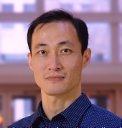
 Leo J Lee
· 1 previous affiliation
- University of TorontoCurrent
- Current
- Researcher · 2010–2023
- Postdoc · 2005–2010
Research Overview
Leo J Lee focuses on the intersection of machine learning and genome biology, with a particular emphasis on developing deep learning architectures for genetic medicine. His work spans the design of generative models for DNA, the application of energy-based models to single-cell transcriptomics, and the creation of foundation models for RNA regulatory codes. As a senior research scientist at the University of Toronto’s Probabilistic and Statistical Inference (PSI) Group, he manages research initiatives that bridge computational theory and biological application, specifically focusing on how deep learning can decipher the complex grammar of the human genome.
Research Trajectory
Lee’s early contributions centered on the transition from predictive to generative modeling in genomics. In 2017, he was part of the research effort to apply Scaling Generative Models for Large Biological Structures to DNA sequence design. This work explored how deep generative models could learn the "language" of the genome to design entirely new DNA sequences with optimized biological properties, moving beyond the The Computational Experimental Validation Gap paradigms of the time. During this period, the group also addressed fundamental challenges in genomic modeling, such as Reverse Complement Equivariant DNA Foundation Models, which account for the double-helical nature of DNA strands.
As the field moved toward more complex molecular representations, Lee participated in research involving Addressing Feature Homogenization in Deep Graph Neural Networks. This expertise was applied to molecular property prediction, specifically in developing models that combine Graph Neural Networks (GNNs) with traditional molecular fingerprints to predict carcinogenicity. This phase of his work emphasized Robust Generalization via Dropout and Redundant Feature Representations, ensuring that models could perform reliably in low-data regimes common in medical omics.
In recent years, Lee’s research has shifted toward RNA regulation and single-cell analysis. He has led the development of energy-based models (EBMs) for single-cell RNA sequencing (scRNA-seq) annotation, addressing the critical problem of out-of-distribution detection for previously unobserved cell types. His recent senior-authored work focuses on self-supervised contrastive learning, treating biological processes like alternative splicing and gene evolution as natural data augmentations to learn functional RNA representations. This trajectory has led to the development of large-scale RNA foundation models and highly efficient sequence-to-function architectures designed to advance therapeutic development and disease understanding.
Representative Work
In Generating and designing DNA with deep generative models, Lee and his colleagues demonstrated that deep generative models could be used to "write" functional DNA. The study showed that these models could capture the complex regulatory grammar of the genome, enabling the design of synthetic sequences with specific, optimized biological functions. This work was an early indicator of the potential for generative AI to move from observation to active biological engineering.
As senior author, Lee led the development of Energy-based Modelling for Single-cell Data Annotation. This research addresses a major bottleneck in single-cell pipelines: the accurate annotation of cell types in the presence of significant measurement noise and novel cellular states. By deploying EBMs for joint discriminative and generative tasks, the method provides a robust framework for out-of-distribution detection, allowing researchers to identify and categorize rare or previously unknown cell populations with higher reliability than standard classification tools.
In another senior-authored project, Splicing Up Your Predictions with RNA Contrastive Learning, Lee introduced IsoCLR, a self-supervised framework for RNA isoform representation. The model utilizes functional similarities between sequences generated through alternative splicing and gene duplication as a contrastive objective. This approach allows the model to master the "language" of RNA without requiring massive amounts of labeled experimental data, achieving state-of-the-art results in predicting RNA half-life and ribosome load.
Lee participated in the development of Orthrus: Towards Evolutionary and Functional RNA Foundation Models, a Mamba-based architecture that incorporates biological domain knowledge into its pre-training. Unlike standard genomic models that rely on text-based objectives like masked language modeling, Orthrus uses a contrastive objective centered on evolutionary orthology. This allows the model to learn highly functional representations of mature RNA, which are particularly effective for downstream biological prediction tasks even when fine-tuning data is scarce.
In the area of causal inference, Lee contributed to DynGFN: Bayesian Dynamic Causal Discovery using Generative Flow Networks. This work addresses the challenge of inferring gene regulatory networks (GRNs) from noisy, cyclic biological data. By treating GRN inference as a causal discovery problem and using Generative Flow Networks, the method captures the uncertainty inherent in biological systems and accounts for the feedback loops (cycles) that characterize gene interactions, which are often ignored by traditional directed acyclic graph (DAG) models.
More recently, Lee was involved in the development of Enigma: An Efficient Model for Deciphering Regulatory Genomics. This research focuses on architectural efficiency in sequence-to-function modeling. Rather than simply scaling model size, Enigma utilizes a curated set of genome tracks and an optimized transformer-based architecture to achieve high performance at a fraction of the computational cost of previous models. This work is aimed at making large-scale genomic applications and therapeutic design more accessible and faster to iterate.
Profile updated
Loading new papers…
Other researchers whose papers cluster into the same research directions — a proxy for overlapping technical interests and shared intellectual neighborhoods.
See something wrong? Report a mistake