

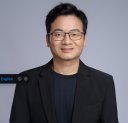
 Lei Liang
4 previous affiliations
- Ant Group (China)2016–2025
- Researcher · 2016–2025
- Alibaba Group (China)2014–2016
- engineer · 2014–2016
- Baidu (China)2010–2014
- engineer · 2010–2014
- MS student · 2007–2010
Research Overview
Lei Liang focuses on the integration of knowledge graphs with large language models, retrieval-augmented generation, and structured reasoning in specialized domains. His work spans from scalable data interconnection to multimodal knowledge graph completion and the evolutionary distillation of reasoning paths. Recently, he has concentrated on enhancing the reliability and logical consistency of language models for complex scientific and clinical applications.
Research Trajectory
Lei Liang’s early work in the provided corpus establishes a foundation in scalable graph infrastructure and community search. In 2024, he helped develop KGFabric: A Scalable Knowledge Graph Warehouse for Enterprise Data Interconnection, addressing the need for robust data interconnection in enterprise environments. Concurrently, he contributed to algorithmic improvements in graph mining with Efficient and Effective Anchored Densest Subgraph Search: A Convex-programming based Approach, which introduced a nuanced metric for identifying dense communities linked to specific seed nodes.
Building on this graph-centric foundation, his research expanded into integrating knowledge graphs with large language models (LLMs) to improve reasoning and domain specificity. He introduced KAG: Boosting LLMs in Professional Domains via Knowledge Augmented Generation, a framework that bridges vector similarity and logical reasoning by enabling bidirectional enhancement between LLMs and knowledge graphs. This focus on structured knowledge integration naturally aligns with the broader research direction of Unified Graph Abstractions for Heterogeneous Knowledge Reasoning. He also explored multimodal applications, collaborating on Unleashing the Power of Imbalanced Modality Information for Multi-modal Knowledge Graph Completion to better utilize structural, visual, and textual data when predicting missing graph triples.
Throughout 2024, Liang participated in several collaborative efforts to refine LLM generation and information extraction. He was part of the team that built IEPile: Unearthing Large Scale Schema-Conditioned Information Extraction Corpus, a comprehensive bilingual dataset designed to improve instruction tuning for extraction tasks, contributing to the area of Decoupling Logical Structure from Schema Grounding. Additionally, he participated in the development of OneGen: Efficient One-Pass Unified Generation and Retrieval for LLMs, which autoregressively incorporates retrieval tokens to bridge traditionally separate training approaches, advancing work in Dynamic Retrieval for In-Context Learning.
In 2025, Liang’s focus increasingly centered on the reliability, evaluation, and structured reasoning capabilities of retrieval-augmented generation (RAG) systems. To address the persistent challenge of inconsistent or unsupported model outputs, he guided the development of Bi'an: A Bilingual Benchmark and Model for Hallucination Detection in Retrieval-Augmented Generation, providing a rigorous evaluation framework and lightweight judge models. His interest in structured narrative reasoning led to contributions in EventRAG: Enhancing LLM Generation with Event Knowledge Graphs, which explicitly captures temporal dependencies across documents. In the multimodal domain, he collaborated on Structured and Abstractive Reasoning on Multi-modal Relational Knowledge Images, investigating how models process abstract relational structures presented in node-edge visual formats.
His recent work also emphasizes domain-specific reasoning and self-evolution in foundation models. He participated in ClinDEF: A Dynamic Evaluation Framework for Large Language Models in Clinical Reasoning, which uses interactive doctor-patient simulations grounded in disease knowledge graphs to assess proactive information gathering. Similarly, he contributed to Evontree: Ontology Rule-Guided Self-Evolution of Large Language Models, a system that leverages expert-defined rules to refine a model's internal knowledge without massive external datasets. These efforts reflect a sustained engagement with the research area of Stepwise Verification for Robust Multi-Step Reasoning.
Extending these themes into 2026, Liang participated in CoT-Evo: Evolutionary Distillation of Chain-of-Thought for Scientific Reasoning. This work treats reasoning paths as biological organisms subject to mutation and selection, synthesizing high-fidelity training data and directly advancing the research direction of Generative Synthesis from Multiple Flawed Reasoning Paths.
Current Directions
The most recent papers in the evidence indicate a strong focus on the rigorous evaluation and evolutionary refinement of large language model reasoning. Recent work investigates self-distillation and evolutionary frameworks that improve scientific and clinical reasoning by iteratively refining internal knowledge and reasoning paths, reducing the reliance on massive external datasets. Additionally, current efforts address the dynamic evaluation of models in specialized domains—such as interactive clinical diagnosis—and the mitigation of hallucinations in retrieval-augmented systems. Across these projects, the central theme is enhancing the logical consistency, proactive inquiry, and structured knowledge integration of foundation models in complex, multi-step tasks.
Profile updated
Loading new papers…
Other researchers whose papers cluster into the same research directions — a proxy for overlapping technical interests and shared intellectual neighborhoods.
See something wrong? Report a mistake