

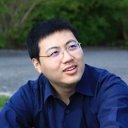
 Lei Jiao
· 1 previous affiliation
- University of AgderSince 2008
- Full Professor · Since 2022
- Associate Professor · 2014–2022
- Postdoc · 2012–2014
- PhD student · 2008–2012
Research Overview
Lei Jiao focuses on interpretable machine learning, symbolic logic, and hardware-efficient artificial intelligence. His trajectory spans early work in learning automata to the extensive development of Tsetlin Machines for transparent, logic-based pattern recognition across computer vision, natural language processing, and medical diagnostics. Currently, his research addresses the theoretical convergence of these models and their scalable deployment in edge computing and representation learning.
Research Trajectory
His early research investigated the theoretical properties and scalability of learning automata. He introduced formal proofs for continuous pursuit models in On Using the Theory of Regular Functions to Prove the ε-Optimality of the Continuous Pursuit Learning Automaton. He later expanded these foundational concepts to handle environments with significantly larger action spaces in The Hierarchical Continuous Pursuit Learning Automation: A Novel Scheme for Environments With Large Numbers of Actions.
Transitioning toward logic-based machine learning, he began adapting Tsetlin Machines (TMs) for complex pattern recognition tasks. In 2019, he developed The Convolutional Tsetlin Machine, an architecture that replaces opaque neural network weights with interpretable propositional logic by treating logical clauses as convolutional filters. This work contributed significantly to the broader research direction of Symbolic Logic for Interpretable and Faithful AI. Concurrently, he applied these transparent models to natural language processing, demonstrating their capacity to generate human-readable rules for medical text in Using the Tsetlin Machine to Learn Human-Interpretable Rules for High-Accuracy Text Categorization With Medical Applications.
To address the computational bottlenecks of traditional TMs, he designed a decentralized voting mechanism in Massively Parallel and Asynchronous Tsetlin Machine Architecture Supporting Almost Constant-Time Scaling. By allowing logic clauses to update independently and eliminating the majority vote synchronization bottleneck, this architecture achieved substantial speedups on GPUs. In parallel, he continued to advance natural language applications, extracting fine-grained opinions via specialized binary formats in Human-Level Interpretable Learning for Aspect-Based Sentiment Analysis. He also integrated continuous latent spaces into logic models in Enhancing Interpretable Clauses Semantically using Pretrained Word Representation, advancing the research area of Self-Explainable Neural Networks without Performance Loss.
His subsequent work deepened the formal understanding of these systems while expanding their domain applications. He analyzed the convergence behaviors of TMs for fundamental logical operators in On the Convergence of Tsetlin Machines for the IDENTITY- and NOT Operators. Applying these rigorous foundations to healthcare, he developed Interpretable Tsetlin Machine-based Premature Ventricular Contraction Identification. This diagnostic tool aligned AI decision-making with established clinical concepts to identify heart arrhythmias, furthering the field of Discretizing Continuous Features for Robust and Interpretable Models.
Recent years have seen a focus on generalized theory, hardware acceleration, and novel embedding techniques. He utilized logic-based patterns to prune search spaces for statistical modeling, drastically reducing the required number of tests in Scalable Bayesian Network Structure Learning Using Tsetlin Machine to Constrain the Search Space. In the hardware domain, he developed Tsetlin Machine-Based Image Classification FPGA Accelerator With On-Device Training. He also oversaw research integrating logic models with reinforcement learning for industrial applications in Implementing Hybrid Tsetlin Machine and Q-Learning for Solving the Job Shop Scheduling.
To bridge a significant gap in the theoretical understanding of logic-based learning, he introduced Probabilistic Concept Learning in Generalized Convergence Analysis of Tsetlin Automaton Based Algorithms: A Probabilistic Approach to Concept Learning, decoupling literal updates to provide generalized convergence proofs. Collaborating on further theoretical extensions, he participated in analyzing these models under varying conditions in Convergence Analysis of Tsetlin Machines under Noise-Free and Noisy Training Conditions: From $2$ Bits to $k$ Bits. Finally, he expanded the utility of TMs in representation learning with Omni TM-AE: A Scalable and Interpretable Embedding Model Using the Full Tsetlin Machine State Space, demonstrating that the internal state space of logic models can yield transparent, high-performing word embeddings for natural language processing.
Current Directions
The most recent papers in the evidence address the theoretical convergence of Tsetlin Machines, hardware acceleration for edge devices, and the extraction of interpretable representations from logic-based models. Recent work investigates generalized convergence proofs for Tsetlin automata, moving beyond simple logical operators to formalize how these models learn complex concepts under both noise-free and noisy conditions. Additionally, current research explores scalable applications, including on-device FPGA training, hybrid reinforcement learning for scheduling tasks, and the use of full internal state spaces to generate transparent embeddings for natural language processing.
Profile updated
Loading new papers…
Other researchers whose papers cluster into the same research directions — a proxy for overlapping technical interests and shared intellectual neighborhoods.
See something wrong? Report a mistake