

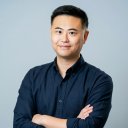
 Le Chen
· 2 previous affiliations
- Argonne National LaboratorySince 2025
- Postdoc · Since 2025
- Iowa State University2017–2024
- PhD student · 2017–2024
1 other author named Le Chen: Le Chen (Max Planck Institute for Intelligent Systems · 30 papers)
Research Overview
Le Chen focuses on the intersection of high-performance computing and artificial intelligence, specifically targeting scientific code generation, program translation, and parallel computing. His trajectory spans the development of compiler-guided datasets and benchmarks for data race detection to the automated migration of legacy scientific codebases. Currently, his work investigates the reasoning capabilities and safety of large language models under compute constraints within scientific workflows.
Research Trajectory
Le Chen’s research trajectory is defined by a sustained effort to bridge the gap between artificial intelligence and high-performance computing (HPC). His early active work in the corpus, emerging prominently around 2023, focused on establishing rigorous datasets and evaluation frameworks necessary for applying machine learning to complex programming tasks. Recognizing that large language models (LLMs) often struggle with multi-step reasoning and rectifying non-compilable C and C++ code, he led the development of CompCodeVet: A Compiler-guided Validation and Enhancement Approach for Code Dataset. This first-author work identified that the quality of training data was a primary bottleneck for code comprehension tasks and proposed a compiler-guided methodology to validate and enhance these datasets. Concurrently, he addressed the critical issue of multi-threaded application correctness by leading DataRaceBench V1.4.1 and DataRaceBench-ML V0.1: Benchmark Suites for Data Race Detection. This work introduced specialized data formats derived from an open-source benchmark suite, specifically tailored to train and refine machine learning techniques for HPC program analysis.
As his research progressed into late 2023 and 2024, Chen’s focus expanded toward the research direction of Automated Migration of Legacy Scientific Codebases. Modernizing scientific infrastructure often requires translating decades-old Fortran code into modern C++ to leverage contemporary hardware like GPUs. However, this process is hindered by a lack of parallel bilingual corpora. Chen participated as a core contributor in addressing this bottleneck with Creating a Dataset for High-Performance Computing Code Translation: A Bridge Between HPC Fortran and C++. By curating data from representative open-source OpenMP benchmarks and applying meticulous code similarity tests, this collaborative work demonstrated that fine-tuning LLMs on specialized data could significantly elevate their translation competencies.
Building on these foundational datasets, Chen subsequently led efforts to fully automate this translation process. In his first-author paper Fortran2CPP: Automating Fortran-to-C++ Migration using LLMs via Multi-Turn Dialogue and Dual-Agent Integration, he introduced a novel dual-agent framework. By generating a massive multi-turn dialogue dataset that captured iterative workflows—including compilation, execution, unit testing, and error-fixing—the framework trained models on the actual process of translation rather than just static input-output pairs, resulting in substantial improvements in compilation success rates.
This period also saw Chen contributing to the broader area of Bridging the Parallel Data Gap in Program Translation through unsupervised methods. He was a key co-author on CodeRosetta: Pushing the Boundaries of Unsupervised Code Translation for Parallel Programming, an encoder-decoder transformer model designed to translate between standard programming languages and their HPC extensions, such as C++ to CUDA. By utilizing customized pre-training tasks focused on code structure and parallel-specific keywords, the model successfully generated code that compiled and ran correctly on parallel hardware, outperforming larger general-purpose models in this specialized domain.
By 2025, Chen’s work synthesized his expertise in benchmarking and parallel code generation. He led PCEBench: A Multi-Dimensional Benchmark for Evaluating Large Language Models in Parallel Code Generation, which provided a comprehensive framework to assess how well LLMs handle the intricacies of synchronization, data management, and optimization required for efficient parallel programming.
Current Directions
Recent work investigates the application of large reasoning models (LRMs) and autonomous agents to complex parallel programming tasks and scientific knowledge bases. The most recent papers in the evidence address how compute constraints affect model performance in scientific domains. Specifically, ongoing research evaluates the safety and skill reasoning of LRMs under constraints such as reasoning length limits and model quantization, demonstrating that quantized models can often match full-precision performance by generating more reasoning tokens within a given inference budget.
Additionally, Chen is actively involved in collaborative efforts to integrate LLMs into established scientific workflows. This includes exploring profiling-guided autonomous coding agents for reliable parallel code generation and translation, as well as participating in initiatives to activate fragmented knowledge bases in high-performance scientific computing libraries. By building LLM-powered systems that synthesize source code, documentation, and informal technical discussions, this line of work aims to make decades of accumulated HPC expertise accessible to new developers and automated reasoning systems alike.
Profile updated
Loading new papers…
Other researchers whose papers cluster into the same research directions — a proxy for overlapping technical interests and shared intellectual neighborhoods.
See something wrong? Report a mistake