

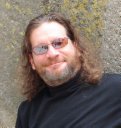
 Lawrence Hunter
· 2 previous affiliations
- University of ChicagoSince 2024
- Full Professor · Since 2024
- Full Professor · 2000–2023
Research Overview
Lawrence Hunter focuses on biomedical natural language processing, ontology-driven semantic integration, and the automated extraction of knowledge from scientific literature. His trajectory spans early applications of artificial intelligence in molecular biology to the development of comprehensive knowledge graphs and standardized data schemas. Recently, his work investigates the use of large language models to identify scientific knowledge gaps and improve biomedical text comprehension.
Research Trajectory
The early phase of this research explored foundational problems at the intersection of computer science and biology. This began with investigations into search and retrieval mechanisms in A Goal-Based Approach to Intelligent Information Retrieval (1991) and expanded into articulating the broader potential of the field in Artificial Intelligence and Molecular Biology. Recognizing the domain's vast online data and clear standards of success, the focus shifted toward empirical data analysis. He evaluated similarity metrics and clustering algorithms, such as k-means and Bayesian AutoClass, for grouping genes by biological function in Comparison of Clustering Metrics and Unsupervised Learning Algorithms on Genome-Wide Gene Expression Level Data. Moving toward text mining, he guided the development of ARBITER, a Prolog-based system utilizing the Unified Medical Language System (UMLS) for Extracting Molecular Binding Relationships from Biomedical Text.
Throughout the 2000s, efforts concentrated on scaling information extraction and improving system robustness. This included the development of MutationFinder: a high-performance system for extracting point mutation mentions from text. To address the complexities of linking disparate biological data, he analyzed system failures in A Fault Model for Ontology Mapping, Alignment, and Linking Systems, contributing to the broader research direction of Cross Species Gene Normalization for Literature Mining. He also helped synthesize community progress by summarizing the efforts of 19 international teams in Overview of BioCreative II gene mention recognition, a shared task dedicated to identifying gene and protein names in scientific literature. Concurrently, he introduced OpenDMAP: An open source, ontology-driven concept analysis engine, with applications to capturing knowledge regarding protein transport, protein interactions and cell-type-specific gene expression, which integrated diverse text processing applications using an expanded pattern language.
In the 2010s, the focus deepened into semantic integration and the creation of heavily annotated corpora. His group participated in developing the CRAFT Corpus, a collection of 97 full-text articles annotated across nine prominent ontologies, detailed in Concept annotation in the CRAFT corpus. To address the persistent fragmentation of biological databases, he outlined processes to establish shared identity and meaning across heterogeneous sources in KaBOB: ontology-based semantic integration of biomedical databases. This interest in structured knowledge representation extended into the 2020s. He surveyed AI models that incorporate facts and logic in Mind the Knowledge Gap: A Survey of Knowledge-enhanced Dialogue Systems and contributed to standardizing knowledge representation via the Biolink Model: A Universal Schema for Knowledge Graphs in Clinical, Biomedical, and Translational Science.
Most recently, the trajectory has shifted toward mapping what is not known and leveraging large language models (LLMs) for biomedical discovery. He developed an "ignorance-base" to capture scientific goals in Creating an ignorance-base: Exploring known unknowns in the scientific literature. Building on this concept, he introduced RecSOI, a recommender system that suggests research directions based on statements of ignorance found in literature (RecSOI: recommending research directions using statements of ignorance). He also continued advancing knowledge graph infrastructure with PheKnowLator, detailed in An open source knowledge graph ecosystem for the life sciences, which automates the construction of FAIR (Findable, Accessible, Interoperable, and Reusable) knowledge graphs. Simultaneously, he investigated the application of LLMs to biomedical text. He demonstrated how prompt structure impacts LLM reading comprehension in It Is Not About What You Say, It Is About How You Say It: A Surprisingly Simple Approach for Improving Reading Comprehension. Applying these models to literature mining, he identified explicit and implicit knowledge gaps in GAPMAP: Mapping Scientific Knowledge Gaps in Biomedical Literature Using Large Language Models, advancing the area of Automated Knowledge Synthesis from Scientific Literature. Finally, he evaluated specialized LLMs for complex text linking in BioCoref: Benchmarking Biomedical Coreference Resolution with LLMs, showing that smaller, dictionary-prompted models can outperform massive architectures on specialized tasks.
Current Directions
Recent work investigates the intersection of large language models and biomedical knowledge discovery. A primary focus is the automated identification of scientific "ignorance"—mapping explicit and implicit knowledge gaps in the literature to guide future research directions and funding allocation. Alongside this, ongoing research evaluates and optimizes LLM performance on complex biomedical natural language processing tasks, such as coreference resolution and reading comprehension. This involves exploring how specialized, smaller-parameter models and targeted prompting strategies can be tailored to handle the unique structural and semantic challenges of life science literature.
Profile updated
Loading new papers…
Other researchers whose papers cluster into the same research directions — a proxy for overlapping technical interests and shared intellectual neighborhoods.
See something wrong? Report a mistake