

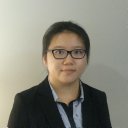
 Lanyu Shang
· 4 previous affiliations
- Loyola Marymount UniversitySince 2024
- Assistant Professor · Since 2024
- Ludwig-Maximilians-Universität MünchenSince 2024
- Assistant Professor · Since 2024
- Doctor of Philosophy - PhD, Information Science/Studies · 2021–2023
- University of Notre Dame2018–2021
- PhD student · 2018–2021
Research Overview
Lanyu Shang focuses on social sensing, misinformation detection, and human-AI collaboration. His early work explored content-agnostic methods for identifying misleading or vulnerable media on social platforms, later expanding into domain-adaptive graph learning for emergent health crises. Currently, he investigates uncertainty-aware crowdsensing and the alignment of large language models using inconsistent human feedback.
Research Trajectory
Shang’s early research centered on social sensing and media integrity, leveraging user interactions and crowdsourced data to analyze physical and digital environments. In 2018, he participated in the development of RiskSens: A Multi-view Learning Approach to Identifying Risky Traffic Locations in Intelligent Transportation Systems Using Social and Remote Sensing, which addressed the lack of public traffic accident databases by fusing social and remote sensing data. Concurrently, he co-developed FauxBuster: A Content-free Fauxtography Detector Using Social Media Comments, a system designed to identify misleading images by analyzing the surrounding discourse rather than the image content itself.
Building on this content-agnostic philosophy, Shang introduced Towards reliable online clickbait video detection: A content-agnostic approach in 2019. By analyzing user comments instead of video titles or thumbnails, this method proved highly robust against sophisticated clickbait creators. This work advanced techniques in graph learning through sequential random walks and hierarchical representations for document-level understanding, generalizing digital behavior across platforms and interfaces. He applied a similar framework to identify videos that unexpectedly trigger hateful discourse in VulnerCheck: A Content-Agnostic Detector for Online Hatred-Vulnerable Videos, aiming to protect content creators from unwarranted platform penalties while managing online toxicity.
In 2021, Shang’s focus expanded to integrate human intelligence with artificial intelligence, particularly for monitoring urban and social environments. He designed StreamCollab: A Streaming Crowd-AI Collaborative System to Smart Urban Infrastructure Monitoring in Social Sensing, a framework that utilizes a duo-branch neural network to quantify its own uncertainty. By strategically querying human workers only when the AI is uncertain, the system balances accuracy with computational efficiency, contributing to the broader area of modeling annotator reliability for noisy labels. He also addressed complex multimodal content on social platforms, introducing AOMD: An analogy-aware approach to offensive meme detection on social media to explicitly model the relations between visual and textual components that convey offensive analogies.
During the COVID-19 pandemic, Shang extensively researched health misinformation, developing systems to handle emergent crises where labeled data is scarce. He designed a tripartite framework in Crowd, Expert & AI: A Human-AI Interactive Approach Towards Natural Language Explanation Based COVID-19 Misinformation Detection, which combines crowd logic, expert medical knowledge, and AI processing to generate high-quality natural language explanations for why a post is misleading. To address the lack of resources in new health domains, he developed A Knowledge-driven Domain Adaptive Approach to Early Misinformation Detection in an Emergent Health Domain on Social Media, adapting domain-invariant features from established datasets to emergent targets. He further explored cross-modal associations in A Duo-generative Approach to Explainable Multimodal COVID-19 Misinformation Detection and utilized community-contributed fact-checking reports in A Privacy-aware Distributed Knowledge Graph Approach to QoIS-driven COVID-19 Misinformation Detection. Concurrently, he continued advancing social sensing for physical events, developing SAT-Geo: A social sensing based content-only approach to geolocating abnormal traffic events using syntax-based probabilistic learning.
In 2023 and 2024, Shang applied his uncertainty-aware methods to environmental monitoring and formalized his domain-adaptive techniques. He introduced CrowdWaterSens: An uncertainty-aware crowdsensing approach to groundwater contamination estimation. He then developed CrowdAdapt in A Domain Adaptive Graph Learning Framework to Early Detection of Emergent Healthcare Misinformation on Social Media, addressing machine learning for emergent events with scarce labeled data. By utilizing contextualized subgraph pruning for knowledge-intensive reasoning and adversarial alignment for domain-invariant feature learning, the framework mitigates negative transfer via feature decoupling to enable fine-grained fact-checking for nuanced claims.
By 2025, Shang’s work increasingly emphasized equitable AI and the societal impacts of environmental crises. With collaborators, he developed CollabDebias in Bidirectional Human-AI Collaboration for Equitable Student Performance Prediction via Deep Uncertainty Learning, tackling fairness under demographic scarcity and the disparate impact of privacy noise in machine learning. The system utilizes deep uncertainty learning and visualizes model confidence for human decision-making to mitigate cognitive biases. He also introduced SIDE in SIDE: Socially Informed Drought Estimation Toward Understanding Societal Impact Dynamics of Environmental Crisis, integrating physical drought data with collective intelligence from social media and news. This framework advances coupled human-natural feedback modeling and social sensing for real-time event detection, contributing directly to the research direction Overcoming Geographic Data Sparsity in Predictive Models as well as representativeness and persona grounding in social NLP.
Current Directions
The most recent papers in the evidence address the alignment of frontier models and the societal impacts of natural disasters. With collaborators, Shang contributed to the creation of MASH: A Multiplatform and Multimodal Annotated Dataset for Societal Impact of Hurricane, a large-scale resource covering nearly 60,000 posts from platforms like Reddit, TikTok, and YouTube during the 2024 hurricane season. This dataset supports research in adapting language models to temporal semantic shift, detecting emergent toxicity in multimodal memes, and fine-grained temporal modeling for video transformers.
Additionally, his 2026 work investigates the alignment of large language models, specifically focusing on Reliability-Aware LLM Alignment from Inconsistent Human Feedback. This research introduces Reliability-Guided Preference Optimization (RGPO), a framework designed to estimate annotator reliability and dynamically adjust training objectives based on consensus. This approach advances robust preference optimization for noisy alignment, probabilistic label aggregation for noisy multi-annotator data, and scaling efficient optimization and alignment to frontier models.
Profile updated
Loading new papers…
Other researchers whose papers cluster into the same research directions — a proxy for overlapping technical interests and shared intellectual neighborhoods.
See something wrong? Report a mistake