

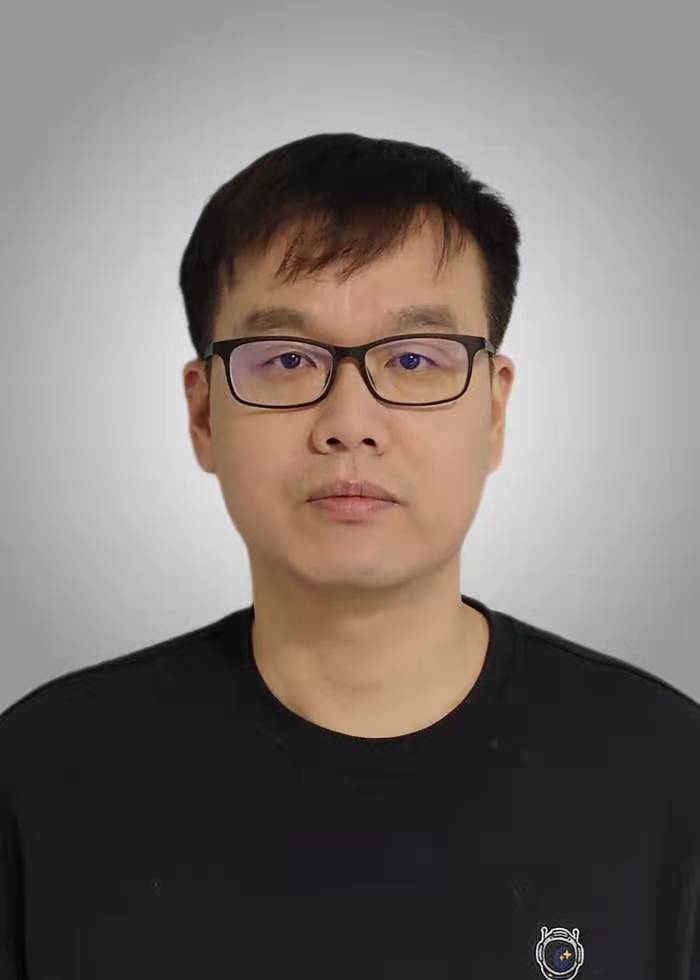
 Lai Wei
· 2 previous affiliations
- Shanghai Maritime UniversitySince 2009
- Associate Professor · Since 2014
- Lecturer · 2009–2014
- Tongji University2000–2009
- PhD student · 2004–2009
- Undergrad student · 2000–2004
5 other authors named Lai Wei: Lai Wei (University of Michigan · 30 papers), Lai Wei (Shanghai Jiao Tong University · Beijing Zhongguancun Academy · 10 papers), Lai Wei (University of Chicago · 3 papers), Lai Wei (1 paper), Lai Wei (ByteDance (China) · 1 paper)
Research Overview
Lai Wei focuses on subspace segmentation, multi-view learning, and dimensionality reduction for pattern recognition. Early work emphasized low-rank representation and sparse projection techniques for biometric and image data. More recently, this research has expanded to address complex label correlations in multi-view datasets, alongside emerging interests in causal inference and sequential decision-making.
Research Trajectory
Lai Wei’s research trajectory began with an emphasis on feature selection and attribute reduction. In 2009, Wei served as the senior author on Fuzzy-rough attribute reduction via mutual information with an application to cancer classification, establishing an early focus on extracting meaningful patterns from complex datasets.
By the mid-2010s, Wei’s focus shifted toward subspace segmentation and unsupervised dimensionality reduction. Leading this line of inquiry, Wei was the first author on Latent space robust subspace segmentation based on low-rank and locality constraints in 2015. This work sought to improve how high-dimensional data is partitioned into lower-dimensional subspaces. Continuing this trajectory, Wei was the senior author on Local sparsity preserving projection and its application to biometric recognition (2018). While traditional dimensionality reduction methods based on sparse representation typically only preserved sparse reconstructive relationships, this proposed method preserved both sparsity and locality simultaneously. By ensuring that a training sample was more likely represented by samples from the same class, the approach yielded a more accurate sparse reconstructive weight matrix for biometric applications.
Wei continued to refine subspace segmentation techniques by analyzing the advantages of fixed-rank representations over standard low-rank representations. As first author of Adaptive graph-regularized fixed rank representation for subspace segmentation (2020), Wei proposed a novel method that departed from existing approaches. Instead of using the original dataset to build a graph regularizer for a reconstruction coefficient matrix, this method utilized one of the matrix factors of the reconstruction matrix itself to construct the regularizer.
In parallel, Wei’s research expanded to address the challenges of semi-supervised and multi-view learning, particularly in scenarios where labeled data is scarce and expensive to obtain. Serving as senior author on Weight-and-Universum-based semi-supervised multi-view learning machine (2020), Wei integrated Universum learning to extract additional prior knowledge from unlabeled data. This work also addressed the practical reality that different views and features play diverse discriminant roles, moving away from traditional models that assign equal weights to all features for convenience.
More recently, Wei has participated in broader collaborative efforts to model complex correlations in high-dimensional data. This includes contributing to A simple multiple-fold correlation-based multi-view multi-label learning (2023). This research addresses the open problem of simultaneously measuring within-view, cross-view, and consensus-view correlations to enhance the performance of learning machines on multi-view multi-label datasets.
Current Directions
The most recent themes in the evidence from 2023 and 2024 indicate an active engagement with causal inference and sequential decision-making. A major focus is the fundamental obstacle of unobserved confounders in causal models. Work in this domain engages with the research direction of Causal Discovery in the Presence of Latent Confounders and the broader area of Information Theoretic Constraints for Causal Identification, looking beyond traditional non-parametric bounds to better isolate causal effects when hidden variables influence both treatment and outcome. Additionally, Wei’s thematic interests include the research direction Causal Inference for Continuous Treatment Regimes, which moves beyond binary treatment models to address real-world interventions where variables like dosages or prices fluctuate continuously.
In the realm of sequential decision-making, recent themes highlight an interest in multi-armed bandits and the exploration-exploitation trade-off. This includes the area of Causal Bandits for Efficient Interventional Learning, which introduces causal dependencies between arms rather than treating them as independent black boxes. Furthermore, the evidence points to work in the area of Generalized Likelihood Ratio Stopping Rules and themes such as Information Directed Exploration for Stochastic Bandits. These directions focus on high-stakes scenarios where the objective is not merely to maximize cumulative reward, but to identify the single best option with a specific level of certainty using as few samples as possible.
Profile updated
Loading new papers…
Loading research neighbors…
See something wrong? Report a mistake