

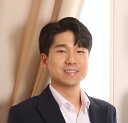
 Kyuwon Kim
· 1 previous affiliation
- PhD student · Since 2023
- Current
- MS student · 2022–2023
- Undergrad student · 2018–2021
Research Overview
Kyuwon Kim focuses on minimax optimization for generative models, the morphosyntactic parsing of morphologically rich languages, and 3D scene reconstruction. Early work addressed computer vision and autonomous vehicle localization, while subsequent research established theoretical foundations for training generative adversarial networks. Most recently, Kim investigates the memorization-generalization trade-off in overparameterized models and efficient training schemes for 3D Gaussian splatting.
Research Trajectory
Kyuwon Kim’s research trajectory spans applied computer vision, theoretical machine learning, and natural language processing, reflecting a broad engagement with both optimization mathematics and structural linguistics. In the early to mid-2010s, Kim’s work centered on computer vision and spatial localization. A representative project from this period is Tunnel Facility-based Vehicle Localization in Highway Tunnel using 3D LIDAR (2020), which addressed the challenge of autonomous navigation in GPS-denied environments. By utilizing mandatory tunnel infrastructure as high-precision point landmarks, the research demonstrated how to achieve lane-level localization with minimal error.
By 2023, Kim’s focus had shifted toward the theoretical underpinnings of machine learning, specifically the optimization of generative adversarial networks (GANs) and adversarial training. A major focus of this period was minimax optimization. In Two-timescale Extragradient for Finding Local Minimax Points (2024), Kim and collaborators provided mathematical proofs showing that two-timescale extragradient methods can reliably find local minimax points even when the problem features a singular Hessian. Kim expanded on this foundation in the first-authored Double-Step Alternating Extragradient with Increasing Timescale Separation for Finding Local Minimax Points: Provable Improvements (2024). This work introduced the Alt2-EG-TS method, designed to converge at the flat, non-strict optimal points frequently encountered in deep learning without requiring complex upfront hyperparameter tuning.
Concurrently in 2024 and 2025, Kim developed a robust research program in natural language processing, specifically targeting the linguistic structures of the Korean language. This work actively engages with the research direction of Distinguishing Verb Arguments from Optional Adjuncts. In the first-authored paper When the Misidentified Adverbial Phrase Functions as a Complement (2024), Kim’s team corrected long-standing misclassifications in Korean NLP treebanks by cross-referencing existing datasets with comprehensive electronic dictionaries. This linguistic focus naturally extended into the broader area of Morphological Feature Integration in Syntactic Parsing. In Enhancing Korean Dependency Parsing with Morphosyntactic Features (2025), Kim contributed to the UniDive framework, which integrates fine-grained morphological features—such as case markers and honorifics—directly into dependency parsing models to significantly improve accuracy.
In 2025, Kim also returned to 3D computer vision, focusing on the computational efficiency of modern rendering techniques. As senior author, Kim published GSta: Efficient Training Scheme with Siestaed Gaussians for Monocular 3D Scene Reconstruction (2025). This research introduced a training scheme that accelerates 3D Gaussian Splatting by freezing "converged" Gaussians during training, thereby reducing storage footprints and computational overhead while maintaining reconstruction quality.
Current Directions
Recent work investigates the theoretical properties of overparameterized generative models, the efficiency of 3D rendering techniques, and the structural parsing of morphologically rich languages. In machine learning theory, the most recent papers in the evidence address the memorization-generalization trade-off. This research challenges the traditional assumption that generative models must avoid memorization to generalize effectively, exploring how overparameterized models might achieve benign overfitting.
Concurrently, Kim is advancing efficient 3D scene reconstruction, developing training schemes that reduce computational overhead and storage requirements for Gaussian splatting. In natural language processing, current efforts continue to explore themes such as Parsing Beyond Fixed Word Order, focusing on how morphosyntactic features can improve dependency parsing in languages where linear position is a secondary signal for meaning.
Profile updated
Loading new papers…
Other researchers whose papers cluster into the same research directions — a proxy for overlapping technical interests and shared intellectual neighborhoods.
See something wrong? Report a mistake