

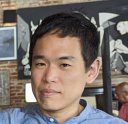
 Kyunghyun Cho
· 6 previous affiliations
- New York UniversitySince 2015
- Professor · Since 2024
- Associate Professor · 2019–2023
- Assistant Professor · 2015–2019
- Genentech2020–2026
- Executive Director of Frontier Research · 2025–2026
- Senior Director of Frontier Research · 2020–2024
- Meta (United States)2017–2020
- Research Scientist · 2017–2020
- Université de Montréal2014–2015
- Postdoc · 2014–2015
- Aalto University2009–2014
- PhD student · 2009–2014
- Undergrad student · 2002–2009
Research Overview
Kyunghyun Cho focuses on neural sequence modeling, natural language processing, and representation learning. His foundational work established the encoder-decoder architectures and attention mechanisms that underpin modern machine translation and generative artificial intelligence. More recently, his research investigates the training dynamics of equivariant networks, out-of-distribution generalization, and sample-efficient optimization for scientific discovery.
Research Trajectory
His early research focused on energy-based models and deep network optimization. He investigated the training dynamics of restricted Boltzmann machines, developing techniques to improve gradient updates and adapt learning rates in Enhanced Gradient and Adaptive Learning Rate for Training Restricted Boltzmann Machines.
By 2014, his focus shifted toward sequence modeling, where he introduced foundational architectures for statistical and neural machine translation. He developed a novel neural network model consisting of two recurrent neural networks—one encoding a source sequence into a fixed-length vector and another decoding it into a target sequence—in Learning Phrase Representations using RNN Encoder-Decoder for Statistical Machine Translation. He further analyzed the properties of these models in On the Properties of Neural Machine Translation: Encoder-Decoder Approaches. Concurrently, he participated in empirical comparisons of recurrent architectures, demonstrating that simpler gated units like the Gated Recurrent Unit (GRU) offer highly competitive alternatives to traditional LSTMs in Empirical Evaluation of Gated Recurrent Neural Networks on Sequence Modeling. This work significantly advanced the broader area of Efficient Recurrence through Gating Simplification and Weight Sharing.
In 2015, he published work that fundamentally altered the trajectory of natural language processing. He introduced the attention mechanism in Neural Machine Translation by Jointly Learning to Align and Translate, allowing models to dynamically focus on relevant parts of a source sequence during generation. This approach overcame the limitations of fixed-length vector encoding, driving progress in the research direction of Robust Neural Machine Translation for Long Sequences and the area of Handling Out of Vocabulary Words in Neural Sequence Models. He also addressed the computational bottlenecks of sequence-to-sequence models, proposing methods to handle massive target vocabularies in On Using Very Large Target Vocabulary for Neural Machine Translation, contributing to the domain of Sampling Based Training for Large Output Spaces. Extending these sequence modeling principles to multi-modal tasks, he collaborated on adapting visual attention mechanisms to automatically generate descriptive text for images in Show, Attend and Tell: Neural Image Caption Generation with Visual Attention.
Expanding beyond standard word-level text, his research explored alternative input representations across different modalities. He guided the application of convolutional recurrent networks to music tagging, combining local feature extraction with temporal modeling in Convolutional Recurrent Neural Networks for Music Classification. Returning to machine translation, he contributed to models that map source to target sequences without explicit word segmentation in Fully Character-Level Neural Machine Translation without Explicit Segmentation, aligning with the broader area of Character Level Representations for Robust Natural Language Processing. In 2018, his lab proposed methods for the supervised learning of embedding ensembles, allowing neural networks to dynamically select pre-trained word embeddings in Dynamic Meta-Embeddings for Improved Sentence Representations. This advanced the research direction Dynamic Representation Fusion via Attentive Weighting.
In the early 2020s, alongside his academic roles, he co-founded Prescient Design and subsequently served as Executive Director of Frontier Research at Genentech.
By 2026, Cho's work explored multimodal generative models, evaluation methodologies, and active learning for distribution-valued outputs. Cho co-developed JUICE, a single flow matching Transformer operating over continuous encoder spaces to enable joint, symmetric image and text generation in JUICE: Unified Multimodal Modeling in Pretrained Representation Spaces. In clinical NLP, they participated in introducing FairSumEval, an evidence-grounded atomic fact evaluation framework for medical discharge summaries in Discharge Summary Generation Is Not Just Summarization: A Reality Check for Evaluation. Cho also co-developed the transport Neural Tangent Kernel for distribution-aware active experimental design in conditional generative modeling in Active Learning of Conditional Generative Models via the Transport Neural Tangent Kernel. In reinforcement learning, they contributed to REINFORCE Look Back, which leverages counterfactual world models conditioned on observations to separate action effects from environmental randomness in Look Back: Reinforcement Learning with Counterfactual World Models. Addressing language model behavior, Cho also led work on unsupervised discovery and explicit conditioning of reasoning styles to diversify responses and improve mathematical problem solving in Reason in Style: Discovering and Controlling Style in Language Models.
Current Directions
His recent papers address a broad spectrum of challenges in machine learning generalization, optimization, continuous multimodal generation, and scientific AI. Recent work investigates the training dynamics of symmetry-agnostic models, demonstrating how networks rapidly learn 3D-rotational equivariance for molecular tasks in Training Dynamics of Learning 3D-Rotational Equivariance. He is also developing sample-efficient optimization frameworks, such as the procedure-informed Bayesian optimization method introduced in None To Optima in Few Shots: Bayesian Optimization with MDP Priors, which leverages Markov Decision Process priors to accelerate discovery in domains like drug design.
Additionally, his recent research critically examines the evaluation and robustness of large-scale models. He and his collaborators have analyzed the limitations of current multi-modal benchmarks in Multi-modal Learning: A Look Back and the Road Ahead and demonstrated that pretraining scaling laws often fail to reliably predict downstream task performance in Scaling Laws Are Unreliable for Downstream Tasks: A Reality Check. Furthermore, he continues to explore out-of-distribution robustness, proposing uniform training distributions to bound worst-case errors across diverse test environments in Generalizing to any diverse distribution: uniformity & rebalancing.
Profile updated
Loading new papers…
Other researchers whose papers cluster into the same research directions — a proxy for overlapping technical interests and shared intellectual neighborhoods.
See something wrong? Report a mistake