

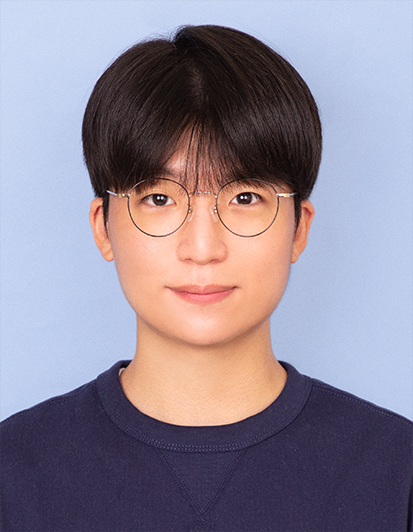
 Kyungho Kim
· 2 previous affiliations
- PhD student · Since 2025
- MS student · Since 2024
- Korea University2020–2024
- Undergrad student · 2020–2024
Research Overview
Kyungho Kim focuses on recommender systems, graph representation learning, and multimodal information retrieval. His trajectory spans from foundational improvements in graph collaborative filtering and anomaly detection to advanced architectures for multi-behavior and long-tail recommendation. Most recently, his work investigates the integration of large language and vision-language models to address data scarcity and cold-start challenges in personalized ranking.
Research Trajectory
Kim’s early research centers on refining the foundational architectures of recommender systems and graph neural networks. In 2024, he co-developed methods to address structural limitations in popular recommendation models, as detailed in Revisiting LightGCN: Unexpected Inflexibility, Inconsistency, and A Remedy Towards Improved Recommendation. Concurrently, he explored techniques to improve representation learning for sparse data, co-authoring Post-Training Embedding Enhancement for Long-Tail Recommendation. Expanding on complex user interactions, he introduced novel approaches for grouping items, demonstrated in Towards Better Utilization of Multiple Views for Bundle Recommendation. Beyond recommendation, he contributed to the area of Anomaly Detection via Statistical Profiling of Reconstruction Residuals. In Rethinking Reconstruction-based Graph-Level Anomaly Detection: Limitations and a Simple Remedy, he and his collaborators identified a "reconstruction flip" where anomalous graphs paradoxically exhibit lower reconstruction errors than normal data, proposing a multifaceted statistical summary method to correct this bias.
Moving into 2025, Kim’s focus expanded to incorporate multimodal signals and complex behavioral data into recommendation pipelines. He co-developed a progressive framework in From Raw Features to Effective Embeddings: A Three-Stage Approach for Multimodal Recipe Recommendation, which systematically refines raw multimodal features using foundation models and message propagation. This work intersects with broader research directions such as Integrating Negative Feedback into Recommender Systems and Graph Contrastive Learning for Sparse Recommendation. To handle diverse user actions beyond simple clicks or purchases, he designed A Self-Supervised Mixture-of-Experts Framework for Multi-behavior Recommendation.
During this period, he also explored the integration of large language models into recommendation systems. In ItemRAG: Item-Based Retrieval-Augmented Generation for LLM-Based Recommendation, he collaborated on an item-centric retrieval method that helps LLMs capture co-purchase patterns, advancing the fields of Semantic Representations for Cold Start Recommendation and Denoising Behavioral Sequences in Recommender Systems. Additionally, he participated in broader graph modeling evaluation efforts, co-authoring RDB2G-Bench: A Comprehensive Benchmark for Automatic Graph Modeling of Relational Databases to accelerate research into optimal database-to-graph conversion strategies.
By 2026, Kim sought to systematize the rapidly growing field of complex recommendation. He led A comprehensive survey on multi-behavior recommender systems: extended taxonomy and recent advances, which categorizes data modeling, encoding, and optimization strategies, contributing to the broader goal of Standardizing Evaluation and Benchmarking for Recommender Systems. He also continued to refine graph collaborative filtering techniques. In Rethinking Contrastive Learning for Graph Collaborative Filtering: Limitations and a Simple Remedy, he and his co-authors analyzed the mechanics of contrastive learning objectives, revealing biases toward item-side neighbors and proposing a neighbor-type-aware objective to adaptively weight node connections. Furthermore, Kim contributed to User-Adaptive Fusion of Multiple Foundation Models for Recommender Systems, which introduces a score-level fusion method that adaptively weights multiple foundation models per user without requiring alignment of their representation spaces.
Current Directions
The most recent papers in the evidence indicate a shift toward applying large vision-language models (VLMs) to highly specific, data-scarce ranking problems. Recent work investigates how to adapt generic multimodal reasoning capabilities to specialized business objectives, such as brand-specific advertisement ranking. In Context-Aware Criteria Generation with VLMs for Advertisement Ranking under Data Scarcity, Kim introduces a framework that derives explicit, brand-aware decision criteria using VLMs, bypassing the need for large-scale supervision. This direction highlights an ongoing interest in bridging the gap between massive foundation models and constrained, domain-specific recommendation tasks.
Profile updated
Loading new papers…
Other researchers whose papers cluster into the same research directions — a proxy for overlapping technical interests and shared intellectual neighborhoods.
See something wrong? Report a mistake