

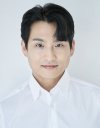
 Kyong Hwan Jin
· 5 previous affiliations
- Korea UniversitySince 2023
- Associate Professor · Since 2023
- Assistant Professor · 2021–2023
- Samsung (South Korea)2019–2021
- Staff Engineer · 2019–2021
- Postdoc · 2016–2019
- PhD student · 2008–2015
- Undergrad student · 2004–2008
Research Overview
Kyong Hwan Jin focuses on deep learning for signal and image processing, with an emphasis on solving inverse problems and developing neural network architectures for image restoration. His early trajectory established foundational methods in low-rank matrix recovery and learned inverse solvers for medical imaging. Currently, his research group investigates continuous implicit neural representations, advanced image stitching techniques, and hallucination-resistant sampling for diffusion models.
Research Trajectory
His early research focused on classical and structured matrix approaches to image reconstruction. He introduced a patch-based approach to image inpainting by exploiting the annihilation property between shift-invariant filters and image data in Annihilating Filter-Based Low-Rank Hankel Matrix Approach for Image Inpainting. This work framed inpainting as a structured matrix completion problem, contributing to the broader area of Nuclear Norm Minimization for Low Rank Matrix Recovery. Transitioning to deep learning, he developed a novel convolutional neural network architecture for ill-posed inverse problems in Deep Convolutional Neural Network for Inverse Problems in Imaging. By unrolling iterative methods into a CNN structure, this research helped establish the research direction of Learned Inverse Solvers for Real-Time Image Reconstruction, demonstrating how neural networks could bypass the high computational costs and hyperparameter tuning of traditional regularized iterative algorithms.
Building on these inverse solvers, he later adapted the Deep Image Prior concept to the temporal domain for dynamic MRI. Time-Dependent Deep Image Prior for Dynamic MRI demonstrated that neural networks could reconstruct moving organs—such as a beating fetal heart—using only the data from the scan itself, without relying on massive labeled datasets. This advanced the areas of Untrained Neural Networks as Structural Priors and Self-Supervised Medical Image Reconstruction without Ground Truth. Expanding into arbitrary-resolution image reconstruction, he and his collaborators proposed a dominant-frequency estimator for natural images in Local Texture Estimator for Implicit Representation Function. Jointly trained with a deep super-resolution architecture, this estimator enabled implicit functions to capture fine details in 2D Fourier space, contributing to the field of High Frequency Residual Learning for Signal Restoration.
Leading a research group, his focus broadened to complex image restoration tasks, continuous representations, and multi-frame processing. In the area of Efficient Decoding for Continuous Implicit Neural Representations, his lab addressed JPEG quantization degradation with JDEC: JPEG Decoding via Enhanced Continuous Cosine Coefficients, utilizing a continuous cosine spectrum estimator to restore distorted spectra directly across different quality factors. This interest in continuous representations also informed his work on image stitching. Implicit Neural Image Stitching With Enhanced and Blended Feature Reconstruction estimated Fourier coefficients to blend color mismatches and misalignments in the latent space, avoiding the blurry artifacts common in existing frameworks. To handle large parallax errors in stitching, his team developed recurrent elastic warps under Dirichlet boundary conditions in Learning Residual Elastic Warps for Image Stitching under Dirichlet Boundary Condition, boosting performance through residual learning. For multi-frame super-resolution, he guided the development of BurstM: Deep Burst Multi-scale SR Using Fourier Space with Optical Flow, which mitigates misalignment between reference and source frames by estimating optical flow in the Fourier domain rather than relying solely on deformable convolution networks.
Continuing the focus on compression and representation, his lab introduced a backward-compatible neural codec in JPEG Processing Neural Operator for Backward-Compatible Coding. By integrating neural operators in both encoding and decoding stages, the method reduces compression artifacts while maintaining the ubiquitous JPEG format. They also pushed the boundaries of implicit representations by proposing a method for perfect reconstruction of 16-bit signals in Towards Lossless Implicit Neural Representation via Bit Plane Decomposition. By treating signal representation as a series of binary classification tasks rather than high-precision regression, this work overcame the exponential parameter requirements typically associated with lossless continuous representations.
Most recently, his research has addressed the stability and semantic coherence of generative models. In Balancing Fidelity and Diversity in Diffusion Models via Symmetric Attention Decomposition: Hopfield Perspective, his team decomposed the attention matrix into stability and movement components, creating a training-free mechanism that helps models escape poor local minima and resolves semantic blending issues. Similarly, TAG: Tangential Amplifying Guidance for Hallucination-Resistant Sampling introduced a geometric decomposition of sampling updates. By amplifying the tangential component, the method steers generation toward high-probability regions of the data manifold, significantly reducing hallucinations with negligible computational overhead.
Current Directions
Based on his most recent work, his current research agenda is organized around two primary themes:
Generative AI and Diffusion Models: Recent work investigates the internal mechanics of diffusion models to improve their reliability, fidelity, and semantic coherence. By analyzing attention matrices and the geometry of sampling updates, his group develops training-free interventions—such as symmetric attention decomposition and tangential amplifying guidance—that prevent hallucinations and help generative models navigate complex data manifolds more effectively.
Advanced Neural Codecs and Lossless Representations: A continuing focus is the intersection of deep learning and traditional signal compression. The most recent papers in the evidence address the development of next-generation, backward-compatible image compression frameworks using neural operators. Furthermore, his lab is exploring bit-plane decomposition techniques to achieve truly lossless implicit neural representations, reframing continuous signal reconstruction as a series of efficient binary classification tasks.
Profile updated
Loading new papers…
Other researchers whose papers cluster into the same research directions — a proxy for overlapping technical interests and shared intellectual neighborhoods.
See something wrong? Report a mistake