

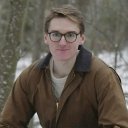
 Kyle Vedder
· 3 previous affiliations
- physical intelligenceSince 2025
- Researcher · Since 2025
- University of Pennsylvania2019–2025
- PhD student · 2019–2025
- Dyna Robotics2024–2025
- Researcher · 2024–2025
Research Overview
Kyle Vedder focuses on 3D scene flow, robot learning, and multi-agent planning. His early work addressed scalable pathfinding for dynamic environments before shifting toward efficient perception and motion estimation for resource-constrained robotics. Currently, he investigates unsupervised methods for continuous space-time scene flow and zero-shot generalization in 3D perception.
Research Trajectory
Kyle Vedder’s research trajectory began with a focus on multi-agent planning in dynamic environments. Recognizing that the configuration space of multi-agent systems grows exponentially, he introduced methods to manage this complexity by exploiting the geometric properties of path conflicts. This approach was detailed in X*: Anytime Multiagent Planning With Bounded Search, where he demonstrated that conflicts often have geometrically local resolutions within a small repair window. By iteratively improving partial search trees over successively larger windows, the system could eventually compute globally optimal plans. He subsequently expanded on this framework for broader applications in sparse domains in X*: Anytime Multi-Agent Path Finding for Sparse Domains using Window-Based Iterative Repairs.
Transitioning toward perception systems for resource-constrained robotics, his focus shifted to optimizing 3D object detection. In Sparse PointPillars: Maintaining and Exploiting Input Sparsity to Improve Runtime on Embedded Systems, he developed a pipeline that leverages the inherent sparsity of Bird's Eye View (BEV) representations. By avoiding unnecessary computations on empty regions, the method achieved significant runtime speedups on embedded hardware with only a modest drop in detection accuracy. During this period, he also participated in broader collaborative efforts exploring decentralized computation, contributing to a vision for networked agents exchanging knowledge in A collective AI via lifelong learning and sharing at the edge.
A major theme of his doctoral and subsequent research has been the scalable and flexible estimation of 3D motion, specifically scene flow. He introduced highly efficient distillation methods for scene flow in ZeroFlow: Scalable Scene Flow via Distillation, which demonstrated substantial speedups over existing architectures. This line of inquiry culminated in his dissertation, Toward Scalable, Flexible Scene Flow for Point Clouds, which synthesized his work on ZeroFlow, introduced new evaluation metrics like Bucket Normalized EPE to better capture small objects such as pedestrians, and laid the groundwork for continuous motion modeling. This body of work significantly advances the research direction of Mitigating Long Range Sparsity in 3D Object Detection.
Building on these foundations, he developed unsupervised approaches to scene flow estimation. In Neural Eulerian Scene Flow Fields, he reframed scene flow as a continuous space-time ordinary differential equation (ODE) represented by a neural prior. This unsupervised approach enabled emergent 3D point tracking and outperformed supervised methods on major autonomous driving benchmarks without relying on human labels. Concurrently, he collaborated on UniFlow: Towards Zero-Shot LiDAR Scene Flow for Autonomous Vehicles via Cross-Domain Generalization, which demonstrated that geometric tasks like scene flow can generalize across diverse, unseen sensor configurations when trained on unified datasets, yielding notable improvements in zero-shot performance. Expanding his scope to multimodal generation, he also contributed to Articulate-Anything: Automatic Modeling of Articulated Objects via a Vision-Language Foundation Model. This system utilizes vision-language models in an iterative actor-critic loop to generate Python code, automating the creation of interactive 3D models and substantially increasing articulation success rates. This work aligns with the broader area of Closed Loop Visual Feedback for Multimodal Generation.
Current Directions
Recent work investigates the intersection of continuous space-time modeling, zero-shot generalization, and multimodal foundation models for 3D understanding. The most recent papers in the evidence address unsupervised scene flow estimation using neural ordinary differential equations, challenging the reliance on supervised learning and specific sensor configurations in autonomous perception. By demonstrating that low-level geometric tasks can generalize across heterogeneous LiDAR setups, this research points toward universal motion priors that do not require sensor-specific retraining. Additionally, collaborative efforts explore the integration of vision-language models to automate the articulation of 3D objects, indicating an ongoing interest in increasingly flexible and scalable pipelines for spatial reasoning and scene recomposition.
Profile updated
Loading new papers…
Other researchers whose papers cluster into the same research directions — a proxy for overlapping technical interests and shared intellectual neighborhoods.
See something wrong? Report a mistake