

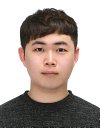
 Kyeongpil Kang
· 7 previous affiliations
- Kyungpook National UniversitySince 2024
- Assistant Professor · Since 2024
- 강원대학교Since 2024
- 조교수 · Since 2024
- Liner2024
- Machine Learning Researcher · 2024
- Scatterlab2020–2023
- Machine learning researcher · 2020–2023
- goorm2020
- Artificial Intelligence Researcher · 2020
- Postdoctoral Researcher · 2020
- Korea University2012–2020
- 박사, 컴퓨터 공학 · 2016–2020
- 컴퓨터학과, 소프트웨어 과학과 기술 연계전공 · 2012–2016
Research Overview
Kyeongpil Kang focuses on topic modeling, natural language processing, and the application of neural architectures to complex document collections. His trajectory spans from early work in short-text mining and visual topic exploration to the computational restoration of historical texts using self-attention mechanisms. Most recently, his research investigates multimodal approaches that bridge image captioning and large-scale visual clustering.
Research Trajectory
Kyeongpil Kang’s research trajectory demonstrates a sustained focus on extracting latent structures from complex, noisy, and high-dimensional data. His early work centered on text mining and the broader area of Non-negative Matrix Factorization for Latent Topic Discovery. In 2017, as a second author, he contributed to Predicting the Currency Market in Online Gaming via Lexicon-Based Analysis on Its Online Forum, which utilized user opinions from massive multiplayer online game forums to forecast virtual currency fluctuations. Building on this interest in unstructured text, he subsequently co-authored Short-Text Topic Modeling via Non-negative Matrix Factorization Enriched with Local Word-Context Correlations in 2018. This work introduced a semantics-assisted model designed to overcome the sparsity and ambiguity inherent in short texts by effectively incorporating local word-context semantic relationships into the factorization process.
By 2019, Kang’s focus expanded to integrate topic modeling with neural attention mechanisms. Leading this direction as first author, he published Recommender System Using Sequential and Global Preference via Attention Mechanism and Topic Modeling, demonstrating how latent topic representations could be combined with sequential user data to improve recommendation architectures.
In 2021, Kang applied these neural language modeling techniques to highly specialized, low-resource domains, specifically engaging with the research direction of Computational Restoration of Gaps in the Historical Record. As first author of Restoring and Mining the Records of the Joseon Dynasty via Neural Language Modeling and Machine Translation, he proposed a multi-task learning approach based on self-attention to simultaneously restore damaged historical texts and translate them into modern languages. This project highlighted the practical utility of deep learning in addressing the expert bottleneck in archival research, aligning with themes such as Domain Specific Pretraining for Historical Language Processing.
Current Directions
The most recent papers in the evidence indicate a shift toward multimodal data analysis, extending Kang's foundational expertise in topic modeling to the visual domain. Recent work investigates how text-based clustering techniques can be adapted for large-scale image datasets. Specifically, in his 2024 first-author work, See, caption, cluster: Large-scale image analysis using captioning and topic modeling, Kang explores pipelines that first generate textual descriptions of visual content using image captioning models, and then apply robust scoring and topic modeling to those captions. This approach facilitates the summarization and intuitive clustering of global information across extensive image collections, bridging the gap between natural language processing and computer vision.
Profile updated
Loading new papers…
Loading research neighbors…
See something wrong? Report a mistake