

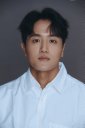
 Kwanyoung Kim
· 7 previous affiliations
- Assistant Professor · Since 2026
- 광주과학기술원Since 2026
- Assistant Professor · Since 2026
- GistCurrent
- Current
- Samsung Electronics (South Korea)2024–2026
- AI Researcher · 2024–2026
- Samsung (South Korea)2024–2026
- Researcher · 2024–2026
- Ph.D, Graduate School of AI · 2020–2024
- MS student · 2018–2020
- Undergrad student · 2012–2018
Research Overview
Kwanyoung Kim focuses on generative artificial intelligence, medical imaging, and self-supervised learning for inverse problems. His research bridges theoretical frameworks like optimal transport and score matching with practical applications in computer vision and healthcare. Recently, his work emphasizes large multimodal models for clinical workflows and improving the reliability of diffusion models.
Research Trajectory
Kim’s early research addressed foundational challenges in computer vision and medical imaging, particularly focusing on scenarios where high-quality ground truth data is scarce. In 2018, he worked on Efficient Module Based Single Image Super Resolution for Multiple Problems, proposing modular ensemble networks to reduce training time and improve performance in super-resolution tasks. He subsequently applied deep learning to clinical domains, developing Unsupervised Training of Denoisers for Low-Dose CT Reconstruction Without Full-Dose Ground Truth. This work utilized the Poisson Unbiased Risk Estimator to train denoising networks directly on noisy sensor measurements, bypassing the need for clean, full-dose radiation data.
This interest in unsupervised and self-supervised inverse problems led to significant contributions in the research direction of Score Function Estimation via Optimal Denoising. In 2021, he introduced Noise2Score: Tweedie's Approach to Self-Supervised Image Denoising without Clean Images, which provided a coherent mathematical structure for self-supervised denoising by finding the mode of the posterior distribution via Tweedie's formula. He expanded on this framework the following year with Noise Distribution Adaptive Self-Supervised Image Denoising using Tweedie Distribution and Score Matching. This blind denoising framework unified various noise models to automatically estimate parameters from noisy data, advancing the broader area of Balancing Noise Suppression and Texture Preservation. Concurrently, he explored data efficiency in deep learning by proposing Task-Aware Variational Adversarial Active Learning, a method that queries the most informative samples for annotation, contributing to the field of Balancing Uncertainty and Diversity in Batch Active Learning.
Expanding into multimodal and generative frameworks, Kim began applying large language models to specialized medical tasks. In 2023, he developed RO-LLaMA: Generalist LLM for Radiation Oncology via Noise Augmentation and Consistency Regularization, a model tailored to manage clinical workflows like treatment plan suggestion and target volume segmentation. This work pushed forward the area of Cross-Modality Generalization in Medical Artificial Intelligence. He continued to refine his medical imaging techniques in 2024 with UNICORN: Ultrasound Nakagami Imaging via Score Matching and Adaptation, which replaced traditional sliding-window estimation with a pixel-level closed-form estimator to improve tissue characterization. Alongside these medical applications, he introduced Noise2one: One-Shot Image Denoising with Local Implicit Learning, leveraging a lightweight decoder for per-pixel noise adjustment based on a single noisy image.
In recent years, his focus has heavily incorporated optimal transport and advanced diffusion models. To improve zero-shot semantic segmentation, he proposed OTSeg: Multi-Prompt Sinkhorn Attention for Zero-Shot Semantic Segmentation, utilizing the Optimal Transport algorithm to align multiple text prompts with pixel embeddings. With collaborators, he also addressed the challenge of Overcoming the Curse of Dimensionality in Optimal Transport and advanced the direction of Direct Distribution Mapping via Schrödinger Bridges through the development of Unpaired Image-to-Image Translation via Neural Schrödinger Bridge, which reformulated the Schrödinger Bridge problem for high-quality, multi-step image translation without relying on a Gaussian prior.
By 2025 and 2026, Kim's research trajectory converged on optimizing the inference and reliability of generative models, alongside deploying end-to-end clinical systems. He introduced PLADIS: Pushing the Limits of Attention in Diffusion Models at Inference Time by Leveraging Sparsity, a method that extrapolates query-key correlations to boost pre-trained models without additional training. He further improved diffusion sampling with Toward the Frontiers of Reliable Diffusion Sampling via Adversarial Sinkhorn Attention Guidance, a training-free method that intentionally disrupts self-attention to create a high-quality negative signal for guidance. In the domain of video generation, he tackled the sensitivity of initial noise seeds by proposing Model Already Knows the Best Noise: Bayesian Active Noise Selection via Attention in Video Diffusion Model, allowing models to identify seeds likely to produce temporally coherent videos. Simultaneously, his medical AI research culminated in End-to-end breast cancer radiotherapy planning via LMMs with consistency embedding, integrating clinical report summarization and 3D segmentation into a unified, robust workflow.
Current Directions
Recent work investigates the reliability, efficiency, and controllability of generative models, particularly diffusion architectures and large multimodal models. The most recent papers in the evidence address inference-time optimization through sparse attention mechanisms and training-free guidance strategies that leverage optimal transport theory to improve sample quality. In the context of video generation, current research explores Bayesian active noise selection to eliminate stochastic variance and ensure temporal coherence. Additionally, Kim continues to advance medical artificial intelligence by developing end-to-end multimodal systems designed to automate and standardize complex clinical workflows, utilizing consistency embeddings to handle noisy, sequentially generated outputs in oncology.
Profile updated
Loading new papers…
Other researchers whose papers cluster into the same research directions — a proxy for overlapping technical interests and shared intellectual neighborhoods.
See something wrong? Report a mistake