

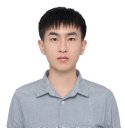
 Kun Cheng
· 2 previous affiliations
- Alibaba Group (China)Since 2026
- Researcher · Since 2026
- Xidian University2016–2025
- PhD student · 2020–2025
- Undergrad student · 2016–2020
3 other authors named Kun Cheng: Kun Cheng (Qufu Normal University · 3 papers), Kun Cheng (Beijing University of Post and Telecommunication · 2 papers), Kun Cheng (mthreads · 1 paper)
Research Overview
Kun Cheng focuses on generative artificial intelligence, computer vision, and the optimization of deep learning architectures for high-fidelity media synthesis. Their work primarily addresses the computational efficiency and scalability of diffusion models, with specific applications in audio-driven video editing, image super-resolution, and face synthesis. Cheng’s research trajectory reflects a transition from distributed systems and cloud infrastructure toward the development of sophisticated generative frameworks that balance model performance with inference speed.
Research Trajectory
The early stages of Cheng’s research, around 2020, were centered on the reliability and performance of large-scale computational environments. This period involved work on Robust Isolation for Multi-Tenant Virtualized Infrastructure, addressing the challenges of maintaining logical boundaries between workloads in cloud computing. During this time, Cheng also participated in research regarding Root Cause Localization for Cascading Microservice Failures, focusing on the complexities of failure propagation in distributed architectures. These foundational interests in system efficiency and automated analysis provided a technical basis for later work in optimizing large-scale neural models.
In 2022, Cheng shifted focus toward generative computer vision, specifically the problem of audio-visual synchronization. This transition was marked by the development of VideoReTalking: Audio-based Lip Synchronization for Talking Head Video Editing In the Wild, which sought to improve the realism of synthetic lip movements in unconstrained video environments. This work established a focus on sequential generative pipelines that decompose complex tasks—such as facial expression modification and identity preservation—into manageable sub-problems.
The year 2023 appears as a period of interdisciplinary application, where Cheng’s work intersected with environmental and biological informatics. This included participation in research themes such as Unmixing Chemical Fingerprints with Excitation Emission Matrix Spectroscopy, which utilizes advanced spectroscopy to analyze complex organic mixtures. During this phase, Cheng’s research profile also included contributions to Restoring Soil Health through Integrated Biological and Organic Synergies and Bridging the Translational Gap in Agricultural Biotechnology. These projects focused on the application of computational methods to soil organic carbon depletion and the scaling of laboratory-based agricultural innovations to field environments. Additionally, Cheng’s work during this period touched upon Microbial Co-occurrence Network Analysis, applying network analysis to understand the stability of microbiome communities.
From 2024 onward, Cheng returned to core generative AI, focusing on the efficiency of diffusion models. This recent work addresses the "sampling bottleneck" in diffusion-based synthesis, exploring methods to reduce the iterative steps required for high-quality output. This focus is evident in research on one-step super-resolution and the integration of Mixture-of-Experts (MoE) architectures into Diffusion Transformers, representing a move toward more scalable and compute-efficient generative frameworks.
Current Directions
Cheng’s current research is concentrated on the scalability of Diffusion Transformers (DiT) and the optimization of high-resolution image synthesis. A primary area of interest is the development of architectures that can dynamically allocate computational resources based on the complexity of the input data and the specific stage of the denoising process. By integrating Mixture-of-Experts (MoE) modules, Cheng aims to create models that maintain high performance while reducing the number of active parameters during inference.
Another significant direction is the acceleration of diffusion-based super-resolution. Cheng is investigating time-aware distillation techniques that allow models to achieve high-fidelity image reconstruction in a single step, bypassing the traditional requirement for hundreds of sampling iterations. This work is critical for making diffusion models viable for real-time applications in public security, media editing, and mobile computing.
Representative Work
In VideoReTalking: Audio-based Lip Synchronization for Talking Head Video Editing In the Wild, Cheng (as first author) proposed a system for editing talking head videos where the lip movement is synchronized with a target audio track. The research addresses the limitations of previous methods that struggled with "in the wild" videos containing varied poses and lighting. The system utilizes a three-stage pipeline: expression editing, lip-sync generation, and identity-preserving enhancement. By decoupling these components, the framework achieves higher synchronization accuracy and visual quality than end-to-end models that attempt to learn these transformations simultaneously.
Cheng’s work on Diff-MoE: Diffusion Transformer with Time-Aware and Space-Adaptive Experts introduces a scalable architecture for image generation. As first author, Cheng integrated a Mixture-of-Experts (MoE) framework into the Diffusion Transformer. The core innovation of Diff-MoE is its ability to adaptively select experts based on both the spatial content of the image and the temporal stage of the diffusion process. Since different levels of image detail are resolved at different timesteps, the model uses dedicated timestep conditioning to ensure that computational effort is concentrated where it is most effective. This approach significantly reduces the active parameter count while maintaining state-of-the-art generation quality.
In the domain of image enhancement, Cheng contributed to One Step Diffusion-based Super-Resolution with Time-Aware Distillation. This research addresses the high latency of diffusion-based super-resolution (SR) models. As a co-author, Cheng participated in the development of a knowledge distillation method that aligns a student model with a teacher model across various timesteps. Unlike standard distillation that relies on pixel-level loss, this method recognizes that diffusion models prioritize different information (such as global structure versus fine texture) at different stages of denoising. The resulting model enables high-quality SR in a single sampling step, making the technology more practical for latency-sensitive applications.
Cheng also explored the synthesis of facial sketches in Integrating hybrid priors for face photo-sketch synthesis. This work focuses on the challenge of image-to-image translation between the photo and sketch domains, which is often hampered by limited training data and the difficulty of capturing instance-level details. The research proposes the integration of hybrid priors—combining parametric deep learning with non-parametric components—to better capture the nuances of facial features. This is particularly relevant for sketch-to-photo synthesis, a task with significant implications for forensic science and public security.
The breadth of Cheng’s work, from the systems-level challenges of multi-tenant clouds to the fine-grained details of facial synthesis, indicates a consistent interest in how complex computational structures can be optimized for reliability and performance. While the 2023 interdisciplinary work in soil health and fluorescence fingerprinting represents a divergence into environmental informatics, the most recent contributions to Diffusion Transformers and super-resolution suggest a consolidated focus on the next generation of efficient generative AI.
Profile updated
Loading new papers…
Other researchers whose papers cluster into the same research directions — a proxy for overlapping technical interests and shared intellectual neighborhoods.
See something wrong? Report a mistake