

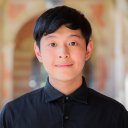
 Kuan Heng Lin
· 6 previous affiliations
- Columbia UniversitySince 2025
- PhD student · 2025–2030
- Current
- Netflix Eyeline Labs2025
- Intern · 2025
- Eyeline2025
- Research Intern · 2025
- AI Advisor · 2024–2025
- Undergraduate Researcher | Zhou Lab · 2023–2025
- Bachelor of Science - BS, Computer Science, minor in Mathematics · 2021–2025
- AI President · 2023–2024
- Program Development Team | Learning Assistant Program · 2023
- AI Workshops Officer · 2022–2023
- Assistant Managing Editor of Review · 2022
- Discover2021–2025
- Undergrad student · 2021–2025
- Snap Inc.2024
- Intern · 2024
Research Overview
Kuan Heng Lin focuses on the understanding and control of multimodal generative models, with an emphasis on text-to-image and text-to-video diffusion architectures. His early work explored natural language processing for social network extraction, while his recent trajectory centers on developing training-free frameworks for precise spatial and structural control over visual generation. Currently, he investigates methods to decouple style from content to facilitate intuitive human interaction with generative systems.
Research Trajectory
Kuan Heng Lin's early research involved natural language processing and computational social science. In 2020, he contributed to Applying Social Network Extraction With Named Entity Recognition to the Examination of Political Bias Within Online News Articles, which utilized named entity recognition to map social networks and analyze political bias in online media.
Transitioning into computer vision and the controllability of generative models during his studies at UCLA and subsequently at Columbia University, his focus shifted toward methods that avoid the computational overhead of fine-tuning large-scale architectures. In the domain of visual generation, he has worked extensively on techniques that manipulate the internal representations of diffusion models to guide their outputs.
With collaborators, he developed FreeControl: Training-Free Spatial Control of Any Text-to-Image Diffusion Model with Any Condition. This framework enables precise spatial control over text-to-image diffusion models without requiring expensive fine-tuning or auxiliary modules like ControlNet. By leveraging the internal feature subspaces of pre-trained models, the approach facilitates zero-shot control across diverse architectures—including SDXL and SD 1.5—and modalities such as point clouds, meshes, and poses, while maintaining strong alignment with text prompts. This work contributes to the broader research direction of Decoupling Style from Content in Diffusion Models.
Building on these training-free paradigms, he introduced Ctrl-X: Controlling Structure and Appearance for Text-To-Image Generation Without Guidance. This framework allows users to dictate both the structure and appearance of generated images using reference images, entirely bypassing the slow optimization steps characteristic of prior guidance-based methods. The resulting plug-and-play solution achieves significant inference speedups and is applicable to both text-to-image and text-to-video diffusion models. This advancement aligns with work in the area of Repurposing Pretrained Diffusion Models for Visual Perception, demonstrating how internal diffusion representations can be harnessed for structural control.
Current Directions
The most recent papers in the evidence address the challenge of making large-scale diffusion models more controllable and interactive without incurring the costs of retraining or heavy inference-time optimization. Recent work investigates training-free and guidance-free frameworks that manipulate the internal feature spaces of pre-trained models to achieve precise spatial, structural, and appearance control. Moving forward, this research aims to extend these zero-shot control mechanisms across diverse modalities, including text-to-video generation, to enable more intuitive and human-centric interactions with multimodal generative systems.
Profile updated
Loading new papers…
Other researchers whose papers cluster into the same research directions — a proxy for overlapping technical interests and shared intellectual neighborhoods.
See something wrong? Report a mistake