

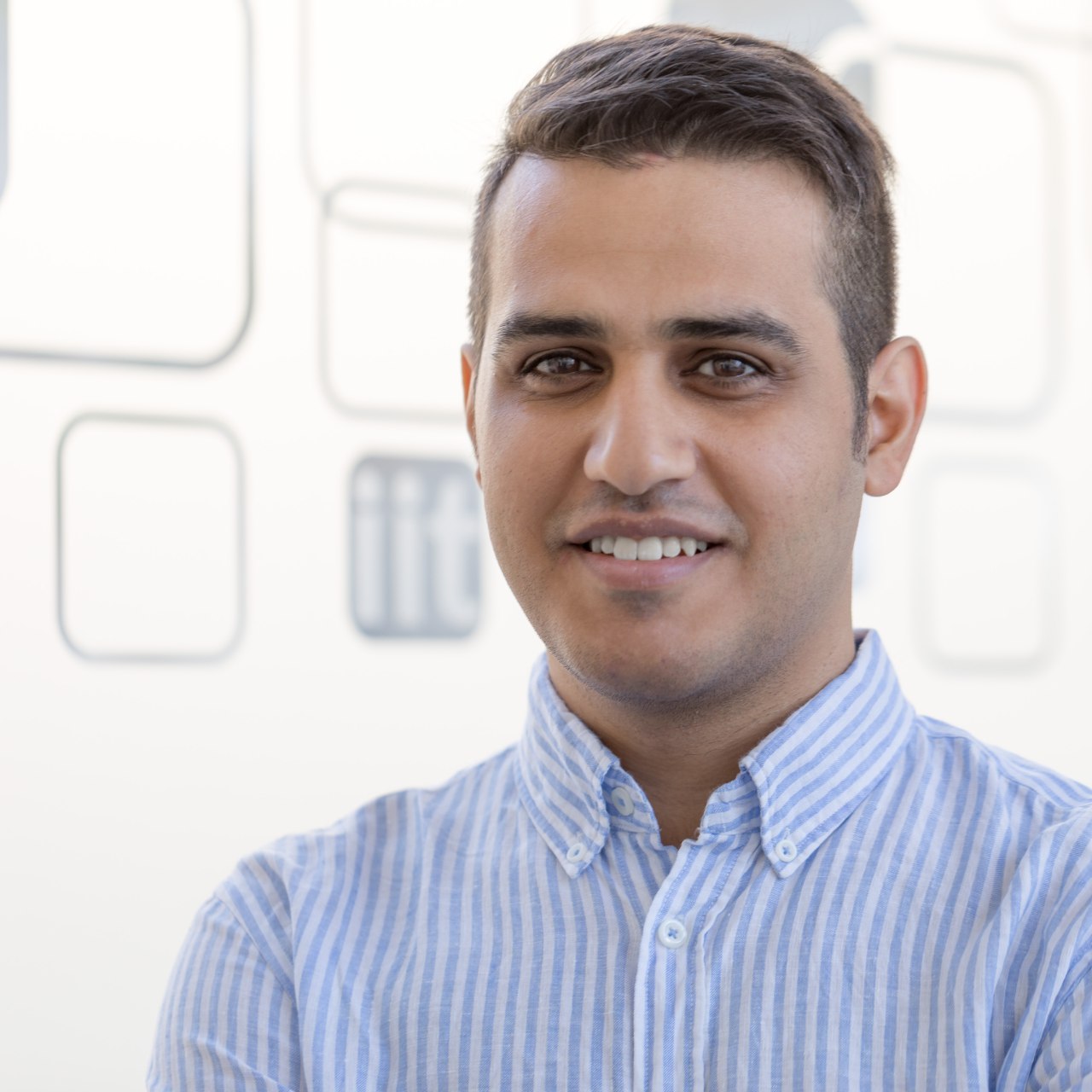
 Kourosh Darvish
· 7 previous affiliations
- University of TorontoSince 2022
- Researcher · Since 2024
- Postdoctoral Researcher · 2022–2024
- Postdoc · 2022–2023
- Acceleration ConsortiumSince 2024
- Staff Scientist · Since 2024
- Italian Institute of Technology2018–2022
- Postdoctoral Researcher · 2018–2022
- Postdoc · 2019–2022
- Research Fellowship · 2018–2019
- University of Genoa2015–2018
- PhD Candidate · 2015–2018
- Maron Medisa Medical Company2014–2015
- Research Engineer · 2014–2015
- Sharif University of Technology2012–2014
- MS student · 2012–2014
- K.N.Toosi University of Technology2008–2012
- Undergrad student · 2008–2012
Research Overview
Kourosh Darvish focuses on robotic manipulation, task and motion planning, and the integration of large language models into autonomous systems. His collaborative work spans from automating chemistry laboratory experiments to developing verifier-assisted prompting techniques for robot task programming. Recently, he has contributed to methods for generalizable object placement using synthetic data and vision-language models.
Research Trajectory
Based on the available corpus, which consists of a select number of collaborative publications between 2022 and 2025, Darvish's research trajectory demonstrates a consistent involvement in advancing autonomous robotic systems. His contributions primarily appear as part of larger research teams, focusing on bridging high-level reasoning with low-level robotic execution.
In 2022, Darvish contributed to research addressing the automation of complex, multi-step physical processes. As a co-author on An Adaptive Robotics Framework for Chemistry Lab Automation, he participated in the development of a robotic manipulation framework designed to autonomously execute chemistry experiments. This work utilized high-level abstract descriptions of experiments and applied constrained task and motion planning, specifically leveraging PDDLStream solvers, to prevent collisions and spillage in a laboratory environment.
The following year, his collaborative efforts shifted toward the intersection of natural language processing and robotics. He was part of the research team behind Errors are Useful Prompts: Instruction Guided Task Programming with Verifier-Assisted Iterative Prompting. This 2023 study tackled the challenge of generating low-level robot task plans from high-level natural language instructions, particularly in domains where specific language data is scarce. The team proposed CLAIRIFY, an approach combining automatic iterative prompting with program verification to ensure that the code generated by large language models is syntactically valid and respects environmental constraints.
By 2025, Darvish's collaborative work expanded into the research direction of Zero-Shot Transfer from Simulation to Physical Hardware, focusing on robust manipulation policies trained in virtual environments. He co-authored AnyPlace: Learning Generalizable Object Placement for Robot Manipulation, a study introducing a two-stage method for predicting feasible placement poses across diverse object geometries. Trained entirely on synthetic data, the approach uses a Vision-Language Model to identify approximate placement regions before applying a low-level model to capture precise, multimodal placement poses.
Current Directions
The most recent papers in the evidence indicate an ongoing focus on bridging the gap between simulated training environments and real-world robotic manipulation. Recent work investigates how synthetic datasets and multimodal foundation models, such as Vision-Language Models, can be combined to solve complex spatial reasoning tasks like generalized object placement. A central theme of this current direction involves reducing the reliance on extensive real-world fine-tuning by developing robust, simulation-trained policies that can successfully interpret diverse physical geometries and environmental constraints.
Profile updated
Loading new papers…
Other researchers whose papers cluster into the same research directions — a proxy for overlapping technical interests and shared intellectual neighborhoods.
See something wrong? Report a mistake