

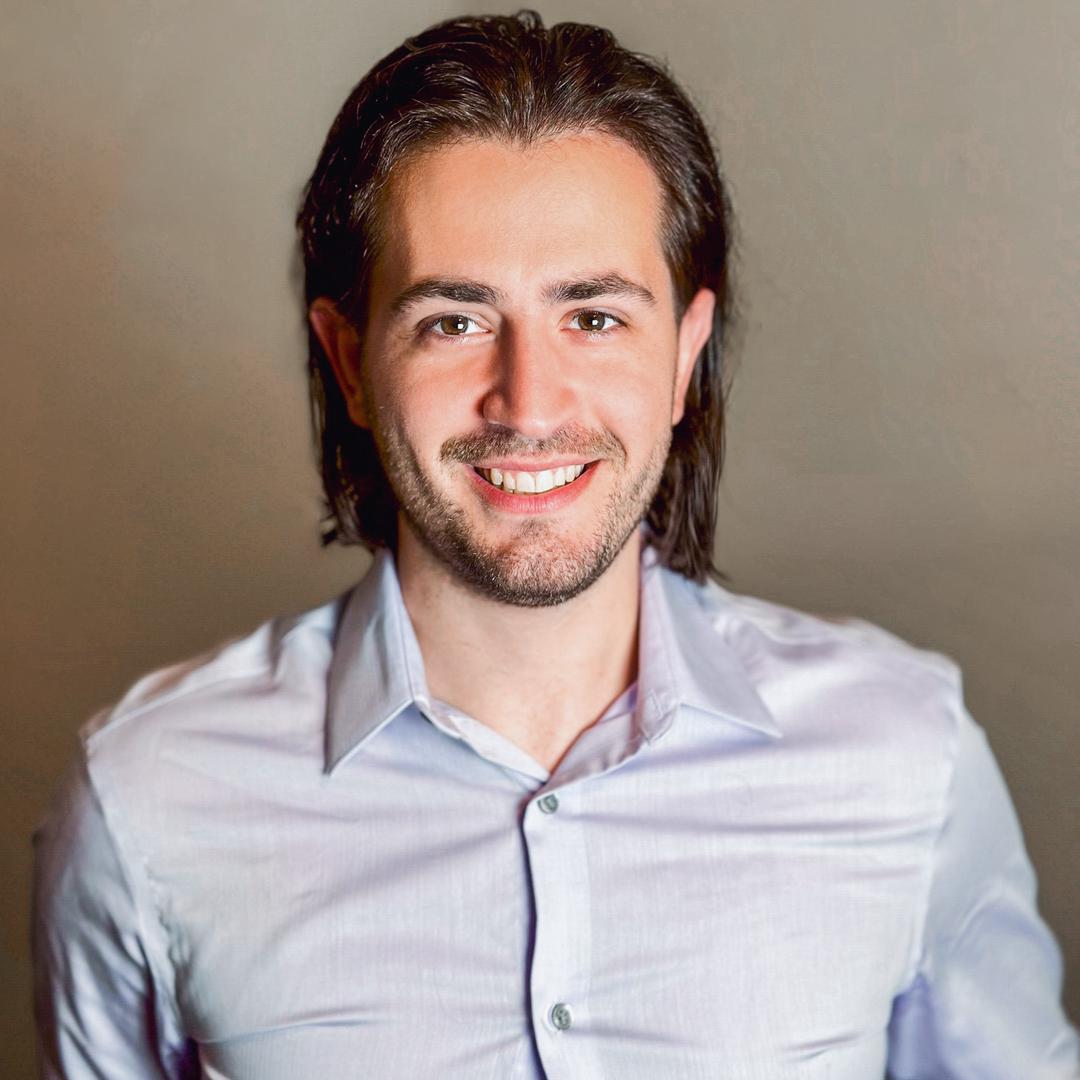
 Konstantinos Stavropoulos
· 2 previous affiliations
- The University of Texas at AustinSince 2021
- PhD student · Since 2021
- Undergrad student · 2015–2020
Research Overview
Konstantinos Stavropoulos focuses on theoretical machine learning, robust statistics, and learning under distribution shift. His work develops efficient algorithms with provable guarantees that relax the strong distributional assumptions traditionally required in learning theory. Recently, his research emphasizes testable learning frameworks and robust classification models capable of handling heavy data contamination.
Research Trajectory
Stavropoulos’s early work addressed foundational problems in statistical learning and probability. He developed algorithms for the research direction of Learning and Aggregating Incomplete Preference Rankings, culminating in Aggregating Incomplete and Noisy Rankings (2021). This work introduced a selective Mallows model to learn true orderings from sparse and noisy pairwise comparisons, establishing asymptotically tight sample complexity bounds. Following this, he investigated the sample complexity and covering properties of integer-valued random variables with infinite support in Learning and Covering Sums of Independent Random Variables with Unbounded Support (2022).
By 2023, his focus expanded to agnostic learning under relaxed distributional assumptions. In Agnostically Learning Single-Index Models using Omnipredictors, he and his collaborators provided algorithms for learning single-index models with arbitrary monotone and Lipschitz activations. This approach required only bounded second moments rather than the stricter anticoncentration assumptions typical in prior literature.
A major theme in Stavropoulos’s trajectory is the development of algorithms that perform reliably under distribution shift. He helped formalize a new paradigm in Testable Learning with Distribution Shift (2024). This framework departs from relying on hard-to-compute distance metrics between training and test distributions, instead offering efficient algorithms to certify a classifier's performance. This work contributed to the broader area of The Complexity Gap Between Learning and Verification and addressed challenges related to The Intractability of Total Variation Distance in High Dimensions. Building on this model, he explored specific concept classes in Learning Intersections of Halfspaces with Distribution Shift: Improved Algorithms and SQ Lower Bounds, advancing the research direction of Agnostic Learning with Adversarial Label Noise. During this period, he also participated in the design of universal algorithms for related hypothesis classes, as seen in An Efficient Tester-Learner for Halfspaces.
To circumvent computational hardness results in agnostic learning, Stavropoulos utilized smoothed analysis. In Smoothed Analysis for Learning Concepts with Low Intrinsic Dimension, he demonstrated that requiring a learner to compete only with classifiers robust to small Gaussian perturbations enables efficient learning for multi-index models. He also tackled malicious noise models, where both inputs and labels can be adversarially corrupted. His paper Learning Constant-Depth Circuits in Malicious Noise Models provided robust algorithms matching the performance of noise-free settings, contributing to the areas of Iterative Data Refinement to Prevent Outlier Masking and Reducing the Exponents of Theoretically Tractable Algorithms.
In 2025, his research continued to push the boundaries of robust statistics and deep learning theory. He extended guarantees under shifting environments to deep learning architectures in Learning Neural Networks with Distribution Shift: Efficiently Certifiable Guarantees. Addressing extreme data corruption, he co-authored The Power of Iterative Filtering for Supervised Learning with (Heavy) Contamination, which introduced iterative polynomial filtering to handle scenarios where adversarial data outnumbers clean data. He further resolved long-standing theoretical bottlenecks in robust classification with A Fully Polynomial-Time Algorithm for Robustly Learning Halfspaces over the Hypercube, bypassing traditional anti-concentration requirements. In the domain of high-dimensional statistics, he investigated sparse signal recovery in Sparse Linear Regression is Easy on Random Supports, showing that random support selection allows for near-optimal sample complexity even with ill-conditioned design matrices. Finally, he formalized metrics for decision-maker trust in predictive models in Efficient Calibration for Decision Making, demonstrating that structured adjustments enable practical auditing and omniprediction.
Current Directions
The most recent papers in the evidence address the theoretical limits of learning under extreme data corruption and distribution shift. Recent work investigates iterative filtering techniques capable of recovering signals even when adversarial contamination outweighs clean data. Additionally, Stavropoulos is exploring the certifiability of neural networks in shifting environments and developing fully polynomial-time algorithms for robustly learning fundamental concept classes, such as halfspaces over the Boolean hypercube. His current focus also extends to the efficient calibration of predictive models, formalizing how decision-makers can practically audit and adjust predictors to minimize downstream losses.
Profile updated
Loading new papers…
Other researchers whose papers cluster into the same research directions — a proxy for overlapping technical interests and shared intellectual neighborhoods.
See something wrong? Report a mistake