

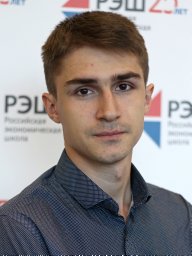
 Konstantin Sobolev
· 10 previous affiliations
- Fusion BrainSince 2024
- Researcher · Since 2024
- Fusionbrain labSince 2024
- Researcher, Group Lead · Since 2024
- Lomonosov Moscow State UniversitySince 2025
- Researcher · Since 2025
- Samsung Electronics (South Korea)2022–2024
- Leading Engineer · 2022–2024
- Samsung (South Korea)2022–2024
- Researcher · 2022–2024
- Research Engineer · 2022
- Research Intern · 2019–2022
- PhD student · 2018–2022
- VEON2018–2019
- Data Scientist · 2018–2019
- Virtuozzo2017–2018
- Researcher · 2017–2018
- Master's degree, Applied mathematics and physics · 2016–2018
- Undergrad student · 2012–2016
Research Overview
Konstantin Sobolev focuses on neural network compression, parameter-efficient adaptation, and generative model optimization. His early work explored tensor decomposition techniques to reduce the computational cost of convolutional networks while maintaining numerical stability. More recently, he investigates parameter-efficient fine-tuning for diffusion models and the alignment of vision-language systems.
Research Trajectory
Sobolev's early research concentrated on reducing the computational overhead of deep neural networks through advanced tensor methods. In 2020, he contributed to Stable Low-Rank Tensor Decomposition for Compression of Convolutional Neural Network, which addressed the problem of degeneracy in Canonical Polyadic (CP) tensor decomposition. By mitigating the numerical instability caused by diverging components, this work improved the fine-tuning of compressed convolutional neural networks. Continuing in this domain, he collaborated on Canonical Polyadic Tensor Decomposition With Low-Rank Factor Matrices, proposing an algorithm that automatically determines factor matrix ranks to bound fitting errors while maintaining a small parameter count. He further advanced the area of Tensor Factorization for Parameter Efficient Model Adaptation with How to Train Unstable Looped Tensor Network, developing stabilization techniques for Tensor Chains to enable more robust compression of convolutional architectures.
Transitioning toward scenarios where original training data is unavailable, Sobolev introduced FRanDI: Data-Free Neural Network Compression via Feature Regression and Deep Inversion. This framework synthesizes data using deep inversion and applies feature regression to recover model performance, contributing to the research direction of Compressing Neural Networks Without Original Data and the broader area of Reconstructing Training Data from Batch Normalization Statistics.
In recent years, his focus has expanded to encompass the architecture and alignment of generative models. He participated in evaluating temporal consistency modules and frame interpolation for text-to-video generation in ImproveYourVideos: Architectural Improvements for Text-to-Video Generation Pipeline. Concurrently, he contributed to the area of Rationale First Automated Evaluation through Listener-Rewarded Thinking in VLMs for Image Preferences, which developed a reinforcement learning framework where an independent vision-language model evaluates the reasoning process of a primary model to better align image generation with human intent.
As a principal investigator, Sobolev has recently guided research on parameter-efficient adaptation for diffusion models. He oversaw the development of T-LoRA: Single Image Diffusion Model Customization Without Overfitting, a timestep-dependent low-rank adaptation framework designed to personalize diffusion models from a single concept image while mitigating overfitting at higher diffusion timesteps. He also directed work on Calibri: Enhancing Diffusion Transformers via Parameter-Efficient Calibration, optimizing scaling parameters within Diffusion Transformer (DiT) blocks to improve image quality and inference speed. Alongside these generative modeling efforts, he has continued to support work in Preserving Model Capabilities Under Aggressive Compression, collaborating on Lightweight Attribute Localizing Models for Pedestrian Attribute Recognition to compress deep neural networks for resource-constrained devices by preserving gradient directions.
Current Directions
The most recent papers in the evidence address the efficient adaptation and alignment of large-scale generative architectures. A primary focus is the parameter-efficient customization of diffusion models and Diffusion Transformers (DiTs), specifically designing methods that allow for high-quality, personalized image generation without the computational burden of full fine-tuning or the risk of overfitting to limited data. Additionally, recent work investigates the alignment of vision-language models using reinforcement learning and automated evaluation frameworks to better capture human preferences. Across these domains, a unifying theme remains the optimization of complex neural architectures to maximize performance while minimizing parameter updates and resource requirements.
Profile updated
Loading new papers…
Other researchers whose papers cluster into the same research directions — a proxy for overlapping technical interests and shared intellectual neighborhoods.
See something wrong? Report a mistake