

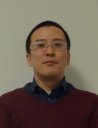
 Kimiaki Shirahama
· 6 previous affiliations
- Doshisha UniversitySince 2023
- Full Professor · Since 2025
- Associate Professor · 2023–2025
- 同志社大学Since 2023
- 教授 · Since 2025
- 准教授 · 2023–2025
- Kindai University2018–2023
- Associate Professor · 2018–2023
- University of Siegen2013–2018
- Postdoc · 2013–2018
- Muroran Institute of Technology2012–2014
- Assistant Professor · 2012–2014
- Kobe University2008–2011
- PhD student · 2008–2011
Research Overview
Kimiaki Shirahama focuses on computer vision and multimedia analysis, with specific applications ranging from biological image segmentation to video retrieval. Early collaborative work addressed the tracking and segmentation of complex biological structures, while more recent efforts center on ad-hoc video search and multimedia evaluation.
Research Trajectory
The available evidence outlines a research trajectory spanning from 2015 to 2019, characterized by an initial participation in biological image analysis and a subsequent shift toward video retrieval tasks. Because the documented publication record is sparse, this trajectory highlights specific collaborative projects rather than an exhaustive research program.
In early work, Shirahama contributed as a middle author to computer vision applications in biology. This included participation in the 2015 study Interactive tracking of insect posture. The following year, Shirahama was a co-author on Stem cell microscopic image segmentation using supervised normalized cuts. This research proposed a machine learning-based strategy to segment partially overlapping cells with curved edges. By utilizing loosely annotated images to train and optimize parameters for a Normalized Cut segmentation process, the work touched upon challenges relevant to the broader area of Scaling Noisy Data for Better Generalization. As a middle author on these papers, Shirahama's role reflects participation in interdisciplinary teams applying computer vision to complex biological datasets.
By 2019, the focus of the documented work shifted toward multimedia and video analysis. Shirahama led a team as first author on Kindai University and Kobe University at TRECVID 2019 AVS Task. The TRECVID Ad-hoc Video Search (AVS) task involves retrieving video shots that match complex text queries, a problem space closely aligned with the research direction of Cross-Modal Retrieval via Joint Visual-Semantic Embeddings. This transition indicates a move from static image segmentation to the challenges of dynamic, multi-modal content retrieval, intersecting with themes such as Sparse Temporal Sampling for Efficient Video Understanding.
Current Directions
The most recent paper in the evidence is from 2019, marking a distinct focus on ad-hoc video search and multimedia evaluation. Based on this recent work and associated research themes, current directions center on the semantic understanding of dynamic visual content. This encompasses challenges in bridging the semantic gap between text queries and video data, as well as extracting meaningful relationships from complex scenes. These efforts align with broader research areas, including the direction of Spatiotemporal Graph Representations for Video Reasoning and work in the area of Relational Reasoning for Group Activity Recognition.
Profile updated
| Title | Venue | Year |
|---|---|---|
| Kindai University and Kobe University at TRECVID 2019 AVS Task | Trecvid | 2019 |
| Stem cell microscopic image segmentation using supervised normalized cuts | ICIP | 2016 |
| Interactive tracking of insect posture | Pattern Recognition | 2015 |
Loading new papers…
Loading research neighbors…
See something wrong? Report a mistake