

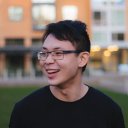
 Kevin Ta
· 5 previous affiliations
- WaabiSince 2023
- Senior Software Developer | Localization & Calibration · Since 2025
- Researcher · 2023–2025
- Master Thesis · 2022
- Cruise2021–2022
- Sensor Calibration Intern · 2021–2022
- ETH Zurich2020–2022
- Master of Science - MS, Robotics, Systems, and Control · 2020–2022
- Research Assistant · 2020–2021
- University of British Columbia2014–2020
- Team Captain · 2015–2020
- Bachelor of Applied Science - BASc, Mechanical Engineering · 2014–2020
Research Overview
Kevin Ta focuses on multi-sensor fusion, extrinsic calibration, and uncertainty estimation for autonomous systems. His work primarily addresses the integration of diverse sensing modalities—including lidars, event cameras, and frame-based cameras—to improve the robustness of perception and localization in robotics and autonomous driving. By leveraging the high temporal resolution of neuromorphic sensors and the geometric precision of lidar, Ta develops methods to synchronize and calibrate heterogeneous sensor suites, particularly in scenarios where traditional frame-based approaches face limitations due to motion blur or lighting conditions.
Research Trajectory
Ta’s research trajectory is characterized by a progression from specific sensor-to-sensor calibration problems toward broader frameworks for uncertainty-aware mapping and unified neural representations. In 2023, his work emphasized the fundamental challenge of extrinsic calibration between emerging neuromorphic technology and established lidar systems. This period focused on exploiting the unique properties of event cameras—such as high dynamic range and low latency—to create direct registration methods that do not rely on traditional, often fragile, temporal synchronization.
During the same period, Ta expanded his focus to include uncertainty modeling within the context of Simultaneous Localization and Mapping (SLAM). This shift involved moving beyond rigid geometric registration to consider the probabilistic reliability of sensor data. By incorporating uncertainty learning into dense neural SLAM, his work sought to improve the robustness of tracking and mapping by dynamically re-weighting sensor inputs based on their estimated reliability.
In 2024, Ta’s contributions transitioned toward large-scale multi-sensor systems and the application of differentiable scene representations. This phase of work involves participation in the development of comprehensive datasets for semantic perception under adverse conditions and the creation of unified calibration frameworks. These recent efforts suggest an interest in scaling calibration and perception methods to handle complex, real-world environments where environmental uncertainty and sensor diversity are primary challenges.
Current Directions
Ta’s current work appears to be situated at the intersection of differentiable rendering and autonomous vehicle (AV) sensor suites. A significant portion of this focus is directed toward "effortless" calibration—reducing the reliance on manual infrastructure or controlled environments by using neural representations to achieve geometric and photometric consistency across multiple views. This direction aligns with the broader industry need for scalable calibration solutions for large vehicle fleets.
Additionally, Ta continues to contribute to the field of semantic perception under uncertainty. By participating in the creation of multi-modal datasets that include non-camera modalities, he supports the development of visual perception systems capable of maintaining performance in adverse weather and lighting. This work emphasizes the importance of panoptic annotations and synchronized multi-sensor data in achieving higher levels of driving automation.
Representative Work
Ta’s primary contribution to sensor calibration is detailed in L2E: Lasers to Events for 6-DoF Extrinsic Calibration of Lidars and Event Cameras. As the lead author, Ta proposed a method for the 6-DoF extrinsic calibration of lidars and event cameras that operates without the need for strict temporal coupling. The approach exploits the ability of event cameras to directly register lidar laser returns, using information-based correlation methods to optimize the extrinsic parameters. This work is significant for its use of the high temporal resolution of neuromorphic sensors to solve the correspondence problem between asynchronous data streams.
In the domain of neural SLAM, Ta served as a key contributor to UncLe-SLAM: Uncertainty Learning for Dense Neural SLAM. This research introduced an online framework for estimating pixel-wise uncertainties for depth inputs in dense SLAM systems. By training the uncertainty estimation in a self-supervised manner from 2D input data, the framework allows for the dynamic re-weighting of tracking and mapping losses. This method addresses the inherent noise in multi-sensor inputs, particularly when certain image regions provide more reliable geometric information than others.
Ta also participated in the development of UniCal: Unified Neural Sensor Calibration, a framework designed for the calibration of multiple lidars and cameras on self-driving vehicles. The method utilizes a differentiable scene representation to render sensor data that is both geometrically and photometrically consistent. This approach aims to replace traditional fiducial-based calibration, which is often difficult to scale, with a more automated process suitable for fleet-wide deployment.
Furthermore, Ta contributed to the creation of MUSES: The Multi-Sensor Semantic Perception Dataset for Driving under Uncertainty. This work involved the assembly of a synchronized multi-modal dataset specifically designed for driving in adverse conditions. By providing 2D panoptic annotations across diverse weather scenarios, the dataset facilitates the development of robust semantic visual perception systems that can leverage non-camera modalities to resolve uncertainty in challenging environments.
Profile updated
Loading new papers…
Other researchers whose papers cluster into the same research directions — a proxy for overlapping technical interests and shared intellectual neighborhoods.
See something wrong? Report a mistake