

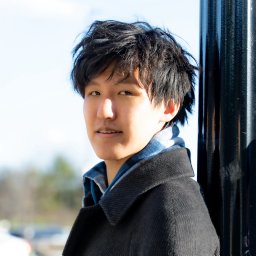
 Kevin Li
· 9 previous affiliations
- PhD Student Researcher · Since 2023
- Harvard Medical SchoolSince 2023
- Doctor of Philosophy - PhD, Computer Science & Medical Engineering/Medical Physics · 2023–2028
- Massachusetts Institute of TechnologySince 2023
- PhD student · 2023–2029
- University of California, Berkeley2020–2023
- CS 61A Head TA · 2022–2023
- CS 61A TA · 2021–2022
- CS 61A Course Staff · 2020–2021
- Undergrad student · 2019–2023
- Intern · 2022
- AI for Life in Space Research Intern · 2022
- Computational Neuroscience Research Apprentice · 2020–2021
- Aging Research Scholar · 2021
2 other authors named Kevin Li: Kevin Li (Carnegie Mellon University · 7 papers), Kevin Li (University of California, Berkeley · 1 paper)
Research Overview
Kevin Li focuses on machine learning for high-dimensional biological data, reinforcement learning for safety-critical systems, and time series reasoning. His early work developed explainable artificial intelligence and transfer learning methods to decode complex multi-omics and transcriptomic datasets. More recently, his research investigates controllable sequence editing for clinical trajectories and zero-shot policies for safe autonomous control.
Research Trajectory
Li’s early work addressed computational challenges in processing large-scale neural recordings. In 2020, he contributed to the development of YASS: Yet Another Spike Sorter applied to large-scale multi-electrode array recordings in primate retina. This spike sorting pipeline was designed to handle the complexities of multi-electrode array data, utilizing neural networks for robust spike detection and denoising. The system incorporated advanced deconvolution techniques to accurately separate and identify overlapping neural signals, even in challenging environments characterized by high firing rates.
By 2023, Li’s focus expanded into computational biology and genomics, where he led efforts to extract meaningful insights from highly constrained datasets. This work significantly advanced the research direction of Learning from High Dimensional Low Sample Size Biomedical Data. In Using Guided Transfer Learning to Predispose AI Agent to Learn Efficiently from Small RNA-sequencing Datasets, he introduced a guided transfer learning approach to overcome the limitations of small-scale genomic studies. By pre-training models on over 400,000 RNA-sequencing samples and employing a novel "scouting" method to learn inductive biases, the approach achieved high accuracy on a minimal 12-sample space biology dataset where traditional models failed. This methodology also intersected with the broader area of Parameter Importance Regularization for Continual Learning.
Continuing his focus on space biology and physiological adaptation, Li developed explainable artificial intelligence techniques in Explainable machine learning identifies multi-omics signatures of muscle response to spaceflight in mice. By integrating multi-omics data with physiological measurements, he identified specific protein signatures that explain why different muscle types exhibit varying responses to microgravity. This research contributed to methods in the area of Distilling Neural Networks into Closed Form Expressions and the related field of Discovering Governing Equations via Sparse Symbolic Regression. Concurrently, Li participated in neurodegenerative disease research, specifically investigating the role of genetic variants in Alzheimer's disease. He contributed to APOE3ch alters microglial response and suppresses Aβ-induced tau seeding and spread and its subsequent 2024 expansion, APOE3 Christchurch influences amyloid induced tau seeding and spreading via effects on microglia. These studies characterized how the APOE3 Christchurch variant influences the microglial response to amyloid-beta plaques, thereby suppressing the subsequent seeding and spreading of tau proteins.
In 2025, Li’s research broadened into reinforcement learning and the formalization of analytical frameworks. Addressing safety-critical applications, he introduced Prompting Decision Transformers for Zero-Shot Reach-Avoid Policies. This work focused on enabling autonomous agents—such as robotic arms or self-driving vehicles—to navigate toward goals while strictly avoiding designated hazard regions, contributing to the broader research direction of Safe Optimization and Control in Non-Convex Environments. In parallel, he co-developed PRAXA: A Framework for What-If Analysis, which synthesized literature across 141 research papers to establish a standardized grammar for hypothetical scenario exploration. By moving beyond inconsistent jargon like "counterfactuals" versus "inverse modeling," PRAXA provided structured methodologies relevant to the area of Sequential Tool Use for Agentic Reasoning.
Most recently, in 2026, Li has focused on generative modeling and reasoning for complex time series data. He co-authored Controllable Sequence Editing for Biological and Clinical Trajectories, which presented CLEF, a generative model designed to simulate the temporal effects of specific interventions—such as drug dosages or surgical procedures—on clinical outcomes. By learning temporal concepts that represent rates of change, the model allows for precise control over the timing and variables affected by an edit, improving predictions for both immediate and delayed future outcomes. Additionally, he collaborated on Adaptive Time Series Reasoning via Segment Selection, which introduced the ARTIST approach. Rather than processing entire sequences simultaneously, this method actively selects relevant segments of a time series to answer natural language questions, improving both accuracy and computational efficiency across multiple benchmarks.
Current Directions
The most recent papers in the evidence indicate a focus on sequential decision-making, time series reasoning, and controllable generative modeling for clinical and biological applications. Li is investigating methods to simulate the temporal effects of interventions on biological trajectories, utilizing generative models that learn specific rates of change to predict delayed outcomes accurately. Concurrently, his work addresses adaptive reasoning over complex time series by selectively processing relevant segments to answer natural language queries, optimizing both performance and efficiency. Furthermore, his recent contributions to reinforcement learning emphasize zero-shot policies for safety-critical reach-avoid tasks, ensuring that autonomous agents can reliably navigate complex environments while adhering to strict safety constraints.
Profile updated
Loading new papers…
Other researchers whose papers cluster into the same research directions — a proxy for overlapping technical interests and shared intellectual neighborhoods.
See something wrong? Report a mistake