

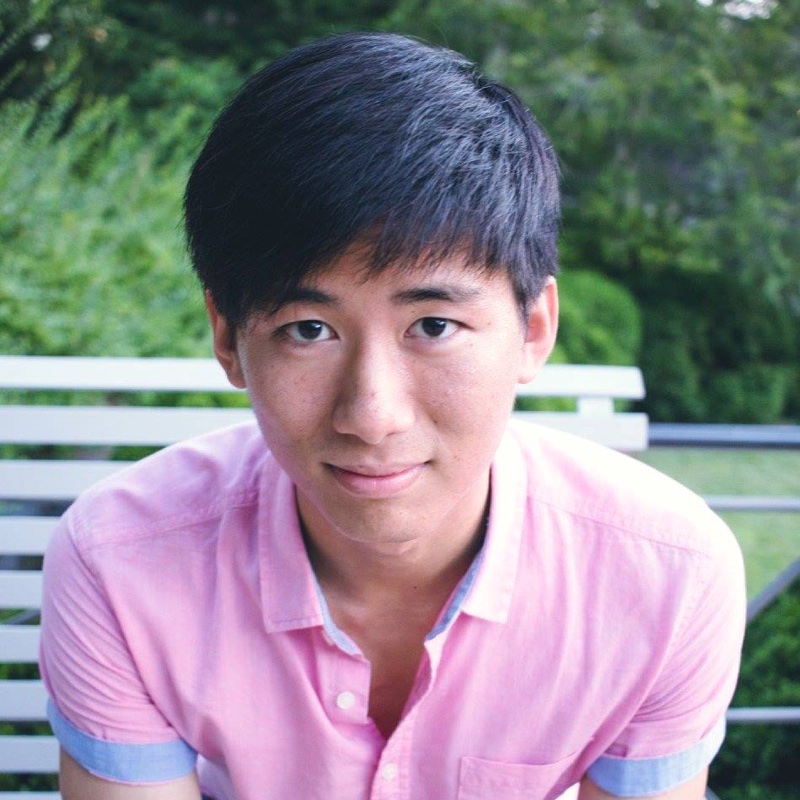
 Kevin J Liang
· 4 previous affiliations
- Meta (United States)Since 2019
- Research Scientist · Since 2020
- Software Engineer Intern, PhD · 2019
- Duke University2011–2020
- PhD student · 2015–2020
- Undergrad student · 2011–2015
- Infinia ML (United States)2018
- Data Scientist Intern, PhD · 2018
- Software Engineering Intern, PhD · 2017
Research Overview
Kevin J Liang focuses on the development of adaptive and robust machine learning systems, with a primary emphasis on computer vision applications in dynamic and resource-constrained environments. His work addresses the fundamental challenges of model generalization, specifically how neural networks can learn from limited data, adapt to sequential tasks without forgetting, and maintain robustness against adversarial perturbations. His recent research has transitioned toward egocentric (first-person) vision, exploring long-term object tracking and action prediction in complex, real-world scenarios where temporal consistency and partial observability are critical.
Research Trajectory
The trajectory of Liang’s research reflects a systematic progression from foundational model robustness and privacy to the development of sophisticated adaptive learning frameworks, and finally to the application of these techniques in large-scale egocentric video analysis.
In 2020, Liang’s work was primarily concerned with the vulnerabilities and privacy constraints of deep learning models. This period involved investigating how adversarial examples transfer between different architectures and how to protect data in distributed training environments. Research into feature distributions revealed that perturbations targeting intermediate representations could enhance the transferability of adversarial attacks, providing a more rigorous way to evaluate model security. Simultaneously, Liang participated in the development of federated learning protocols, such as WAFFLe: Weight Anonymized Factorization for Federated Learning, which sought to mitigate the risks of whitebox access to local model parameters in privacy-sensitive domains.
By 2021, Liang’s focus shifted toward the problem of "learning to learn" and model flexibility. This phase was characterized by a heavy emphasis on zero-shot learning (ZSL), few-shot learning (FSL), and continual learning (CL). The core challenge addressed during this time was the rigid nature of standard supervised learning, which typically assumes a static dataset and a fixed label space. Liang explored how models could generalize to unseen categories by leveraging semantic attributes and how they could be updated sequentially without experiencing catastrophic forgetting. This work often employed Bayesian nonparametrics and hypernetworks to allow model architectures to expand or adapt dynamically based on the complexity of incoming data.
In 2022 and 2023, the research moved deeper into specialized computer vision tasks, particularly those involving spatiotemporal data. This included contributions to multilingual optical character recognition (OCR) and the development of transformer-based architectures for action prediction. A significant theme during this period was the management of incomplete information—whether due to resource constraints that prevent full-frame processing or the inherent occlusions found in first-person video.
Currently, Liang’s work is centered on egocentric vision and the understanding of skilled human activity. This involves the creation of large-scale datasets and benchmarks that capture the unique challenges of first-person perspectives, such as rapid camera motion, varying scales, and frequent object occlusions. This research direction aims to bridge the gap between third-person video understanding and the requirements of embodied AI agents that must interact with the world from a subjective viewpoint.
Current Directions
Liang’s current research is focused on three primary areas: egocentric visual tracking, spatiotemporal action prediction, and the analysis of skilled human activities from multi-view perspectives.
A major component of this work involves addressing the limitations of existing tracking datasets, which often fail to capture the long-term, high-motion nature of egocentric video. By developing benchmarks that emphasize these "in-the-wild" challenges, Liang’s work facilitates the creation of more resilient tracking algorithms for wearable devices and robotics.
Another active area of investigation is the use of "glimpse" mechanisms within transformer architectures. This approach acknowledges that in many real-world applications, processing high-resolution video at high frame rates is computationally prohibitive. Liang’s research explores how models can intelligently select and process narrow spatial glimpses to maintain high predictive accuracy for ongoing actions, even when global context is missing.
Finally, Liang is involved in large-scale collaborative efforts to understand skilled human activity. This includes participation in the Ego-Exo4D: Understanding Skilled Human Activity from First- and Third-Person Perspectives project, which provides a massive multimodal dataset for studying how humans perform complex tasks like sports, music, and repair. This work integrates first-person and third-person views to provide a comprehensive understanding of human-object interactions and procedural knowledge.
Representative Work
Adversarial Robustness and Feature Distributions
In the study Transferable Perturbations of Deep Feature Distributions, Liang and his collaborators investigated the transferability of adversarial examples. While many adversarial attacks are optimized for a specific source model, their effectiveness often diminishes when applied to a different target model. This research demonstrated that by perturbing the intermediate feature distributions rather than just the final output, it is possible to create more robust adversarial examples that transfer more effectively across different architectures. This work provided critical insights into how adversarial noise affects the internal representations of deep networks and suggested new avenues for evaluating and improving model robustness.
Continual and Zero-Shot Learning
The challenge of adapting models to new classes in a sequential manner was addressed in Meta-Learned Attribute Self-Gating for Continual Generalized Zero-Shot Learning. Standard zero-shot learning often suffers from a bias toward classes seen during training. Liang proposed a meta-learning approach that uses attribute self-gating to help the model distinguish between seen and unseen categories in a continual learning setting. This method allows for the constant adjustment of deployed models as they encounter a stream of new data, mitigating the risk of catastrophic forgetting while maintaining the ability to generalize to novel concepts via semantic attributes.
Few-Shot Learning with Hypernetworks
In Revisiting Linear Decision Boundaries for Few-Shot Learning with Transformer Hypernetworks, Liang explored alternatives to the standard nearest-neighbor classifiers used in few-shot learning. While ProtoNet-style classifiers are common, they are often context-independent and may not capture the nuances of a specific task. This research introduced a transformer-based hypernetwork that generates task-specific linear classifier weights. By leveraging the attention mechanism of transformers, the model can consider the relationship between all support examples in a task, leading to more flexible and accurate decision boundaries without the need for expensive task-specific fine-tuning.
Bayesian Nonparametrics for Model Expansion
To address the problem of determining model capacity in continual learning, Liang co-authored Continual Learning using a Bayesian Nonparametric Dictionary of Weight Factors. Many existing continual learning methods require the practitioner to manually decide how much to expand a model for each new task. This work proposed a principled approach using the Indian Buffet Process (IBP) prior, which allows the data itself to determine the necessary model complexity. By factorizing the neural network’s weight matrices and using the IBP to manage a dictionary of weight factors, the model can grow its capacity as needed to accommodate new information while preserving knowledge from previous tasks.
Online Action Prediction under Constraints
The development of GliTr: Glimpse Transformers with Spatiotemporal Consistency for Online Action Prediction represents a significant step toward resource-efficient video understanding. In many applications, an agent cannot observe an entire frame due to bandwidth or power constraints. Liang’s work on Glimpse Transformers (GliTr) enables a model to observe only narrow glimpses of a scene. The architecture uses spatiotemporal consistency to predict both the ongoing action and the most informative location for the next glimpse. This approach allows for effective action prediction based on partial information, making it highly suitable for embodied AI and mobile platforms.
Long-term Egocentric Tracking
Liang’s contribution to egocentric vision is exemplified by EgoTracks: A Long-term Egocentric Visual Object Tracking Dataset. Recognizing that traditional tracking datasets focus on short, third-person clips, this work introduced a dataset specifically designed for the challenges of first-person video. Egocentric tracking is characterized by frequent occlusions, objects leaving and re-entering the frame, and rapid changes in appearance due to camera motion. EgoTracks provides a benchmark for evaluating how well tracking algorithms can maintain object identity over long durations in these volatile environments, serving as a foundational resource for the development of more robust embodied AI systems.
Profile updated
Loading new papers…
Other researchers whose papers cluster into the same research directions — a proxy for overlapping technical interests and shared intellectual neighborhoods.
See something wrong? Report a mistake