

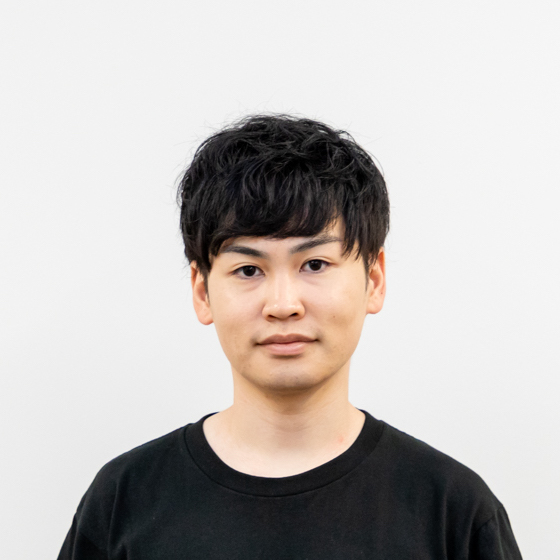
 Kento Sasaki
· 4 previous affiliations
- Turing.incSince 2023
- Researcher · Since 2023
- TURING株式会社Since 2022
- Research Enginner · Since 2023
- Software Engineer Intern · 2022–2023
- University of TsukubaSince 2021
- Master of Science - MS · 2023–2027
- MS student · Since 2023
- Current
- Bachelor of Arts - BA · 2021–2023
- National Institute for Materials Science2021
- Intern · 2021
Research Overview
Kento Sasaki focuses on the development and evaluation of vision-language models, with a particular emphasis on their application to autonomous driving and spatiotemporal reasoning. His work spans the creation of culturally grounded benchmarks, the construction of comprehensive vision-language-action datasets, and the analysis of model robustness against adversarial and typographic vulnerabilities. Recently, he investigates hierarchical reasoning for complex driving scenarios and the fundamental sensitivities of novel attention mechanisms.
Research Trajectory
Sasaki’s early work addresses the evaluation and adaptation of vision-language models (VLMs) for non-English contexts. In Heron-Bench: A Benchmark for Evaluating Vision Language Models in Japanese, he and his collaborators introduced an evaluation framework designed to test VLMs on Japanese cultural and linguistic nuances. This research contributes to the broader area of Culturally Grounded Benchmarks for Multilingual Evaluation and explores methods for The Dominance of Linguistic Priors in Vision Language Models. The project also provided an open-source baseline model to demonstrate how language-specific tuning can bridge the performance gap between regional tasks and massive English-centric models, touching upon techniques for Scaling Human Judgment with LLM Evaluators.
A major theme in Sasaki’s trajectory is the application of multimodal models to autonomous driving, specifically focusing on spatiotemporal understanding and action generation. He developed STRIDE-QA: Visual Question Answering Dataset for Spatiotemporal Reasoning in Urban Driving Scenes, a massive corpus of 16 million visual question-answering pairs based on Tokyo driving footage. By fine-tuning VLMs on this dataset, the research transformed models with poor predictive consistency into systems capable of precise 3D spatial localization and future motion forecasting. Expanding on the integration of perception and control, he participated in the creation of CoVLA: Comprehensive Vision-Language-Action Dataset for Autonomous Driving. This dataset uniquely combines vision, language, and action data to train Vision-Language-Action (VLA) models capable of generating coherent driving scene descriptions and predicting future trajectories.
Further advancing the interpretability of autonomous systems, Sasaki investigated narrative explanations of complex road events. In Hierarchical Reasoning with Vision-Language Models for Incident Reports from Dashcam Videos, he presented a strategy for generating human-interpretable incident reports from dashcam footage, moving beyond simple accident detection toward nuanced scene understanding. This work advances the research direction of Reasoning Through the Long Tail of Autonomous Driving.
Alongside domain-specific applications, Sasaki has contributed to foundational model efficiency. He collaborated on One-D-Piece: Image Tokenizer Meets Quality-Controllable Compression, which introduces a discrete image tokenizer designed for variable-length tokenization. By implementing a regularization mechanism that concentrates critical information at the head of the token sequence, the method allows for quality-controllable compression and more efficient token allocation.
Sasaki’s research also addresses the vulnerabilities of multimodal architectures. He contributed to the study of Typographic Vulnerabilities in Vision Language Models through Read or Ignore? A Unified Benchmark for Typographic-Attack Robustness and Text Recognition in Vision-Language Models. This work introduced a benchmark requiring models to selectively decide when to read text and when to ignore misleading typographic attacks placed inside an image, alongside a training method to build robustness without sacrificing text recognition capabilities.
Continuing this focus on model reliability, his subsequent research examines the fundamental sensitivities of novel architectural components. In Understanding Sensitivity of Differential Attention through the Lens of Adversarial Robustness, he oversaw an analysis of Differential Attention—a mechanism designed to reduce hallucinations by subtracting noisy context. The study revealed that the same subtractive structure that sharpens focus also creates a fragile principle, making the models significantly more vulnerable to targeted adversarial perturbations than standard attention mechanisms.
Current Directions
The most recent work in the evidence points toward a sustained focus on the adversarial robustness and architectural reliability of vision-language models. While earlier efforts concentrated on adapting these models for complex, domain-specific tasks like autonomous driving and spatiotemporal reasoning, current directions investigate the underlying vulnerabilities introduced by new attention mechanisms and multimodal integrations. This includes analyzing how techniques designed to reduce hallucinations might inadvertently increase a model's sensitivity to targeted perturbations. Additionally, ongoing research addresses the challenge of typographic attacks, seeking training paradigms that allow models to maintain strong text recognition capabilities while successfully ignoring adversarial visual text in complex environments.
Profile updated
Loading new papers…
Other researchers whose papers cluster into the same research directions — a proxy for overlapping technical interests and shared intellectual neighborhoods.
See something wrong? Report a mistake