

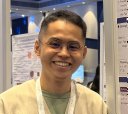
 Ken Kobayashi
· 1 previous affiliation
- Institute of Science TokyoSince 2022
- Associate Professor · Since 2024
- Current
- Assistant Professor · 2024
- Assistant Professor · 2022–2024
Research Overview
Ken Kobayashi focuses on the development of modeling techniques and algorithms for mixed-integer optimization, conic optimization, and their applications in machine learning and operations research. His work bridges the gap between theoretical mathematical programming and practical decision-making under uncertainty, with a particular emphasis on mixed-integer semidefinite optimization (MISDO) and multi-objective optimization. Currently, his research explores the intersection of mathematical optimization and reliable machine learning, including algorithmic recourse, counterfactual explanations, and the verification of deep neural networks.
Research Trajectory
The evolution of Kobayashi’s research reflects a transition from foundational multi-objective optimization techniques to the development of specialized algorithms for complex, constrained integer programs, and finally to the application of these methods within the machine learning pipeline.
Multi-objective Optimization and Pareto Fronts (2018–2020)
In the early stages of his career, Kobayashi’s work centered on approximating the Pareto front in multi-objective optimization (MOO). Traditional MOO methods often focus on finding a discrete set of points on the trade-off surface. Kobayashi and his collaborators introduced the Bézier simplex model as a means to describe the entire "trade-off surface" or Pareto front of simplicial problems. This approach, detailed in Bezier Simplex Fitting: Describing Pareto Fronts of Simplicial Problems with Small Samples in Multi-objective Optimization, utilized an "inductive skeleton fitting" algorithm to map high-dimensional trade-offs using limited sample points. This period also involved rigorous analysis of the Asymptotic Risk of Bezier Simplex Fitting, establishing the theoretical bounds and optimal sampling strategies for these geometric models.
Mixed-Integer Conic Optimization and Portfolio Theory (2020–2021)
Beginning around 2020, Kobayashi shifted focus toward the computational challenges of mixed-integer semidefinite optimization (MISDO). This class of problems is notoriously difficult due to the combination of discrete variables and non-linear, positive semidefinite (psd) constraints. He developed a branch-and-cut algorithm for solving mixed-integer semidefinite optimization problems, which utilized a cutting-plane approach to relax the psd constraint and iteratively impose valid inequalities.
This algorithmic expertise was subsequently applied to financial engineering, specifically in portfolio optimization. Kobayashi addressed the computational hurdles of the Bilevel cutting-plane algorithm for cardinality-constrained mean-CVaR portfolio optimization. This work tackled the dual challenges of cardinality constraints (limiting the number of assets) and large-scale scenario data in risk measures like Conditional Value-at-Risk (CVaR). This period aligns with broader research themes in Iterative Constraint Generation for Large Scale Optimization.
Robustness and Distributional Uncertainty (2021–2023)
As his work matured, Kobayashi increasingly integrated concepts of robustness into his optimization frameworks. He explored Distributionally Robust Optimization with Ambiguity Sets to account for the "optimizer’s curse," where models become hyper-tuned to noise in historical data. This led to the development of a Cardinality-constrained distributionally robust portfolio optimization model. By reformulating the problem as a MISDO and employing positive semidefinite matrix completion techniques, he demonstrated how to maintain global optimality while improving computational efficiency under Robust Decision Making Under Knightian Uncertainty. During this time, he also participated in research regarding Distributionally Robust Optimization with Probability Metric Uncertainty Sets and Modeling Heavy-Tailed Distributions and Tail Risk.
Machine Learning Explainability and Verification (2023–2026)
In recent years, Kobayashi has applied his optimization background to the reliability and interpretability of machine learning models. This includes work on Counterfactual Explanation with Missing Values, which addresses the practical challenge of providing algorithmic recourse when user data is incomplete. He also returned to multi-objective themes with Bézier Flow: a Surface-wise Gradient Descent Method for Multi-objective Optimization, a framework that treats MOO as the evolution of a continuous surface rather than a search for discrete points.
His most recent work addresses the scalability of Semidefinite Programming (SDP) for neural network verification. In Interior-Point Vanishing Problem in Semidefinite Relaxations for Neural Network Verification, he and his collaborators identified a fundamental numerical stability issue—the "interior-point vanishing problem"—that occurs when applying SDP to deep architectures. This research proposes methods to maintain strict feasibility, allowing for more precise robustness guarantees in high-stakes decision-making environments, a focus that overlaps with themes in Off-Policy Evaluation for Reinforcement Learning.
Current Directions
Kobayashi’s current research is concentrated on three primary pillars:
- Mixed-Integer Conic Optimization: Refining algorithms for MISDO to handle increasingly large and complex constraints, particularly in the context of industrial engineering and operations research.
- Algorithmic Recourse and Explainability: Developing mathematically rigorous methods for counterfactual explanations that remain robust to data imperfections and model uncertainty.
- Neural Network Verification: Overcoming the numerical and computational barriers of using conic relaxations to prove the safety and robustness of deep learning models.
Representative Work
Bezier Simplex Fitting: Describing Pareto Fronts of Simplicial Problems with Small Samples in Multi-objective Optimization This paper introduces the Bézier simplex as a geometric model for approximating the Pareto front. By exploiting the hierarchical structure of trade-off surfaces, the authors developed an inductive skeleton fitting algorithm that significantly reduces the number of samples required to describe high-dimensional surfaces compared to traditional point-wise methods.
A branch-and-cut algorithm for solving mixed-integer semidefinite optimization problems As the lead author, Kobayashi presents a specialized branch-and-cut framework for MISDO. The work establishes the convergence properties of a cutting-plane algorithm that dynamically adds valid inequalities for the positive semidefinite constraint, providing a foundational tool for solving optimization problems that involve both discrete choices and semidefinite constraints.
Bilevel cutting-plane algorithm for cardinality-constrained mean-CVaR portfolio optimization This research addresses the computational difficulty of portfolio selection when limited to a specific number of assets (cardinality) and evaluated via Conditional Value-at-Risk. Kobayashi proposes a bilevel cutting-plane approach that manages the complexity arising from both the integer variables and the large number of return scenarios.
Cardinality-constrained distributionally robust portfolio optimization In this first-author publication, Kobayashi extends his work on portfolio optimization into the domain of distributional robustness. The paper provides a MISDO reformulation of the robust portfolio problem and introduces a specialized algorithm using matrix completion techniques to accelerate the solution process while guaranteeing global optimality.
Bézier Flow: a Surface-wise Gradient Descent Method for Multi-objective Optimization This work proposes a novel framework for multi-objective optimization that utilizes the Bézier simplex to model the entire Pareto set as a continuous manifold. The authors demonstrate that this surface-wise approach can be derived from single-objective gradient descent and provides theoretical stability in the sense of Probably Approximately Correct (PAC) learning.
Interior-Point Vanishing Problem in Semidefinite Relaxations for Neural Network Verification Kobayashi contributed to identifying a critical limitation in SDP-based neural network verification: the loss of strict feasibility in deep networks. The paper analyzes this "interior-point vanishing" phenomenon and proposes practical solutions to restore numerical stability, enabling the scaling of SDP relaxations to deeper architectures.
Profile updated
Loading new papers…
Other researchers whose papers cluster into the same research directions — a proxy for overlapping technical interests and shared intellectual neighborhoods.
See something wrong? Report a mistake