

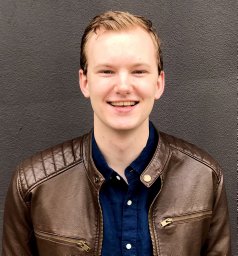
 Keir Adams
· 5 previous affiliations
- D. E. Shaw ResearchSince 2025
- Machine Learning Research Engineer · Since 2025
- Summer Intern (ML Team) · 2023
- Graduate Student Researcher · 2021–2025
- PhD student · 2020–2025
- Flagship Pioneering (United States)2023–2024
- Machine Learning Consultant · 2023–2024
- Mathnasium - The Math Learning Center2020
- Math Instructor · 2020
- University of Chicago2016–2020
- Undergrad student · 2016–2020
Research Overview
Keir Adams focuses on geometric deep learning for the molecular sciences, with a specific emphasis on 3D representation learning, generative modeling, and the computational treatment of molecular flexibility. His work addresses fundamental challenges in structural biology and drug discovery, including the modeling of molecular chirality, the generation of molecules conditioned on 3D spatial constraints, and the development of robust benchmarks for conformer ensembles. By integrating physical symmetries and geometric invariants into neural architectures, Adams seeks to improve the accuracy and reliability of molecular property prediction and de novo design.
Research Trajectory
The early phase of Adams's research, beginning around 2021, was primarily concerned with the limitations of existing Bridging the Molecular Geometric Representation Gap. At this time, molecular representation learning was often divided between 2D graph-based methods, which ignore spatial geometry, and 3D methods that were frequently invariant to chirality. Adams addressed this gap by developing methods for Chirality Sensitive Geometric Deep Learning, ensuring that neural models could distinguish between enantiomers—mirror-image molecules that share identical connectivity but possess distinct biological activities. This work often utilized Molecular Generation using Internal Coordinate Representations, such as torsion angles, to maintain invariance to bond rotations while remaining sensitive to stereochemical configurations.
In 2022, Adams shifted focus toward the generative aspects of molecular science, specifically Fragment Based Generative Modeling for 3D Molecular Design. Rather than generating molecules atom-by-atom, which can lead to geometrically unstable structures, this research direction emphasized the assembly of chemically valid fragments. This approach was applied to ligand-based drug design, where the goal is to generate novel chemical structures that match the 3D shape of a known active ligand. This period marked a transition from descriptive modeling to prescriptive design, utilizing equivariant shape encoding to guide the generative process.
Between 2023 and 2024, Adams’s work expanded to address the dynamic nature of molecular structures. Recognizing that molecules exist as ensembles of interconverting shapes rather than static objects, he participated in efforts to improve Robust Geometric Learning for Noisy Molecular Structures. This involved the creation of large-scale benchmarks to evaluate how well models handle molecular "floppiness" and vibrational perturbations. This line of inquiry naturally led to a focus on Stochastic Sampling for Structural Invariance, where the objective is to learn representations that are consistent across the entire conformer ensemble of a molecule.
Current Directions
Adams’s most recent work in 2025 continues to advance the frontier of 3D generative modeling through the use of diffusion processes. This current research direction focuses on generating molecules that satisfy complex interaction profiles, including electrostatics and pharmacophores, rather than just geometric shape. Furthermore, he has begun to critically examine the data requirements for molecular machine learning, specifically investigating how the quality and computational cost of 3D conformer generation impact the performance of downstream representation learning. This suggests a move toward more efficient and empirically grounded approaches to structural bioinformatics.
Representative Work
In Learning 3D Representations of Molecular Chirality with Invariance to Bond Rotations, Adams introduced ChIRo, a neural network architecture designed to solve a persistent problem in geometric deep learning: the inability of E(3)-invariant models to distinguish between chiral enantiomers. By processing molecular structures using torsion angles and internal coordinates, ChIRo achieves "InterRoto-invariance," meaning it remains invariant to the rotation of rotatable bonds while remaining sensitive to the fixed spatial arrangement of atoms that defines chirality. This work demonstrated that baking these specific physical symmetries into the model architecture significantly improves performance on stereochemical tasks without the need for extensive data augmentation.
Adams further developed generative capabilities in Equivariant Shape-Conditioned Generation of 3D Molecules for Ligand-Based Drug Design. This research presented SQUID, a multimodal generative model that enables the design of molecules tailored to a specific 3D target shape. SQUID utilizes an equivariant shape encoder and a variational chemical identity encoder to ensure that generated molecules are both geometrically realistic and chemically diverse. The model’s ability to perform "zero-shot" scaffold hopping allows for the discovery of novel chemical structures that can mimic the binding pose of existing drugs, a critical task in ligand-based virtual screening.
Adams also contributed to the development of Learning Over Molecular Conformer Ensembles: Datasets and Benchmarks, which introduced the MARCEL benchmark. As a participant in this large-scale collaborative study, Adams helped address the "static structure" bias in molecular representation learning. The benchmark provides a framework for evaluating models on their ability to learn from ensembles of 3D conformers rather than single snapshots. The findings from this work established that explicitly accounting for molecular flexibility and the statistical distribution of shapes leads to more accurate predictions of chemical properties.
In ShEPhERD: Diffusing shape, electrostatics, and pharmacophores for bioisosteric drug design, Adams proposed an SE(3)-equivariant diffusion model for de novo drug design. ShEPhERD goes beyond simple shape matching by jointly diffusing molecular geometry alongside interaction profiles, which include electrostatic surfaces and pharmacophoric features. By employing an inpainting technique, the model can generate molecular structures that fill a specific binding requirement, facilitating the design of bioisosteres—molecules with different chemical compositions but similar biological effects. This represents a significant step toward integrating high-fidelity physical interactions into generative workflows.
Finally, in The impact of conformer quality on learned representations of molecular conformer ensembles, Adams investigated the relationship between the geometric fidelity of training data and the performance of machine learning models. The study challenged the prevailing assumption that higher-quality, computationally expensive 3D structures (such as those derived from high-level quantum chemistry) always yield superior predictive models. The results indicated that for certain property prediction tasks, simpler physics-based ensembles are sufficient, and that the marginal gains from expensive geometry optimization often diminish quickly. This work provides a pragmatic guide for balancing computational resources and model accuracy in large-scale molecular screening.
Profile updated
Loading new papers…
Other researchers whose papers cluster into the same research directions — a proxy for overlapping technical interests and shared intellectual neighborhoods.
See something wrong? Report a mistake