

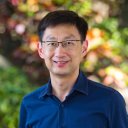
 KC Tan
· 2 previous affiliations
- Hong Kong Polytechnic UniversitySince 2021
- Full Professor · Since 2021
- City University of Hong Kong2017–2020
- Full Professor · 2017–2020
Research Overview
KC Tan focuses on neuromorphic computing, spiking neural networks, and machine learning for scientific discovery. His early work established foundational encoding and plasticity mechanisms for energy-efficient spiking networks, progressively scaling these architectures for deep learning. Recently, his research has expanded into geometric graph neural networks for molecular dynamics, multimodal foundation models, and efficient reasoning in large language models.
Research Trajectory
Tan's early research concentrated on the fundamental mechanisms of neuromorphic computing. In Rapid Feedforward Computation by Temporal Encoding and Learning With Spiking Neurons, he explored how temporal encoding can accelerate feedforward processing. Concurrently, he investigated how precise spike timing drives synaptic changes to learn spatiotemporal patterns in Precise-Spike-Driven Synaptic Plasticity: Learning Hetero-Association of Spatiotemporal Spike Patterns. This foundational work supported broader optimization strategies for energy-efficient spiking networks.
Alongside neuromorphic architectures, he also addressed classical machine learning challenges. In A Cost-Sensitive Deep Belief Network for Imbalanced Classification, he introduced a method to prevent models from ignoring minority classes in highly skewed datasets, a persistent issue in safety-critical and medical domains.
Returning to neuromorphic systems, Tan focused on scaling spiking neural networks (SNNs) for more complex tasks, advancing the field of Energy Efficient Computing with Spiking Neural Networks. He developed Progressive Tandem Learning for Pattern Recognition With Deep Spiking Neural Networks to improve pattern recognition capabilities. Recognizing the limitations of homogeneous neural coding—which forces a sub-optimal trade-off between accuracy, latency, and energy—he collaborated on A Hybrid Neural Coding Approach for Pattern Recognition With Spiking Neural Networks. This work integrated multiple coding schemes, contributing to the research direction of High Precision Neuromorphic Computing via Graded Spikes and the broader area of Non-Binary Information Transmission in Spiking Neural Networks.
His investigation into SNN dynamics continued with Efficient and robust temporal processing with neural oscillations modulated spiking neural networks, which drew inspiration from biological neural oscillations to enforce periodic activation, thereby reducing firing rates and enhancing robustness. This aligned with his interest in the area of Stable Gradient Flow for Long Horizon Spiking Computation. Building on biological realism, his group introduced TC-LIF: A Two-Compartment Spiking Neuron Model for Long-Term Sequential Modelling, a novel architecture designed to capture long-term temporal dependencies, advancing the direction of Multi-Compartment Spiking Neurons for Long-Term Sequential Modeling.
In recent years, Tan has significantly broadened his scope to encompass machine learning systems and artificial intelligence for scientific discovery. In the domain of computational biology, his lab developed scKAN: interpretable single-cell analysis for cell-type-specific gene discovery and drug repurposing via Kolmogorov-Arnold networks, a lightweight framework that distills foundation models to reveal biological drivers. He also explored robust algorithm selection through causal modeling in Towards Robustness and Explainability of Automatic Algorithm Selection, and addressed model merging with HM3: Hierarchical Multi-Objective Model Merging for Pretrained Models, which uses reinforcement learning to optimize architectural combinations across heterogeneous models.
A major recent focus has been the application of graph neural networks to chemistry and materials science. His team introduced A physics-informed cluster graph neural network enables generalizable and interpretable prediction for material discovery, which preserves chemical environments using pseudo-nodes to drastically reduce computational costs. To accelerate 3D molecule generation, they proposed Accelerating 3D Molecule Generation via Jointly Geometric Optimal Transport, mapping coordinates and atom types into a joint equivariant latent space. For large-scale molecular dynamics, his research yielded Large-Scale Molecular Dynamics Simulations: Direct Interatomic Modeling with Dilated Message Passing, bypassing traditional information bottlenecks to simulate systems of up to 40,000 atoms. To ensure the stability of these simulations, his group designed Geometric Graph Neural Diffusion for Stable Molecular Dynamics Simulations, treating information flow as a continuous diffusion process to handle unseen molecular shapes.
Expanding into multimodal and reasoning architectures, Tan's recent work includes MindMix: A Multimodal Foundation Model for Auditory Perception Decoding via Deep Neural-Acoustic Alignment, which decodes auditory experiences directly from EEG signals. Additionally, he addressed the efficiency of large language models in SLAT: Segment-Level Adaptive Trimming for Efficient CoT Reasoning, a reinforcement learning framework that mitigates overthinking by trimming low-information segments from reasoning chains.
Current Directions
Recent work investigates the intersection of geometric deep learning and molecular sciences, focusing on scalable and stable molecular dynamics simulations. This includes developing physics-informed graph neural networks and geometric optimal transport methods to accelerate 3D molecule generation and material discovery. Parallel research continues to advance neuromorphic computing, specifically designing multi-compartment spiking neurons and oscillation-modulated architectures to improve long-term sequential modeling and energy efficiency. Additionally, current projects address the efficiency and alignment of foundation models, exploring reinforcement learning techniques to curb overthinking in large reasoning models, hierarchical frameworks for multi-objective model merging, and multimodal architectures for decoding neural signals.
Profile updated
Loading new papers…
Other researchers whose papers cluster into the same research directions — a proxy for overlapping technical interests and shared intellectual neighborhoods.
See something wrong? Report a mistake