

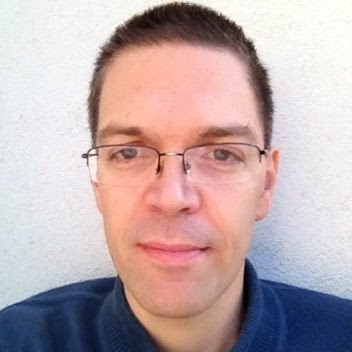
 Kaspar Sakmann
· 7 previous affiliations
- Bosch Center for Artificial IntelligenceSince 2018
- Researcher · Since 2018
- Robert Bosch (Germany)Since 2018
- Machine Learning Research Engineer · Since 2018
- T-Mobile Austria2016–2017
- Big Data Architect · 2016–2017
- Udacity2016–2017
- Self-Driving Car Nanodegree Program, Autonomous Driving · 2016–2017
- TU Wien2015–2016
- Project Assistant, Postdoctoral Researcher · 2015–2016
- Stanford University2012–2015
- Postdoctoral Research Fellow · 2012–2015
- Heidelberg University2007–2012
- Physics Postdoc · 2010–2012
- Doctor of Science · 2007–2010
Research Overview
Kaspar Sakmann focuses on the robustness and reliability of deep learning models, particularly within the domain of computer vision for safety-critical applications. His research addresses the challenges of deploying neural networks in real-world environments where models must contend with adversarial attacks, out-of-distribution (OOD) data, and the need for rigorous uncertainty quantification. Currently a research engineer at the Bosch Center for Artificial Intelligence (BCAI), Sakmann develops methods for certified defenses in semantic segmentation, conformal prediction for object detection, and anomaly-aware vision systems.
Research Trajectory
Sakmann’s academic career began in the field of theoretical physics, specifically focusing on Time-Dependent Variational Orbitals for Many-Body Dynamics. During his doctoral studies at the University of Heidelberg and subsequent postdoctoral fellowships at Stanford University and TU Wien, his work was centered on Modeling Electronic Correlation in Strongly Correlated Systems. This early research phase involved developing numerically exact solutions for the many-body Schrödinger equation to describe the dynamics of Bose-Einstein condensates. This work was characterized by a rigorous mathematical approach to physical systems where standard mean-field approximations, such as the Gross-Pitaevskii equation, failed to capture essential quantum correlations.
Following his tenure in physics, Sakmann transitioned to industrial research at Bosch, where he redirected his expertise in mathematical modeling toward the robustness of deep learning. This shift marked a move from quantum dynamics to the statistical reliability of high-dimensional machine learning models. His recent work reflects a systematic effort to move deep learning beyond the "closed-world" assumption, where models are only expected to perform on data distributions seen during training. Instead, he focuses on Robust Vision Models for Adverse Environmental Conditions and the development of frameworks that allow models to identify and handle unexpected inputs safely.
Current Directions
Sakmann’s current research is concentrated in three primary areas: adversarial robustness, uncertainty quantification, and out-of-distribution detection.
In the area of adversarial robustness, Sakmann has contributed to the development of certified defenses. Unlike empirical defenses, which may be bypassed by new attack strategies, certified defenses provide mathematical guarantees that a model's prediction will remain constant within a certain perturbation range. His work in this area specifically targets semantic segmentation, a task where standard classification-based defenses are often computationally prohibitive or require significant architectural changes.
A second major pillar of his current work is uncertainty quantification via conformal prediction. This framework allows for the generation of prediction sets or intervals that contain the true value with a user-specified probability. Sakmann explores how these guarantees can be extended to complex tasks like multi-object detection and bounding box regression, ensuring that autonomous systems can operate with a quantifiable margin of safety. This involves Reconciling Classification Accuracy and Out of Distribution Detection to ensure that models remain performant on known tasks while becoming more conservative on unknown ones.
Finally, Sakmann investigates Out-of-Distribution Detection for Semantic Segmentation. This research aims to enable vision systems to recognize "unknown" objects—such as unusual debris on a roadway—that were not present in the training set. His approach often involves Open Set Recognition via One-vs-All Binary Decomposition and the use of synthetic data augmentation to expose models to a wider variety of potential outliers during the training phase.
Representative Work
Numerically exact dynamics of the interacting many-body Schrödinger equation for Bose-Einstein condensates : comparison to Bose-Hubbard and Gross-Pitaevskii theory In this foundational work from his physics tenure, Sakmann provided numerically exact solutions to the many-body Schrödinger equation for bosonic Josephson junctions. The research demonstrated that standard approximations, such as Gross-Pitaevskii and Bose-Hubbard theory, often fail in regimes previously considered reliable. To address these inaccuracies, Sakmann introduced "time-dependent Wannier functions," a method that improved the accuracy of lattice models for quantum dynamics with minimal computational overhead.
Certified Defences Against Adversarial Patch Attacks on Semantic Segmentation As the first author of this study, Sakmann introduced "Demasked Smoothing," a framework providing the first certified guarantees against adversarial patch attacks for semantic segmentation. The methodology decouples the process of image "demasking" (or inpainting) from the segmentation task itself. This decoupling is significant because it allows off-the-shelf segmentation models to be made robust without requiring expensive retraining or specialized architectural modifications.
Anomaly-Aware Semantic Segmentation via Style-Aligned OoD Augmentation In this first-author paper, Sakmann addressed the problem of detecting unknown objects in autonomous driving scenarios. The research introduced a method to boost anomaly segmentation performance by using style transfer to align synthetic outlier data with the appearance of the target domain. By applying a specialized "Top-K" fine-tuning loss, the approach improved the detection of out-of-distribution objects while maintaining the model's accuracy on standard, in-distribution classes.
Max-Rank: Efficient Multiple Testing for Conformal Prediction Serving as the second author, Sakmann contributed to the development of "max-rank," a method for handling multiple hypothesis testing within the conformal prediction framework. The approach leverages rank-order information from calibration data to provide tighter uncertainty intervals than traditional methods like the Bonferroni correction. This is particularly effective when multiple prediction targets exhibit positive correlations, allowing for more precise uncertainty quantification in complex multi-target tasks.
Adaptive Bounding Box Uncertainties via Two-Step Conformal Prediction In this second-author work, Sakmann helped develop a two-step conformal prediction framework for multi-object detection. The method provides mathematically guaranteed uncertainty intervals for bounding boxes by first generating a conformal set of possible class labels and then propagating that uncertainty into the regression of the bounding box coordinates. This ensures that safety-critical coverage guarantees are maintained even in cases where the underlying model might misclassify an object.
Fast yet Safe: Early-Exiting with Risk Control Sakmann participated as a co-author in this research on early-exit neural networks (EENNs), which aim to reduce inference time by skipping layers for "easy" inputs. The paper introduces a statistical framework to control the risk associated with these early exits, providing mathematical guarantees that the model will meet specific performance targets. This work contributes to the broader goal of making efficient deep learning models safe for deployment in time-sensitive, high-stakes environments.
Profile updated
Loading new papers…
Other researchers whose papers cluster into the same research directions — a proxy for overlapping technical interests and shared intellectual neighborhoods.
See something wrong? Report a mistake