

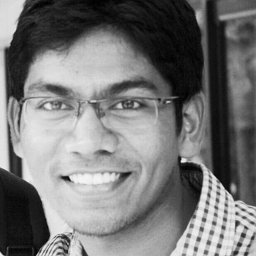
 Karun Kumar
· 7 previous affiliations
- Comcast (United States)Since 2017
- Manager, Machine Learning · Since 2022
- Machine Learning Engineer · 2018–2025
- Engineer 4, Research Lead-Machine Learning · 2021–2022
- Software Engineer 3, Technical research and development · 2017–2021
- Comcast Applied AI ResearchCurrent
- Current
- Syracuse University2015–2017
- Research Assistant · 2017
- MS student · 2015–2017
- Syrasoft Self Storage Software2016
- Software Engineer Intern · 2016
- Pega (United States)2013–2015
- Systems engineer-cloud · 2013–2015
- Wipro (India)2010–2013
- Project Engineer · 2010–2013
- Bachelor of Engineering (B.E.), Mechanical Engineering · 2006–2010
Research Overview
Karun Kumar focuses on applied machine learning, specifically in the domains of speech recognition, natural language processing, and deep generative models. His trajectory spans resource-efficient streaming speech systems and industrial-scale speech recognition, before expanding into the interpretability of diffusion models. Most recently, his work addresses control misalignment and latent dynamics in generative architectures.
Research Trajectory
Kumar's early work in the evidence addresses natural language processing and speech interfaces. In 2021, he contributed to research on Voice Query Auto Completion, exploring methods to predict and complete user queries in voice-driven applications. Continuing in the speech domain, he collaborated on SpeechNet: Weakly Supervised, End-to-End Speech Recognition at Industrial Scale in 2022. This project investigated weakly supervised learning techniques to scale end-to-end speech recognition systems for large-scale industrial deployment.
That same year, Kumar and colleagues addressed the computational efficiency of limited-vocabulary speech commands recognition. In Temporal Early Exiting for Streaming Speech Commands Recognition, they proposed resource-efficient methods to short-circuit recurrent neural networks in the time domain once the model reaches a sufficient confidence threshold. By applying a frame-level labeling objective, the approach significantly improved the efficiency-accuracy trade-off for streaming systems, allowing models to save substantial processing time per utterance without sacrificing performance.
By 2023, his research expanded into the interpretability of generative artificial intelligence. He was part of a team that developed What the DAAM: Interpreting Stable Diffusion Using Cross Attention, which analyzed the internal cross-attention mechanisms of text-to-image diffusion models to better understand how they map textual prompts to specific visual outputs.
Most recently, his focus has shifted toward the safety and reliability of deep generative models. In When does Observational Data Teach Latent Dynamics? Understanding Control Misalignment with Synthetic Tasks (2026), Kumar and collaborators identified "Control Misalignment," a phenomenon where generative models fail to align with the distributional priors of hidden control parameters—such as speed, energy, or transition rules—observed during training. This work highlights patterned violations across tasks and architectures, raising important considerations for fairness and safety when these models are embedded in complex applications.
Current Directions
The most recent papers in the evidence indicate a focus on the theoretical and practical limitations of deep generative models, particularly concerning latent dynamics and control misalignment. Current work investigates how models trained on observational data often fail to capture hidden control parameters, leading to systematic distributional errors. This research emphasizes understanding these misalignments to improve the safety, fairness, and reliability of generative architectures deployed in robotics, simulation, and media synthesis.
Profile updated
Loading new papers…
Loading research neighbors…
See something wrong? Report a mistake