

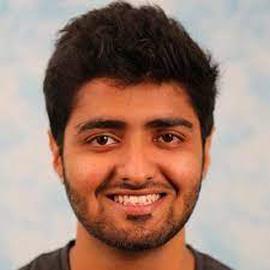
 Karmesh Yadav
· 7 previous affiliations
- Mistral AI (France)Since 2025
- AI Scientist Intern · Since 2025
- Current
- PhD student · 2023–2026
- Yutori2024
- Intern · 2024
- Meta (United States)2021–2023
- AI Resident · 2021–2023
- isee AI2020–2021
- Robotics Engineer II · 2021
- Researcher · 2020–2021
- Carnegie Mellon University2018–2020
- MS student · 2018–2020
- Indian Institute of Technology2013–2017
- Undergrad student · 2013–2017
Research Overview
Karmesh Yadav focuses on Embodied AI, robot learning, and the development of pre-training strategies for autonomous agents. His research investigates how large-scale datasets and pre-trained visual representations can be leveraged to improve agent performance in complex, unstructured environments. Currently, his work emphasizes the integration of long-term memory and reasoning capabilities into vision-language models to support long-horizon robotic control and navigation.
Research Trajectory
Yadav’s early research was characterized by an interest in the intersection of classical robotics and machine learning, specifically focusing on the robustness of navigation systems. During his graduate studies at Carnegie Mellon University, he explored methods to improve Monocular SLAM (Simultaneous Localization and Mapping) by integrating it with reinforcement learning (RL). This work sought to address the fragility of SLAM systems by training agents to select trajectories that minimize the likelihood of perceptual failure. Concurrently, he contributed to the field of meta-learning, developing optimization-based algorithms for online continual learning. This phase of his work established a foundation in using episodic memory and gradient-based adaptation to handle sequentially arriving tasks, a theme that would later evolve into his work on long-term memory for embodied agents.
Following his transition to a residency at Facebook AI Research (FAIR) and subsequent doctoral work at Georgia Tech, Yadav’s focus shifted toward the "data problem" in Embodied AI. Recognizing that the performance of embodied agents was often bottlenecked by the lack of high-quality, semantically annotated 3D data, he led the development of large-scale datasets. This period marked a move away from task-specific optimization toward the creation of general-purpose assets for the research community, emphasizing pixel-accurate semantic boundaries and diverse real-world environments.
In 2023 and 2024, Yadav’s work turned toward the evaluation and development of Pre-trained Visual Representations (PVRs), often referred to as "visual foundation models." He conducted extensive empirical studies to determine whether a universal "artificial visual cortex" could exist for robotics—a single model capable of supporting diverse tasks such as locomotion, navigation, and manipulation. This research involved systematic benchmarking across simulation and real-world platforms, leading to the development of new models that utilize masked auto-encoding and diffusion-based features. His findings during this period highlighted the nuances of sim-to-real transfer and the specific data requirements for training effective robotic representations.
Most recently, Yadav has focused on the limitations of current Vision-Language Models (VLMs) in embodied contexts, particularly their inability to process long-term experience. His work addresses the challenge of "long-horizon" tasks where an agent must reason over days or weeks of visual data. This has led to the development of new benchmarks designed to evaluate memory in embodied agents, moving the field toward models that can efficiently manage vast collections of images and episodic memories to perform complex reasoning and planning.
Representative Work
In the area of continual learning, Yadav co-developed La-MAML: Look-ahead Meta Learning for Continual Learning. This work addressed the inefficiencies of meta-learning in online settings where tasks arrive sequentially. By incorporating per-parameter learning rate modulation into the meta-learning update, the algorithm reduced interference between old and new tasks while maintaining computational efficiency. This research demonstrated how a small episodic memory could be used to stabilize training in lifelong learning scenarios, a concept that remains relevant as embodied agents are deployed for extended durations.
Yadav led the creation of the Habitat-Matterport 3D Semantics Dataset, which significantly expanded the availability of semantically annotated 3D spaces for the academic community. The project focused on providing dense, pixel-accurate object instance annotations across hundreds of real-world environments. By using texture information to refine object boundaries, the dataset enabled more precise training for Object Goal Navigation (ObjectNav) tasks. This work provided the empirical evidence needed to show that policies trained on high-quality semantic data generalize more effectively to novel environments.
In a major empirical effort, Yadav served as a primary author on Where are we in the search for an Artificial Visual Cortex for Embodied Intelligence?. This study introduced CortexBench, a comprehensive benchmark spanning 17 different robotic tasks. The research systematically evaluated existing pre-trained visual representations and found that no single model dominated across all domains. To address this, the team trained VC-1, a vision transformer model optimized on over 4,000 hours of egocentric video. This work clarified the relationship between pre-training data diversity and downstream task performance, providing a roadmap for developing foundation models specifically for robotics.
Complementing the development of VC-1, Yadav led a study titled What do we learn from a large-scale study of pre-trained visual representations in sim and real environments?. This research investigated the transferability of performance trends from simulation to the real world. By testing five different PVRs across multiple robot platforms and tasks, the study confirmed that simulation-based evaluations are generally indicative of real-world success. Notably, the work demonstrated zero-shot transfer for ImageNav tasks in real-world held-out scenes, showcasing the utility of robust visual representations in bridging the sim-to-real gap.
Yadav also explored the use of generative models for robotic control in Pre-trained Text-to-Image Diffusion Models Are Versatile Representation Learners for Control. This research introduced Stable Control Representations (SCR), a method that repurposes the internal features of pre-trained diffusion models like Stable Diffusion for use as feature extractors in RL and imitation learning. The study found that the visuo-spatial representations learned by diffusion models for image generation are highly effective for open-vocabulary navigation and manipulation, outperforming standard discriminative models like CLIP in several challenging benchmarks.
Addressing the current frontier of long-term reasoning, Yadav developed FindingDory: A Benchmark to Evaluate Memory in Embodied Agents. This work identifies a critical gap in existing Vision-Language Models: their inability to handle the vast image collections generated during long-term embodied deployment. FindingDory provides a framework to evaluate how well models can retrieve and reason over experiences spanning multiple days. By targeting scenarios where memory is essential for control, this benchmark encourages the development of more efficient memory architectures for future embodied AI systems.
Current Directions
Yadav’s current research is centered on the deployment of multimodal large language models (MLLMs) as verifiers and planners in embodied settings. This includes investigating "agreement bias" in MLLMs, where models may incorrectly validate agent trajectories due to a lack of grounded reasoning. He is also involved in broader efforts to define the next generation of Embodied Question Answering (EQA), moving toward open-vocabulary benchmarks that require agents to actively explore and understand their environments to answer complex natural language queries. His work continues to bridge the gap between high-level linguistic reasoning and low-level robotic execution, with a persistent focus on the role of large-scale pre-training and memory.
Profile updated
Loading new papers…
Other researchers whose papers cluster into the same research directions — a proxy for overlapping technical interests and shared intellectual neighborhoods.
See something wrong? Report a mistake