

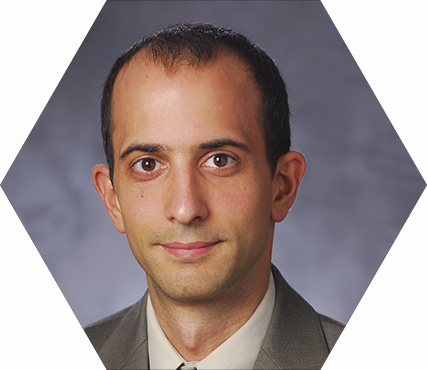
 Karim Sabra
· 1 previous affiliation
- Current
- Full Professor · 2007–2023
Research Overview
Karim Sabra focuses on the physics of wave propagation and its applications across acoustics, structural health monitoring, seismology, and biomechanics. His work centers on the development of passive imaging and monitoring techniques that utilize diffuse wave fields, such as ambient noise and multiple scattered fields, to characterize complex media. By combining theoretical modeling with experimental validation, he investigates how vibratory phenomena in fluid and solid media can be harnessed to localize sources, detect structural defects, and evaluate biological systems.
Research Trajectory
The evolution of Sabra’s research reflects a transition from classical underwater acoustic signal processing toward high-efficiency computational methods and, more recently, the integration of machine learning with physical models. After completing his doctoral work at the University of Michigan and conducting research at the Scripps Institution of Oceanography, Sabra joined the Georgia Institute of Technology in 2007. His early faculty research focused heavily on improving the resolution and efficiency of source localization in underwater environments, particularly through the application of emerging signal processing frameworks.
Between 2010 and 2011, Sabra’s group addressed the computational bottlenecks inherent in traditional underwater acoustics. Standard methods for source localization, such as Matched-Field Processing (MFP), often require exhaustive searches across large parameter spaces, which is computationally prohibitive for real-time applications. Sabra explored randomized sampling and compressed sensing as solutions to this challenge. This period established his interest in using sparse representations to recover signals from limited or noisy data, a theme that would later bridge into his work on surrogate modeling.
By the late 2010s, Sabra’s focus expanded deeper into the utility of ambient noise. While noise is traditionally viewed as an interference to be suppressed, Sabra’s research treats it as a coherent information source. This approach involves cross-correlating diffuse noise fields recorded at different sensors to estimate the Green’s function (the impulse response) between those sensors. This technique allows for "passive" sensing, where the environment is imaged without the need for active sources. His work in 2018 extended these concepts to mobile sensor arrays, addressing the added complexity of sensor motion in dynamic environments.
In recent years, Sabra has participated in the development of hybrid methodologies that combine classical physics with artificial intelligence. This shift addresses the limitations of "black-box" machine learning in physical domains, where data may be sparse and physical consistency is paramount. His collaborative work since 2022 focuses on solving inverse problems—recovering underlying physical parameters from observed data—by using surrogate models and physics-emulation frameworks. These methods aim to maintain the speed of neural networks while ensuring that the results adhere to the governing laws of wave physics.
Current Directions
Sabra’s current research program is characterized by three primary pillars:
Passive Monitoring and Imaging A significant portion of Sabra's ongoing work involves refining noise-based passive imaging. This includes applications in structural health monitoring, such as detecting fatigue or damage in aircraft wings by analyzing ambient vibrations. By leveraging the naturally occurring diffuse fields within a structure, his methods provide a continuous monitoring capability that does not require the weight or power consumption of active transducers.
Underwater Acoustics and Geophysics Continuing his foundational work in ocean acoustics, Sabra investigates the use of vector sensors and mobile arrays to map underwater environments. This research is critical for national security and environmental monitoring, where understanding the interaction between sound waves and the seafloor or thermal layers is essential. His work in seismology follows a similar logic, using ambient seismic noise to probe the Earth's subsurface structure.
Physics-Informed Machine Learning Sabra is increasingly involved in the development of "Physics-AI" hybrids. This involves creating surrogate models that can emulate complex physical simulations (like wave equations) at a fraction of the computational cost. These models are designed to solve inverse problems more reliably than standard deep learning by incorporating higher-order physical constraints and linearizations of physical laws directly into the training process.
Representative Work
The following papers represent key milestones in Sabra’s research, illustrating his contributions to computational acoustics and the transition toward physics-informed surrogate modeling.
In Randomized group testing for acoustic source localization, Sabra and his collaborators introduced a randomized approach to identifying the location of acoustic sources. This work applied the principles of group testing—a combinatorial method typically used in medical screening—to the domain of acoustics, allowing for the identification of active sources among many potential candidates with fewer measurements than traditional grid-based searches.
Building on the theme of computational efficiency, Compressive Matched-Field Processing introduced the cMFP framework. As the senior author, Sabra demonstrated that by leveraging random projections from compressed sensing, it is possible to achieve source localization performance comparable to standard Matched-Field Processing while significantly reducing the computational workload. This paper was foundational in showing that the sparsity of acoustic sources in the spatial domain could be exploited to bypass the "curse of dimensionality" in underwater signal processing.
In Exploiting ambient noise for coherent processing of mobile vector sensor arrays, Sabra served as the lead author, investigating the use of ambient noise for sensing with arrays that are in motion. This work is technically significant because it addresses the Doppler shifts and phase instabilities introduced by sensor mobility, which typically degrade the coherence of noise correlation functions. The research demonstrated that even with mobile platforms, ambient noise can be processed to extract coherent environmental information.
Sabra’s recent collaborative work has moved into the intersection of AI and inverse problems. In Incorporating Higher Order Constraints for Training Surrogate Models to Solve Inverse Problems, he participated in a study that moved beyond "black-box" supervised learning. The researchers proposed training surrogate forward models that incorporate existing physical knowledge, allowing for more efficient optimization when solving for underlying signals from observable data. This approach leverages modern auto-differentiation libraries to solve classical optimization problems within a machine learning framework.
Furthering this direction, PETAL: Physics Emulation Through Averaged Linearizations for Solving Inverse Problems describes a framework for solving complex inverse problems by combining deep learning speed with physical reliability. Sabra contributed to the development of this surrogate model, which is constructed from weighted "mini-linearizations" of physical laws. The PETAL framework represents a sophisticated attempt to ensure that machine learning models remain "well-behaved" and physically accurate during the optimization process, particularly in domains governed by non-linear forward models.
Profile updated
| Title | Venue | Year |
|---|---|---|
| PETAL: Physics Emulation Through Averaged Linearizations for Solving Inverse Problems | NeurIPS | 2023 |
| Incorporating Higher Order Constraints for Training Surrogate Models to Solve Inverse Problems | AI4Science @ NeurIPS | 2022 |
| Exploiting ambient noise for coherent processing of mobile vector sensor arrays | Dblp | 2018 |
| Compressive Matched-Field Processing | arXiv | 2011 |
| Randomized group testing for acoustic source localization | Computational Imaging | 2010 |
Loading new papers…
Other researchers whose papers cluster into the same research directions — a proxy for overlapping technical interests and shared intellectual neighborhoods.
See something wrong? Report a mistake