

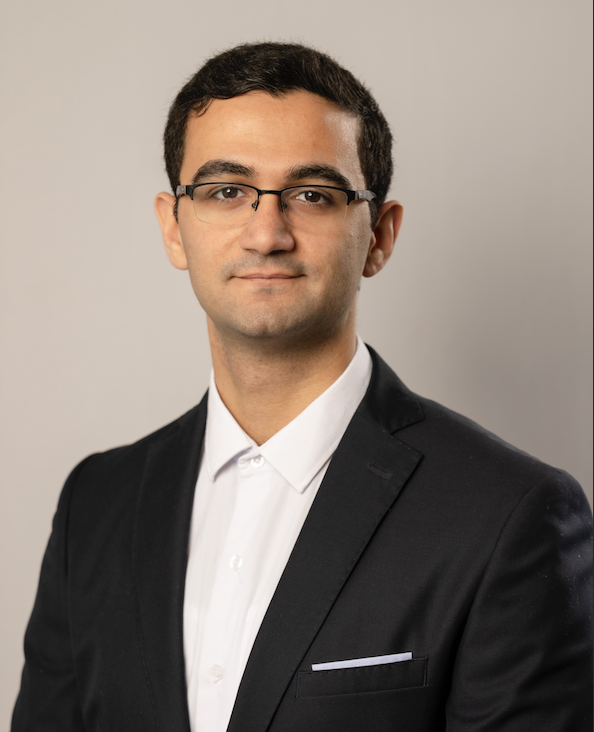
 Kareem Abdelmaqsoud
· 7 previous affiliations
- Robert Bosch (United States)Since 2026
- Computational Materials Science Intern · Since 2026
- Carnegie Mellon UniversityCurrent
- Current
- PhD student · 2022
- Orbital2025
- Machine Learning Researcher · 2025
- Entos, Inc2022
- Machine Learning Engineer · 2022
- University of Delaware2021–2022
- Undergraduate Researcher · 2021–2022
- University of Rochester2018–2022
- Bachelor of Science - BS, Chemical Engineering · 2018–2022
- TEDI-London2020
- Design Engineer · 2020
Research Overview
Kareem Abdelmaqsoud focuses on the intersection of Density Functional Theory (DFT) and machine learning to advance the fields of heterogeneous catalysis and materials science. His work addresses the development, evaluation, and optimization of machine learning potentials (MLPs), with a particular emphasis on improving the consistency of training data and the reliability of model predictions. By integrating computational chemistry with deep learning architectures, he seeks to accelerate the discovery of materials for chemical transformations and surface-sensitive reactions.
Research Trajectory
Abdelmaqsoud’s research trajectory is defined by a transition from traditional computational chemistry methods toward the development of large-scale, data-driven models for atomistic simulations. His early doctoral work at Carnegie Mellon University has centered on identifying and mitigating the sources of error in machine learning models trained on massive catalysis datasets. This focus is motivated by the observation that while MLPs have significantly reduced the computational cost of simulating atomic interactions, their accuracy remains uneven across different chemical spaces.
In a primary investigation into model reliability, Abdelmaqsoud served as the lead author on Investigating the error imbalance of large-scale machine learning potentials in catalysis. This work scrutinized the Open Catalyst 2020 (OC20) dataset, one of the most significant benchmarks in the field, to understand why certain material classes—specifically non-metals—exhibited higher mean absolute errors (MAE) than others. His analysis revealed that these discrepancies were not necessarily a result of the machine learning architectures themselves, but rather stemmed from inconsistencies in the underlying DFT data. By identifying "abnormal behavior" in specific DFT calculations that disrupted the referencing scheme of the dataset, he demonstrated that removing these inconsistent systems could reduce machine learning errors by approximately 35%. This finding established a critical methodological precedent for the curation of large-scale datasets intended for training universal potentials.
Parallel to his work on model accuracy, Abdelmaqsoud has applied data-driven techniques to complex problems in surface science, particularly regarding chirality. In Structure Sensitive Reaction Kinetics of Chiral Molecules on Intrinsically Chiral Surfaces, he developed models to predict the enantiospecificity of tartaric acid reactions on chiral copper surfaces. This research utilized feature vectors derived from generalized coordination numbers to characterize the local atomic environment of the catalyst. By leveraging experimental data from curved Cu(hkl) surfaces, which allow for simultaneous measurements across hundreds of orientations, he demonstrated how machine learning can bridge the gap between fundamental surface chemistry and catalyst design.
Current Directions
Abdelmaqsoud’s current research involves enhancing the robustness of Graph Neural Networks (GNNs) and participating in the development of foundation models for chemistry. As the second author of Uncertainty Quantification in Graph Neural Networks with Shallow Ensembles, he explored methods to identify when MLPs encounter out-of-domain data, a frequent challenge in materials discovery. The study integrated Direct Propagation of Shallow Ensembles (DPOSE) into the SchNet architecture, providing a computationally efficient alternative to deep ensembles for uncertainty quantification. This work is essential for ensuring that MLPs can be used reliably in autonomous discovery loops where model confidence is as important as predictive accuracy.
Furthermore, Abdelmaqsoud has contributed to large-scale collaborative efforts to build universal atomistic models. He participated in the development of UMA: A Family of Universal Models for Atoms, a project involving the Facebook AI Research Chemistry (FAIR-Chem) team. This work introduced a Mixture of Linear Experts (MoLE) architecture to scale model capacity to 1.4 billion parameters. Trained on a dataset of 500 million structures, the UMA models represent a shift toward "zero-shot" performance across diverse domains, including molecules and crystals. His involvement in this project highlights a broader interest in the scalability of atomistic simulations and the move toward foundation models that generalize across the periodic table.
Representative Work
The following papers represent the core of Abdelmaqsoud’s contributions to the field of machine-learned potentials and catalysis:
- Investigating the error imbalance of large-scale machine learning potentials in catalysis: A first-author study identifying DFT data inconsistency as a primary driver of error in large-scale catalysis datasets.
- Structure Sensitive Reaction Kinetics of Chiral Molecules on Intrinsically Chiral Surfaces: A first-author application of data-driven modeling to enantiospecific surface chemistry.
- Uncertainty Quantification in Graph Neural Networks with Shallow Ensembles: A second-author contribution developing efficient uncertainty quantification for GNNs in materials science.
- UMA: A Family of Universal Models for Atoms: A collaborative effort (7th author) to scale atomistic foundation models using a Mixture of Experts approach.
Abdelmaqsoud’s work continues to focus on the technical nuances of DFT data generation and the architectural requirements for training high-fidelity machine learning potentials, aiming to provide more reliable tools for the computational design of heterogeneous catalysts.
Profile updated
Loading new papers…
Other researchers whose papers cluster into the same research directions — a proxy for overlapping technical interests and shared intellectual neighborhoods.
See something wrong? Report a mistake