

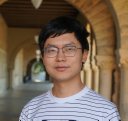
 Kangjie Zhou
· 2 previous affiliations
- Columbia UniversitySince 2024
- Postdoc · Since 2024
- Stanford University2019–2024
- PhD student · 2019–2024
1 other author named Kangjie Zhou: Kangjie Zhou (Peking University · 1 paper)
Research Overview
Kangjie Zhou focuses on the mathematical foundations of high-dimensional statistics, non-convex optimization, and the theoretical underpinnings of deep learning. His research investigates the interplay between overparameterization and computational tractability, seeking to define the informational and algorithmic limits of statistical inference in complex models. Currently a Founder's Postdoctoral Fellow at Columbia University, Zhou’s work employs tools from high-dimensional probability and statistical physics to characterize phase transitions in optimization landscapes and the dynamics of feature learning in neural networks.
Research Trajectory
The evolution of Zhou’s research reflects a progression from fundamental questions in optimization theory toward the specific statistical phenomena observed in modern machine learning. In the early stages of his doctoral work at Stanford University, he addressed the The Mechanics of Benign Overfitting in High Dimensions, specifically examining how the ratio of parameters to data points influences the ease of finding global minima. This period was marked by a focus on toy models, such as the negative perceptron, to rigorously demonstrate how overparameterization can shift a non-convex problem from a computationally hard regime to one that is efficiently solvable.
By 2022, Zhou’s focus expanded to include high-dimensional geometry and the properties of random projections. He investigated the asymptotic behavior of Gaussian point clouds, specifically characterizing the set of all possible empirical distributions that can arise from low-dimensional projections. This work established a bridge between classical projection pursuit and the interpolation capabilities of two-layer neural networks, providing a framework for understanding High Dimensional Asymptotics in the Proportional Regime. During this time, he also contributed to the analysis of tensor decomposition, providing lower bounds for the convergence of power iteration methods in overcomplete models. This work was significant for refuting existing conjectures regarding the logarithmic convergence of such algorithms, establishing instead that polynomial iterations are necessary for recovery from random initializations.
In 2023 and 2024, Zhou’s research shifted toward the temporal dynamics of learning and the High-Dimensional Dynamics of Stochastic Gradient Descent. He developed theoretical frameworks to explain the non-linear learning curves observed in deep networks, where performance often plateaus before sudden improvements. By analyzing networks in the mean-field regime, he demonstrated that learning follows a canonical order, sequentially approximating target functions of increasing complexity. This period also saw a deeper integration of statistical physics, as he utilized the Parisi formula and Approximate Message Passing (AMP) to identify which "exceptional" structures in high-dimensional noise are discoverable in polynomial time.
Most recently, Zhou has applied these theoretical insights to practical challenges in supervised learning, such as imbalanced classification and the implicit bias of gradient descent in non-homogeneous architectures. His work now seeks to explain how high-dimensional effects, such as the "rectification" of logits, lead to systematic biases against minority classes, and how Feature Learning to Overcome the Curse of Dimensionality can be mathematically formalized to improve model robustness.
Current Directions
Zhou’s current research is centered on two primary axes: the statistical theory of overfitting in imbalanced settings and the implicit bias of optimization in complex network architectures. He is developing a rigorous framework to explain why overparameterized models exhibit a disproportionate loss of accuracy on minority classes, a phenomenon he attributes to a specific truncation effect in high-dimensional score distributions. This work aims to derive optimal rebalancing strategies that are grounded in the statistical geometry of the decision boundary rather than heuristic sampling.
Additionally, he is investigating the Sample Complexity Advantage of Feature Learning in networks that do not satisfy standard homogeneity conditions, such as those with residual connections. By establishing "near-homogeneity" conditions, his recent work proves that gradient descent continues to maximize normalized margins even in these complex settings. He also maintains an interest in discrepancy algorithms, recently serving as a senior author on work analyzing the storage capacity and algorithmic limits of the binary perceptron problem, further bridging the gap between combinatorial optimization and statistical learning.
Representative Work
Tractability from overparametrization: The example of the negative perceptron This paper investigates the computational benefits of overparameterization through the lens of the negative perceptron. Zhou and his co-author demonstrate a rigorous phase transition where the optimization landscape of this non-convex problem becomes "easy" as the number of parameters increases relative to the number of data points. The work provides a theoretical basis for why overparameterized models are often easier to optimize than their underparameterized counterparts, despite the increased dimensionality of the search space.
Overparametrized linear dimensionality reductions: From projection pursuit to two-layer neural networks In this work, Zhou characterizes the "least Gaussian" projections of high-dimensional Gaussian data clouds. The paper establishes tight bounds on the extent to which a low-dimensional projection can deviate from a standard normal distribution in the proportional limit where both the number of points and the dimension grow to infinity. These results are linked to the interpolation limits of two-layer neural networks, proving that a specific degree of overparameterization is required for networks to achieve certain margins on training data.
Lower Bounds for the Convergence of Tensor Power Iteration on Random Overcomplete Models Focusing on the dynamics of tensor decomposition, this paper addresses the convergence speed of power iteration for overcomplete tensors. Zhou proves that for random overcomplete models, the algorithm requires a number of steps that is polynomial in the input dimension to converge from a random initialization. This result is critical as it refutes prior suggestions in the literature that logarithmic iterations might be sufficient, thereby clarifying the computational complexity of a fundamental primitive in latent variable modeling.
Learning time-scales in two-layers neural networks This research provides a theoretical explanation for the "staircase" learning curves often observed in deep learning. By analyzing two-layer networks in the high-dimensional mean-field regime, Zhou shows that the learning process occurs across distinct, separated timescales. The network sequentially "unlocks" increasingly complex polynomial approximations of the target function, providing a rigorous mathematical description of how feature learning progresses over time.
Which exceptional low-dimensional projections of a Gaussian point cloud can be found in polynomial time? Zhou explores the computational limits of finding non-Gaussian structure in high-dimensional noise. The paper identifies which "exceptional" projections can be discovered using a two-stage Approximate Message Passing (AMP) algorithm. By connecting iterative algorithms to the Parisi formula from statistical physics and stochastic optimal control, the work establishes a framework for determining the algorithmic thresholds of structure discovery in high-dimensional statistical problems.
A statistical theory of overfitting for imbalanced classification This paper addresses the practical problem of class imbalance in high-dimensional machine learning. Zhou proposes a mathematical framework to explain why models overfit more severely on minority classes. The research identifies a "rectification" effect where the distribution of model scores shifts the decision boundary to the detriment of the minority class. The work derives a "margin rebalancing" strategy that provides a statistically grounded method for correcting this bias in overparameterized models.
Profile updated
Loading new papers…
Other researchers whose papers cluster into the same research directions — a proxy for overlapping technical interests and shared intellectual neighborhoods.
See something wrong? Report a mistake