

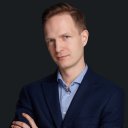
 Kamil Deja
· 4 previous affiliations
- Warsaw University of TechnologySince 2017
- Assistant Professor · Since 2023
- PhD student · 2018–2023
- MS student · 2017–2018
- IDEAS Research InstituteSince 2025
- Team Leader · Since 2025
- IDEAS NCBR Sp. Z o o2023–2025
- Postdoc · 2023–2025
- Applied Science Intern · 2021
Research Overview
Kamil Deja focuses on generative modeling, continual learning, and the interpretability of deep neural networks. His early work addressed catastrophic forgetting in diffusion models and variational autoencoders through generative replay and latent space alignment. More recently, his research investigates activation steering and sparse autoencoders to improve the controllability of complex generative systems across domains like protein design and audio synthesis.
Research Trajectory
Kamil Deja's early research focused heavily on the intersection of continual learning and generative models, investigating how to update complex architectures iteratively without suffering from catastrophic forgetting. He explored the baseline challenges of updating diffusion models sequentially in Exploring Continual Learning of Diffusion Models. To address challenges in the broader area of Representation Drift in Continual Learning, he developed Adapt & Align: Continual Learning with Generative Models Latent Space Alignment. This framework aligns the latent spaces of local and global models via a translator network, enabling forward and backward knowledge transfer while touching on the research direction of The Blurriness Problem in Variational Autoencoders. He further refined VAE-based generative replay in Looking through the past: better knowledge retention for generative replay in continual learning, introducing latent matching and distillation procedures to maintain knowledge across long task sequences, contributing to the area of Enforcing Bidirectional Consistency in Latent Spaces.
Concurrently, he applied generative architectures to complex scientific and medical domains. In the area of Enforcing Physical Laws in Generative Models, he designed a machine learning pipeline to accelerate particle response simulations for the ALICE experiment at CERN in Machine Learning methods for simulating particle response in the Zero Degree Calorimeter at the ALICE experiment, CERN. He later directed a follow-up project, Particle physics DL-simulation with control over generated data properties, which utilized a modified VAE to give researchers explicit, decoupled control over the physical properties of simulated collisions. Expanding into healthcare, his team developed Mediffusion: Joint Diffusion for Self-Explainable Semi-Supervised Classification and Medical Image Generation, a multitask framework that leverages latent diffusion to provide self-explainable diagnoses via high-quality visual counterfactuals.
Returning to continual learning with more advanced architectures, he introduced GUIDE: Guidance-based Incremental Learning with Diffusion Models, an approach that uses classifier guidance to generate hard rehearsal samples near new task decision boundaries, significantly reducing forgetting. As diffusion models grew in scale, he oversaw research into parameter-efficient updating, contributing to the direction of Orthogonal Subspace Projection for Interference Free Parameter Updates. This culminated in Low-Rank Continual Personalization of Diffusion Models, which evaluated methods for initializing and merging Low-Rank Adaptation (LoRA) modules to balance plasticity and stability across sequential tasks.
In his most recent work, the focus has shifted toward the mechanistic interpretability and precise control of large-scale generative models. To address the "black box" nature of protein design models like RFdiffusion, his group developed FoldSAE, detailed across initial preprints (FoldSAE: Learning to Steer Protein Folding Through Sparse Representations) and subsequent publications (FoldSAE: Learning To Steer Protein Folding Through Sparse Representations). This work decomposes internal representations to steer protein folding toward desired structures, advancing the research direction of Resolving Superposition with Sparse Autoencoders. He also applied steering techniques to audio generation in TADA! Tuning Audio Diffusion Models through Activation Steering, demonstrating that localized interventions in attention layers can control musical attributes like tempo and mood. Finally, he investigated the fundamental mechanics of image manipulation in There and Back Again: On the relation between Noise and Image Inversions in Diffusion Models, revealing how inverted noise retains traces of the original image and proposing methods to correct this artifact for cleaner generative editing. Deja also supervised the development of Painter-Thinker (PaTh) in Think Before You Paint: Recursive Latent Reasoning for Diffusion Models, integrating a recursive latent reasoning network with ControlNet adapters to steer diffusion models through complex visual reasoning tasks such as Sudoku and mazes without symbolic supervision.
Current Directions
The most recent papers in the evidence indicate a strong focus on the mechanistic interpretability and fine-grained control of diffusion models across diverse modalities. Recent work investigates how to open the "black box" of complex generative systems using techniques like sparse autoencoders and activation steering. By decomposing internal representations, these methods allow for precise, localized interventions—whether steering the structural properties of generated proteins or tuning specific musical attributes in audio diffusion models. Additionally, ongoing research addresses latent reasoning and noise inversion in diffusion models, seeking to improve the fidelity, editability, and structural constraint-solving capabilities of generative models without relying on symbolic supervision or exhaustive prompt engineering.
Profile updated
Loading new papers…
Other researchers whose papers cluster into the same research directions — a proxy for overlapping technical interests and shared intellectual neighborhoods.
See something wrong? Report a mistake