

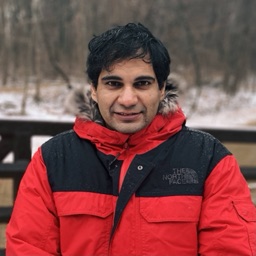
 Kamal Gupta
· 8 previous affiliations
- Tesla (United States)Since 2023
- Staff Machine Learning Scientist · Since 2023
- University of Maryland, College Park2018–2023
- PhD student · 2018–2023
- Researcher · 2022
- Researcher · 2021
- Research Intern · 2019
- Netradyne2017–2018
- Researcher · 2017–2018
- Indian Institute of Technology Delhi2007–2012
- Bachelors, Electrical Engineering · 2007–2012
- Carnegie Mellon University2011–2012
- Researcher · 2011–2012
Research Overview
Kamal Gupta focuses on the intersection of generative modeling, geometric deep learning, and neural network efficiency. His work addresses the challenges of representing complex visual and structural data—ranging from document layouts and 3D shapes to image sequences—through the development of novel attention mechanisms, communication protocols, and compression techniques. A recurring focus in his research is the optimization of how neural models process and represent multi-dimensional data, particularly when constrained by memory or computational bottlenecks.
Research Trajectory
Gupta’s early work centered on the synthesis of structured layouts, treating complex scenes as arrangements of compositional primitives. In Multimodal Attention for Layout Synthesis in Diverse Domains, he introduced the MMA framework to model the contextual relationships between elements in domains such as mobile applications, documents, and 3D objects. By utilizing self-attention to learn these relationships, the work demonstrated a method for generating coherent layouts from either an empty set or an initial seed, establishing a foundation for his subsequent explorations into how models perceive and organize spatial information.
In 2021, Gupta shifted toward investigating the emergence of communication protocols and the efficiency of visual representations. As the lead author of PatchGame: Learning to Signal Mid-level Patches in Referential Games, he explored referential signaling games where agents must communicate via a discrete bottleneck to match image patches across different views. This research demonstrated that agents could develop unsupervised communication protocols, which in turn could be used to identify "important" patches in an image. The practical application of this work showed that focusing on these critical patches could significantly accelerate Vision Transformers, reflecting an early interest in balancing model performance with computational cost.
Following this, Gupta’s research expanded into 3D vision and the challenges of high-resolution volumetric modeling. He contributed to the development of a framework for Improved Modeling of 3D Shapes with Multi-view Depth Maps, which leveraged 2D CNN architectures to generate 3D-consistent depth maps. This approach directly addressed the "cubic bottleneck" often encountered in 3D deep learning—where memory requirements grow cubically with resolution—by instead utilizing more memory-efficient 2D representations. This work aligns with broader efforts in Scaling 3D Representations Beyond the Memory Wall, seeking to achieve high-resolution outputs without the prohibitive costs of standard volumetric grids.
By 2022, Gupta’s work began to address the fundamental problem of data serialization in computer vision. In Neural Space-filling Curves, he participated in the development of a data-driven approach to determine optimal scan orders for images. Traditional methods rely on fixed patterns like Raster or Hilbert scans, but this research proposed using graph-based neural networks to learn context-based linear orderings. This is a critical component of Preserving Spatial Locality in Sequence Models, as it attempts to preserve spatial coherence when flattening multi-dimensional visual data into the one-dimensional sequences required by autoregressive models and state-space models.
Most recently, Gupta has focused on the formalization of model compression and sparsification. His work on LilNetX: Lightweight Networks with EXtreme Model Compression and Structured Sparsification introduced an end-to-end trainable technique for optimizing the accuracy-rate-computation trade-off. By penalizing the self-information of network parameters and introducing priors for structured sparsity, this method avoids the need for the multi-stage training or post-processing typically required in compression pipelines. This trajectory suggests a move toward more integrated, principled methods for Disentangling Architectural Innovation from Training Recipes, ensuring that gains in model efficiency are robust and scalable across large datasets.
Current Directions
Gupta’s recent research suggests a continued interest in the structural and geometric properties of deep learning models. While his earlier work focused on the synthesis and communication of visual data, his more recent contributions emphasize the underlying mechanics of how these models are trained and compressed. This includes addressing the "laziness" of deep networks—where models might rely on spurious correlations rather than true geometric understanding—by advocating for Transformation Consistency for Robust Visual Learning.
Furthermore, his involvement in 3D modeling and space-filling curves points toward ongoing engagement with Intrinsic Geometry for Non-Rigid Shape Correspondence and Resolving Geometric Symmetry Ambiguity in 3D Pose Estimation. These areas are essential for developing models that can navigate the complexities of non-rigid objects and ambiguous orientations in 3D space, ensuring that neural representations are both efficient and geometrically grounded.
Representative Work
- Multimodal Attention for Layout Synthesis in Diverse Domains (2020): Introduced the MMA framework for contextual layout generation using self-attention.
- PatchGame: Learning to Signal Mid-level Patches in Referential Games (2021): Explored unsupervised communication protocols for identifying salient image patches to improve Vision Transformer efficiency.
- Improved Modeling of 3D Shapes with Multi-view Depth Maps (2021): Developed a memory-efficient 3D shape modeling framework using 2D CNNs and multi-view depth maps.
- Neural Space-filling Curves (2022): Proposed a graph-based neural network to learn data-driven scan orders for image serialization.
- LilNetX: Lightweight Networks with EXtreme Model Compression and Structured Sparsification (2023): Presented a joint training objective for extreme model compression and structured sparsity.
Profile updated
Loading new papers…
Other researchers whose papers cluster into the same research directions — a proxy for overlapping technical interests and shared intellectual neighborhoods.
See something wrong? Report a mistake