

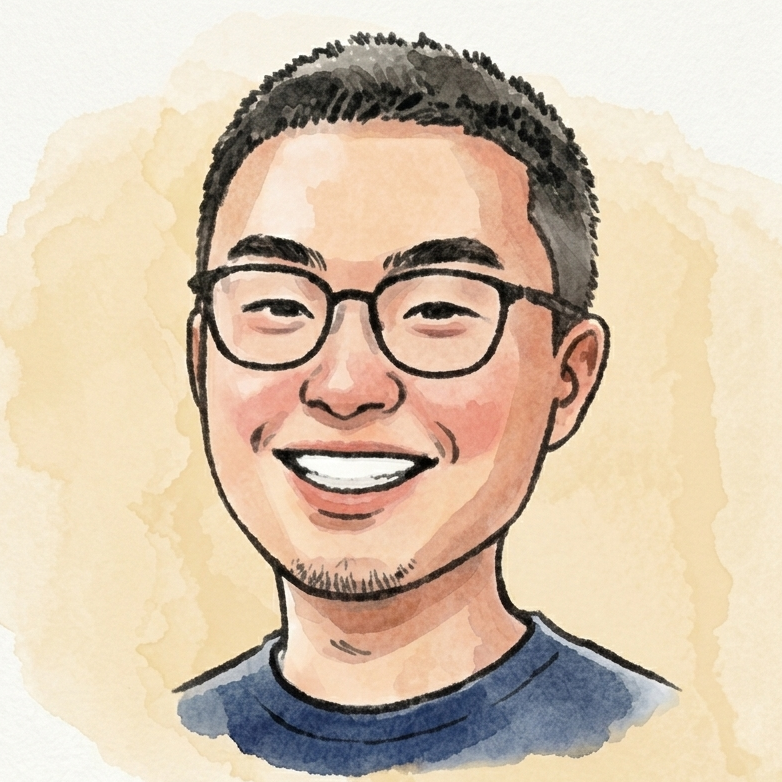
 Kaiyu Yue
· 5 previous affiliations
- Current
- PhD student · 2021–2025
- Meta (United States)2023–2026
- Research Intern · 2025–2026
- Research Intern · 2025
- Research Intern · 2023
- Research Intern · 2022
- Aibee (China)2018–2021
- Research Engineer · 2018–2021
- Baidu (China)2017–2018
- Research Engineer · 2017–2018
Research Overview
Kaiyu Yue focuses on predicting tokens through the understanding of latent representations, spanning computer vision, multimodal learning, and generative modeling. His trajectory bridges early work in fine-grained visual recognition and feature distillation with recent advancements in vision-language alignment. Currently, his research addresses the efficient training of massive multimodal models and the development of interleaved text-image reasoning capabilities.
Research Trajectory
Yue's early research concentrated on improving feature extraction and attention mechanisms for complex visual data. In 2018, he collaborated on Fine-Grained Video Categorization with Redundancy Reduction Attention, which improved action recognition by iteratively suppressing redundant feature channels. This forced the model to focus on subtle, complementary details, advancing the broader area of Localized Feature Discovery for Fine-Grained Visual Recognition as well as the direction of Suppressing Salient Features for Robust Representation Learning. That same year, he introduced the Compact Generalized Non-local Network, extending non-local modules to capture long-range spatio-temporal dependencies across channels. By utilizing a compact representation based on Taylor expansion, this work maintained a fast, low-complexity computation flow for recognizing fine-grained objects and actions.
Transitioning toward model efficiency and representation learning, Yue developed Matching Guided Distillation in 2020. This parameter-free approach to feature distillation reframed the alignment of teacher and student features as a classic assignment problem. By eliminating the need for bulky adaptation modules, the method provided a more efficient way to distill pre-trained models, contributing to the research direction of Mitigating Feature Distortion in Foundation Model Adaptation.
More recently, Yue's focus has shifted toward the intersection of generative modeling and vision-language systems, specifically framing visual tasks through the lens of token prediction. In 2024, he proposed Object Recognition as Next Token Prediction, which reimagined traditional classification as a generative process. By employing a truncated large language model with a custom non-causal attention mask, the approach achieved highly flexible open-vocabulary recognition, driving forward the area of Generative Object Recognition via Next Token Prediction. Recognizing the data bottleneck in multimodal learning, he also led the development of From Pixels to Prose: A Large Dataset of Dense Image Captions. This work introduced PixelProse, a dataset of over 16.4 million images paired with high-quality, dense synthetic captions, providing a critical resource for open-source vision-language models and supporting work in areas like Absence-Aware Training to Suppress Hallucinations.
Continuing to address the computational challenges of massive foundation models, Yue introduced Zero-Shot Vision Encoder Grafting via LLM Surrogates in 2025. This method significantly reduces the cost of training large vision-language models by optimizing a vision encoder against a tiny surrogate model derived from the language model's early layers, which is then grafted onto the full-scale network. In 2026, he collaborated on Zebra-CoT: A Dataset for Interleaved Vision-Language Reasoning, a large-scale collection of interleaved text-image reasoning traces. This dataset teaches models to natively generate sketches and mental maps to solve complex problems, advancing the research direction of Inference Time Scaling for Multimodal Reasoning.
Current Directions
The most recent papers in the evidence indicate a strong focus on scaling and optimizing large multimodal foundation models. Current work investigates methods to drastically reduce the computational overhead of training massive vision-language architectures, such as utilizing surrogate models to align vision encoders before integrating them into full-scale language models. Additionally, Yue is exploring advanced multimodal reasoning capabilities. This involves training models to generate interleaved text and visual aids—such as sketches and diagrams—to form coherent reasoning traces, ultimately improving how AI systems process and solve complex, multi-step visual problems.
Profile updated
| Title | Venue | Year |
|---|---|---|
| Beyond Episodic Evaluation: Memory Architectural Bottlenecks in Sequential Embodied Question Answering | arXiv | 2026 |
| Zebra-CoT: A Dataset for Interleaved Vision-Language Reasoning | ICLR | 2026 |
| Image Generation with a Sphere Encoder | arXiv | 2026 |
| Sphere Encoder 2 | arXiv | 2026 |
| Zero-Shot Vision Encoder Grafting via LLM Surrogates | ICCV | 2025 |
| From Pixels to Prose: A Large Dataset of Dense Image Captions | arXiv | 2024 |
| Object Recognition as Next Token Prediction | CVPR | 2023 |
| Visible Feature Guidance for Crowd Pedestrian Detection | Workshops @ ECCV | 2020 |
| Matching Guided Distillation | ECCV | 2020 |
| Shallow and wide fractional max-pooling network for image classification | Neural Computing and Applications | 2019 |
| Paper | Venue | Year |
|---|---|---|
| Compact Generalized Non-local NetworkGitHubkaiyuyue/ | NeurIPS | 2018 |
Loading new papers…
Other researchers whose papers cluster into the same research directions — a proxy for overlapping technical interests and shared intellectual neighborhoods.
See something wrong? Report a mistake