

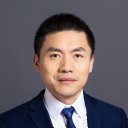
 Kaiwei Wang
· 3 previous affiliations
- Zhejiang UniversitySince 2009
- Full Professor · Since 2019
- Associate Professor · 2009–2019
- University of Huddersfield2005–2019
- Researcher · 2005–2019
- Tsinghua University1997–2005
- PhD student · 2001–2005
- Undergrad student · 1997–2001
1 other author named Kaiwei Wang: kaiwei wang (1 paper)
Research Overview
Kaiwei Wang focuses on computer vision, 3D moving object segmentation, and controllable video generation for robotics. His early work addressed 2D image segmentation and posture estimation under occlusion, while his recent research explores state space models for LiDAR processing and synthetic data generation for quadruped robots.
Research Trajectory
Wang's early research centered on applied computer vision, specifically addressing segmentation and estimation tasks in 2D imagery. In 2019, he contributed to Oval Shape Constraint based Optic Disc and Cup Segmentation in Fundus Photographs, which explored shape-constrained segmentation techniques for medical imaging. That same year, he collaborated on Partially Occluded Head Posture Estimation for 2D Images using Pyramid HoG Features. This work tackled challenges in human-centered AI applications, such as automated monitoring in public spaces, by developing an algorithm to predict head posture even when facial features are partially obscured. The approach utilized a histogram of gradient orientation (HoG) in a pyramid setting, dividing detected face regions to assess occlusion status before applying a support vector machine for model training.
In recent years, Wang's focus has shifted toward 3D perception and embodied AI, particularly involving LiDAR and video generation for robotics. In 2024, he was part of the team that developed MambaMOS: LiDAR-based 3D Moving Object Segmentation with Motion-aware State Space Model. This research addressed the weak coupling of temporal and spatial information in moving object segmentation (MOS). The proposed MambaMOS architecture introduced a Time Clue Bootstrapping Embedding (TCBE) module to better integrate spatial and temporal data from point cloud sequences, leveraging state space models to improve the tracking of moving objects across consecutive LiDAR scans.
Building on this interest in dynamic environments, Wang's work expanded into synthetic data generation for robotic perception. He contributed to the 2025 paper QuaDreamer: Controllable Panoramic Video Generation for Quadruped Robots. Recognizing the difficulty of collecting high-quality panoramic data for quadruped robots due to their unique, jittery motion, the team introduced a system to generate realistic, controllable panoramic videos that mimic these specific movement patterns. This synthetic data was shown to significantly enhance downstream tasks like multi-object tracking. This research intersects with several advanced areas of machine learning, including the research direction of Trajectory Controllable Video Diffusion and the area of Frequency Domain Representations for Motion Modeling. Furthermore, by providing robust training data for complex robotic platforms, the work supports the broader field of Scaling General Purpose Robotics via Vision Language Action Models.
In 2026, Wang contributed to Dual-Stream Event-to-Video Reconstruction, which introduced EvDualDiff, a dual-stream diffusion framework that pairs temporal-mapping events with motion-event cues and light-modulation hardware to autoregressively reconstruct high-fidelity video sequences from event cameras.
Current Directions
The most recent papers in the evidence indicate a strong focus on advanced perception and generative modeling for robotic systems. Wang's current work investigates how novel architectures, such as state space models, can improve the processing of 3D LiDAR point clouds for dynamic object segmentation. Additionally, their recent contributions highlight an interest in overcoming data scarcity in embodied AI through controllable video generation and reconstructing high-fidelity video from neuromorphic event streams.
Profile updated
Loading new papers…
Other researchers whose papers cluster into the same research directions — a proxy for overlapping technical interests and shared intellectual neighborhoods.
See something wrong? Report a mistake