

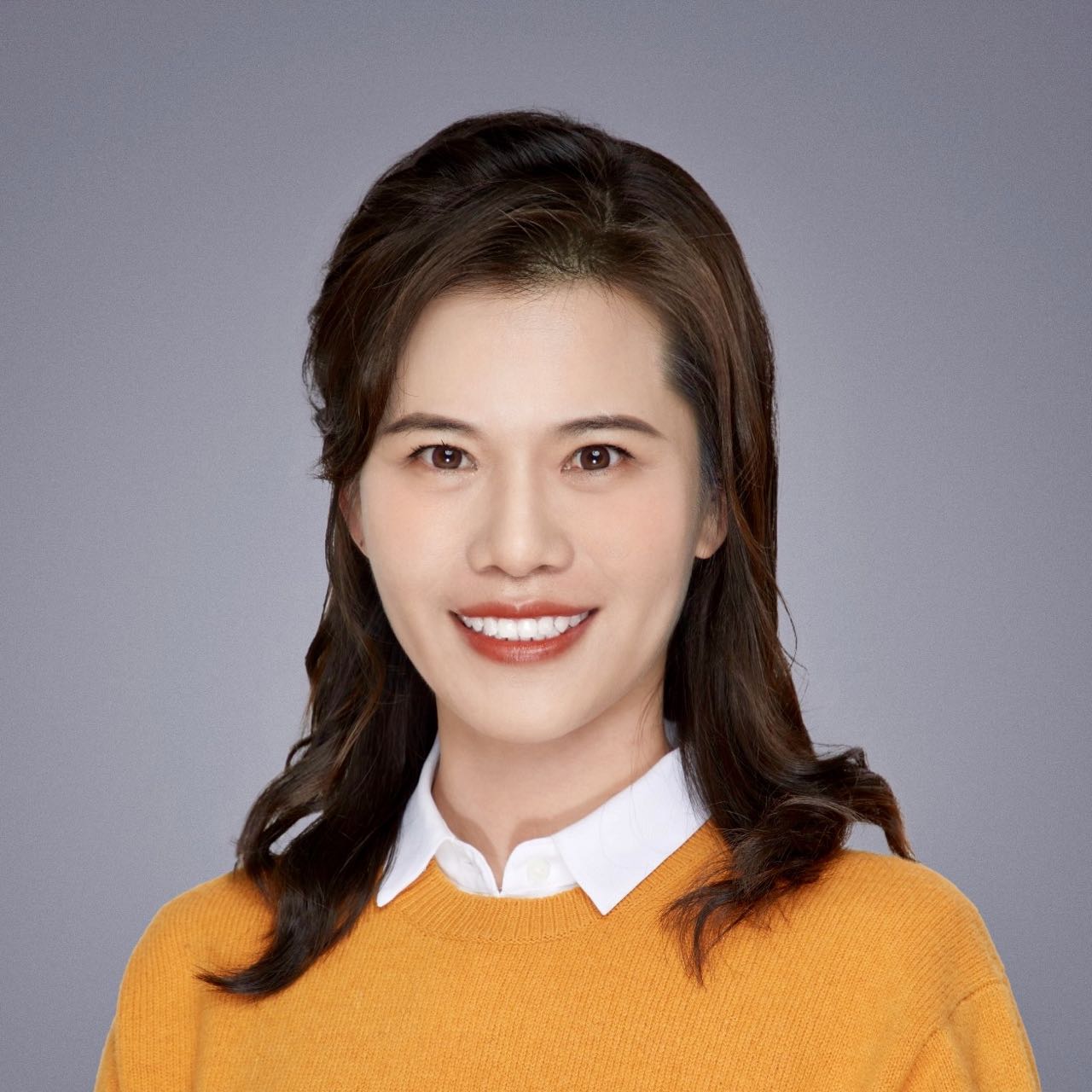
 Kaili Zhao
· 3 previous affiliations
- Meta (United States)Since 2025
- Researcher · Since 2025
- ByteDance (China)2023–2025
- Researcher · 2023–2025
- Associate Professor · 2016–2023
Research Overview
Kaili Zhao focuses on computer vision and machine learning, with a sustained emphasis on facial affective computing, object tracking, and robust representation learning. Zhao’s work has evolved from early explorations of scene classification and sensor-based gesture recognition toward sophisticated deep learning architectures for facial action unit detection and, more recently, the optimization of latent spaces for zero-shot and incremental learning. This trajectory reflects a broader shift in the field from handcrafted feature engineering and metadata-driven classification to the development of end-to-end neural frameworks that prioritize spatial specificity, label correlations, and the geometric properties of feature embeddings.
Research Trajectory
Zhao’s early research, beginning around 2012, addressed fundamental classification problems using diverse data sources. Initial work involved scene classification leveraging camera metadata, followed by contributions to hand gesture recognition using accelerometer data. In the latter, Zhao participated in developing training-free approaches that utilized the physical properties of acceleration direction to define gesture generation spaces, bypassing the need for large-scale annotated datasets.
By 2015, Zhao’s focus shifted significantly toward Modeling the Temporal Evolution of Facial Expressions. This period was characterized by a concentrated effort to improve the detection of Facial Action Units (AUs) within the Facial Action Coding System (FACS). Recognizing that AUs are often sparse and highly correlated, Zhao developed methods to move beyond simple one-vs-all classification. This involved the introduction of joint patch and multi-label learning (JPML) frameworks, which utilized group sparsity to identify relevant facial regions while simultaneously modeling the statistical dependencies between different AUs.
In 2016, Zhao advanced this line of inquiry by integrating deep learning more deeply into the AU detection pipeline. This led to the development of Deep Region and Multi-label Learning (DRML), which introduced specialized architectural components such as region layers. These layers are conceptually related to Locally Connected Layers for Position-Dependent Features, as they allow the network to learn weights that are specific to certain facial regions rather than assuming the translation invariance typical of standard convolutional layers. This architectural choice was driven by the observation that facial expressions are inherently tied to specific anatomical locations.
During the same period, Zhao expanded into the domain of multi-object tracking. As a senior researcher, Zhao oversaw the development of network flow models that integrated spatial structural configurations with appearance constraints. This work sought to address common tracking failures caused by occlusions and environmental clutter by enforcing temporal smoothness and appearance consistency across frames. This interest in tracking persisted into 2019, with contributions to objectness transfer networks and enhanced initialization strategies for tracking-by-detection systems.
Between 2018 and 2020, Zhao’s work addressed the challenges of data scarcity and occlusion in visual recognition. This included developing weakly supervised clustering algorithms to leverage large-scale, noisily-labeled web images for AU training, as well as designing refinement networks for detecting pedestrians in heavily occluded scenes. These projects emphasized the need for models that can adapt to imperfect data and complex spatial configurations.
Current Directions
Zhao’s most recent work, appearing around 2022, moves toward the theoretical and structural aspects of deep feature spaces. This research addresses the limitations of standard supervised learning, particularly in "open-world" scenarios where models must handle categories not seen during training.
A primary current focus is the optimization of representation learning through alignment and uniformity. Zhao has contributed to frameworks that ensure visual-semantic features are not only aligned with their corresponding labels but also distributed uniformly across the feature manifold. This approach is intended to preserve maximal information and improve the generalizability of models in zero-shot video classification tasks.
Furthermore, Zhao’s recent thematic interests include Latent Space Reservation for Incremental Learning. This research direction addresses the "greedy" nature of standard loss functions, which tend to occupy the entire available embedding space for known classes, leaving no room for future learning. By reserving portions of the latent space, Zhao explores ways to mitigate catastrophic forgetting and facilitate the integration of new information. This is closely linked to Enforcing Intra-class Compactness in Deep Feature Spaces, where the goal is to ensure that representations of the same class are tightly clustered, thereby improving the model's ability to distinguish between known and unknown categories. Additionally, Zhao’s work touches upon Semantic Interpolation for Modeling Unknown Categories, a method for synthesizing representations of novel classes by interpolating between the semantic attributes of known ones.
Representative Work
Joint patch and multi-label learning for facial action unit detection In this 2015 work, Zhao addresses the limitations of independent AU classifiers by proposing the JPML framework. The method leverages group sparsity to select a subset of facial patches that are most informative for specific AUs. By modeling the problem as a multi-label learning task, the framework captures the inherent correlations between different facial muscle movements, improving detection accuracy over traditional one-vs-all approaches.
Deep Region and Multi-label Learning for Facial Action Unit Detection Building on the concepts of patch-based learning, this 2016 paper introduces a unified deep network (DRML) for AU detection. The core innovation is a novel region layer that induces the network to focus on specific facial regions. Unlike standard convolutional layers that share weights across the entire image, the region layer allows for position-dependent feature extraction, which is more suited to the localized nature of facial expressions. The network simultaneously optimizes for region-specific features and multi-label AU correlations.
Structure and appearance preserving network flow for multi-object tracking Serving as the senior author, Zhao presents a min-cost flow formulation for multi-object tracking (SAPNF). The approach addresses the problem of tracking through occlusions by introducing a unified framework that preserves both the spatial structure of object groups and the appearance smoothness of individual targets. By combining these two constraints, the model achieves more robust data association in complex scenes compared to methods that rely on appearance or motion in isolation.
Learning Facial Action Units From Web Images With Scalable Weakly Supervised Clustering This 2018 paper tackles the problem of the high cost of AU annotation. Zhao proposes a weakly supervised spectral clustering algorithm that can learn from web images with noisy or inaccurate labels. The method learns an embedding space that couples image appearance with available semantic metadata. A stochastic extension allows the algorithm to scale to large datasets, while rank-order clustering is used to refine labels, providing a more efficient path to training robust AU detectors without exhaustive manual supervision.
Progressive Refinement Network for Occluded Pedestrian Detection In this 2020 study, Zhao contributes to the development of PRNet, a single-stage detector designed for environments where pedestrians are frequently obscured. The network mimics the human annotation process by first identifying high-confidence visible parts, then calibrating these anchors to a full-body template based on occlusion statistics, and finally refining the full-body region. This progressive approach reduces the performance gap between visible-part detection and full-body localization.
Alignment-Uniformity aware Representation Learning for Zero-shot Video Classification This 2022 work focuses on the generalizability of video classification models to unseen categories. Zhao and colleagues propose an end-to-end framework that utilizes a supervised contrastive loss to balance two properties: alignment (ensuring visual features match their semantic counterparts) and uniformity (ensuring features are distributed to maintain maximal information). This dual-objective approach prevents the model from overfitting to the specific visual-semantic mappings of seen classes, thereby enhancing its performance on novel video categories.
Profile updated
Loading new papers…
Other researchers whose papers cluster into the same research directions — a proxy for overlapping technical interests and shared intellectual neighborhoods.
See something wrong? Report a mistake