

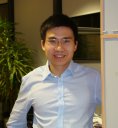
 Kaifu Zhang
· 2 previous affiliations
- Alibaba Group (China)Since 2017
- vice president · Since 2017
- Carnegie Mellon University2014–2017
- Assistant Professor · 2014–2017
Research Overview
Kaifu Zhang focuses on multimodal large language models, preference alignment, and efficient reasoning architectures. His early work explored consumer behavior before transitioning to foundational machine learning, where he has developed techniques for mitigating hallucinations and aligning text-to-image generation. His current research investigates unified autoregressive frameworks and state-transition models for complex visual and linguistic reasoning.
Research Trajectory
Zhang’s early academic work examined quantitative consumer behavior and brand perception, as seen in Breaking Free of a Stereotype: Should a Domestic Brand Pretend to Be a Foreign One?. His focus subsequently shifted toward foundational machine learning, specifically the optimization, alignment, and multimodal expansion of large language models (LLMs).
By 2024, his research centered on improving the robustness and architectural efficiency of LLMs. He contributed to the development of TP-LLaMA in Advancing Tool-Augmented Large Language Models: Integrating Insights from Errors in Inference Trees, a framework that utilizes direct preference optimization on step-wise failure data to enhance agent navigation in complex tool environments. He also directed research on distilling nuanced linguistic styles into smaller, production-ready models, introducing a producer-judge pipeline in PMMT: Preference Alignment in Multilingual Machine Translation via LLM Distillation. Expanding into vision-language integration, he collaborated on Wings: Learning Multimodal LLMs without Text-only Forgetting. This architecture addresses parameter interference by adding parallel modality learners to preserve text performance, advancing the research direction of Modular Multimodal Augmentation of Frozen Language Models and related work in the area of Token Level Routing for Specialized Model Experts.
In 2025, Zhang led several projects focused on model reliability and preference alignment across both text and image modalities. To address factual inaccuracies, his lab developed Multi-Model Contrastive Decoding (MCD) in Alleviating Hallucinations in Large Language Models through Multi-Model Contrastive Decoding and Dynamic Hallucination Detection, which contrasts a base model against specialized truthful and deceptive variants to boost factual accuracy. He also extended preference optimization to diffusion models. He oversaw the introduction of a safeguarded update rule in Diffusion-SDPO: Safeguarded Direct Preference Optimization for Diffusion Models to stabilize training, and unified training-time alignment with test-time sampling in CHATS: Combining Human-Aligned Optimization and Test-Time Sampling for Text-to-Image Generation, contributing to the broader area of Compositional Attribute Binding in Text to Image Diffusion.
Concurrently, Zhang participated in efforts to stabilize self-play fine-tuning using noise contrastive estimation, detailed in SPACE: Noise Contrastive Estimation Stabilizes Self-Play Fine-Tuning for Large Language Models. His work on structured reasoning expanded to visual domains; he collaborated on the TURBO framework in Multimodal Tabular Reasoning with Privileged Structured Information, which intersects with the research direction of Data Efficient Reasoning through Structured Thought Processes. He also contributed to the development of the Ovis2.5 family of multimodal models, which integrate native-resolution vision processing and self-correction mechanisms, as outlined in the Ovis2.5 Technical Report. This work furthered the direction of The Visual Resolution Bottleneck in Multimodal Models. Investigating the security implications of these advanced reasoning capabilities, he led the discovery of the Visualization-of-Thought Attack (VoTA) in Towards Visualization-of-Thought Jailbreak Attack against Large Visual Language Models, demonstrating how logical reasoning chains can be exploited to bypass safety filters.
Moving into 2026, Zhang's research has increasingly emphasized architectural efficiency and unified multimodal generation. He co-authored A State-Transition Framework for Efficient LLM Reasoning, which replaces standard quadratic attention with a mixed attention module to model reasoning as a sequence of state updates, accelerating long-context tasks and advancing the area of Offloading Parametric Memorization to External Memory. In the domain of document understanding, he participated in the design of a compact, end-to-end neural network in OvisOCR: End-to-End Document Parsing via Aligning Specialized Perception with General Reasoning. His collaborative work on complex visual generation includes iTryOn: Mastering Interactive Video Virtual Try-On with Spatial-Semantic Guidance, which handles active human-garment interactions. Finally, he contributed to ORION: Decoupling and Alignment for Unified Autoregressive Understanding and Generation, a monolithic autoregressive framework that resolves the conflict between high-level semantic understanding and low-level structural generation.
Current Directions
The most recent papers in the evidence indicate a focus on unified multimodal architectures and efficient reasoning frameworks. Recent work investigates monolithic autoregressive models capable of handling both high-level semantic understanding and low-level structural generation without relying on task-specific modules. Additionally, Zhang is exploring state-transition frameworks that utilize mixed attention mechanisms to accelerate long-context reasoning, as well as end-to-end perception systems for complex, physics-driven visual tasks such as interactive video generation and high-resolution document parsing.
Profile updated
Loading new papers…
Other researchers whose papers cluster into the same research directions — a proxy for overlapping technical interests and shared intellectual neighborhoods.
See something wrong? Report a mistake