

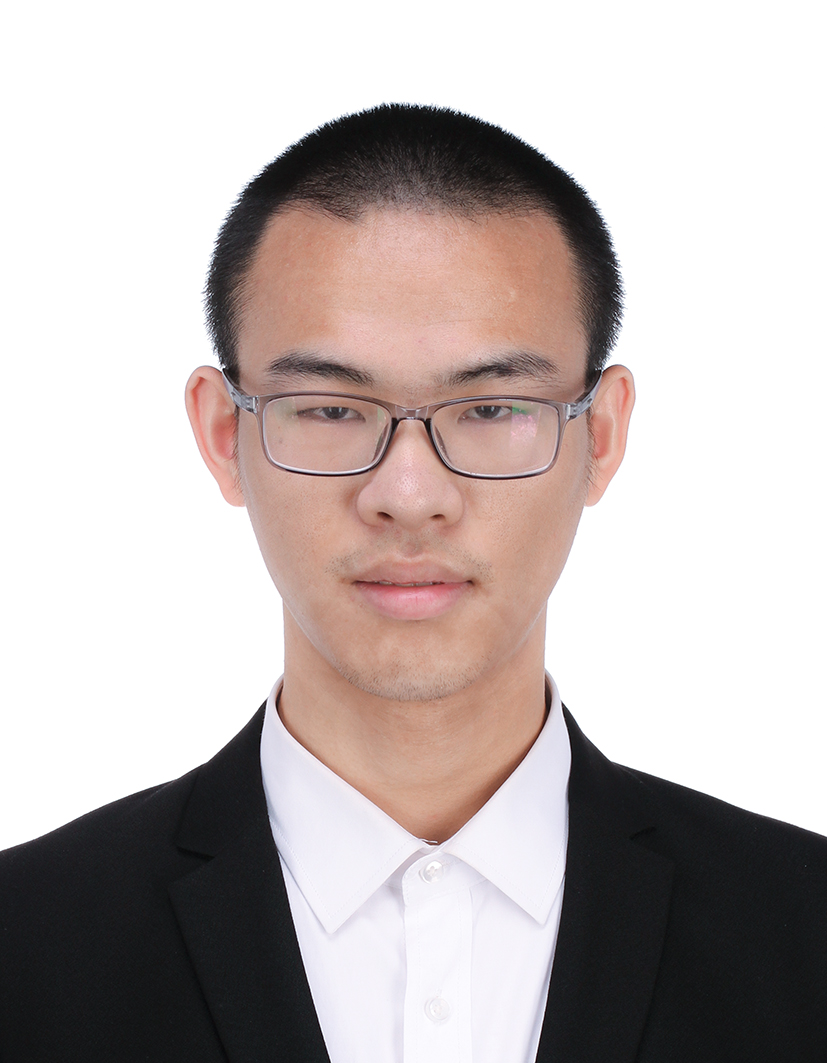
 Kaichao You
· 1 previous affiliation
- Tsinghua UniversitySince 2016
- PhD student · Since 2020
- Undergrad student · 2016–2020
Research Overview
Kaichao You focuses on transfer learning, domain adaptation, and the efficient evaluation of pre-trained models. His early work addressed the challenges of distribution shifts and partial label spaces in unsupervised domain adaptation. More recently, his research has expanded into optimizing memory management and computational efficiency for large-scale model training and deployment.
Research Trajectory
His early research centered on the complexities of domain adaptation, particularly in scenarios where the label spaces of the source and target domains do not perfectly align. In 2019, he explored partial domain adaptation with collaborators in Learning to Transfer Examples for Partial Domain Adaptation, addressing the challenge of transferring knowledge from a large labeled dataset to a smaller unlabeled domain where target labels are only a subset of the source labels. He subsequently expanded this focus to environments lacking prior knowledge about label set relationships, introducing Universal Domain Adaptation to handle scenarios containing both common and private label sets. To address the critical challenge of evaluating these models without target domain labels, he developed Deep Embedded Validation (DEV) in Towards Accurate Model Selection in Deep Unsupervised Domain Adaptation. By applying control variates in the learned feature space, this method provides stable, unbiased performance estimates, contributing to the research direction of Target Risk Estimation for Unsupervised Domain Adaptation and the broader area of Latent Space Monitoring for Distribution Shift Detection.
Moving into 2020, his focus broadened to the mechanics of transfer learning and network fine-tuning. Recognizing that standard fine-tuning often discards valuable task-specific layers from pre-trained models, he proposed a two-step framework in Co-Tuning for Transfer Learning to fully transfer pre-trained representations. Concurrently, he investigated architectural regularization during fine-tuning on small datasets. In Stochastic Normalization, he introduced StochNorm, a pluggable replacement for Batch Normalization that stochastically switches between mini-batch and pre-trained moving statistics. This work advanced the research areas of Stabilizing Feature Distributions via Normalization Anchoring and Regularizing Deep Networks with Stochastic Normalization Noise.
In 2021 and 2022, a major theme of his research became the efficient assessment and utilization of the growing ecosystem of pre-trained models. He developed the Logarithm of Maximum Evidence (LogME) metric in LogME: Practical Assessment of Pre-trained Models for Transfer Learning. Using a Bayesian approach, LogME predicts model performance on new tasks without the computational expense of fine-tuning, significantly accelerating model selection and contributing to the research direction of Predicting Model Transferability through Feature Evolution Dynamics. Building on this paradigm, he introduced B-Tuning in Ranking and Tuning Pre-trained Models: A New Paradigm for Exploiting Model Hubs, a framework that ranks heterogeneous pre-trained models based on transferability before tuning the top candidates for a target task. During this period, he also collaborated on infrastructure for decision-making algorithms, contributing to Tianshou: A Highly Modularized Deep Reinforcement Learning Library, which provides a flexible PyTorch-based foundation for online and offline algorithms in the area of Composable Primitives for Reinforcement Learning.
Returning to the challenges of distribution shifts in 2023, he collaborated on From Big to Small: Adaptive Learning to Partial-Set Domains, further refining techniques for adapting large-scale pre-trained models to small-scale domains with non-identical class spaces.
As models grew in scale, his trajectory shifted toward the systems and efficiency challenges of deploying deep learning architectures. In 2024, he introduced "Tune mode" in Efficient ConvBN Blocks for Transfer Learning and Beyond. By mathematically fusing Convolution and BatchNorm layers on-the-fly during training, this approach bridges the gap between training stability and deployment efficiency, substantially reducing GPU memory usage and training time.
Current Directions
The most recent work in the evidence indicates a strong focus on computational efficiency and memory management for large-scale machine learning systems. Building on prior research into reducing GPU memory footprints during training, current efforts address the systems-level challenges of deploying large language models (LLMs). Specifically, recent research investigates effective memory management strategies to handle hardware and workload heterogeneity in LLM serving environments, as demonstrated by the development of the Jenga system in Jenga: Effective Memory Management for Serving LLM with Heterogeneity.
Profile updated
Loading new papers…
Other researchers whose papers cluster into the same research directions — a proxy for overlapping technical interests and shared intellectual neighborhoods.
See something wrong? Report a mistake