

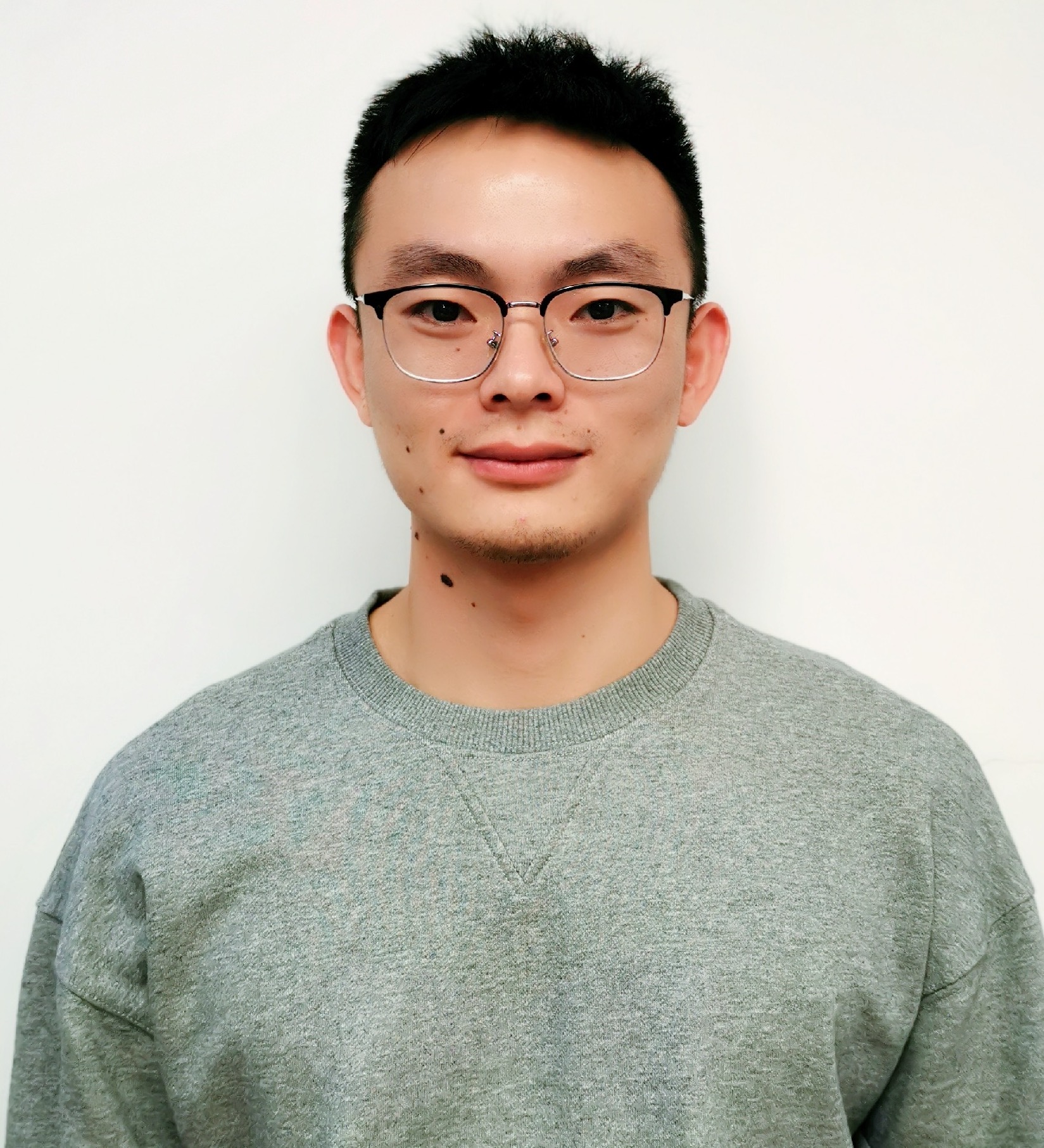
 Kai Yu
· 6 previous affiliations
- University of MinnesotaCurrent
- Current
- Postdoc · 2025–2026
- University of Pennsylvania2024–2025
- Postdoc · 2024–2025
- Researcher · 2022–2024
- Zhejiang University2020–2022
- Researcher · 2020–2022
- Soochow University2014–2020
- PhD student · 2014–2020
- Zhejiang Sci-Tech University2010–2014
- Undergrad student · 2010–2014
6 other authors named Kai Yu: Kai Yu (Shanghai Jiao Tong University · 471 papers), Kai Yu (Beijing Institute of Technology · 23 papers), Kai Yu (Mayun University · 4 papers), Kai Yu (Alibaba Group (China) · 3 papers), Kai Yu (1 paper), and 1 more
Research Overview
Kai Yu focuses on medical image analysis, computer vision, and distributed machine learning. Early collaborative work addressed the segmentation of tumors in positron emission tomography using blind source separation techniques. More recently, this research has shifted toward deep learning architectures for retinal imaging and the development of reliable frameworks for federated learning.
Research Trajectory
The available evidence for Kai Yu's research is relatively sparse, comprising a select number of publications between 2017 and 2023. However, this corpus outlines a clear temporal evolution that begins with classical algorithmic approaches to medical image segmentation and progresses toward complex deep learning architectures.
In 2017, Yu participated as a middle author in collaborative research on tumor delineation. This work involved the development of a Single-Channel Sparse Non-Negative Blind Source Separation Method for Automatic 3-D Delineation of Lung Tumor in PET Images. The study approached the challenge of isolating tumor tissues from surrounding anatomical structures by converting three-dimensional positron emission tomography (PET) scans into pseudo-multichannel images. The team subsequently applied a regularization-free, sparseness-constrained non-negative matrix factorization technique to separate the tumor components based on minimal complexity criteria.
By 2022, Yu’s focus within medical imaging had transitioned toward ophthalmology and the application of modern neural network architectures, taking a more prominent role as a second author. A key contribution during this period was Tiny-Lesion Segmentation in OCT via Multi-scale Wavelet Enhanced Transformer. This research addressed the specific difficulties of segmenting retinal lesions in optical coherence tomography (OCT) images, a task frequently complicated by severe regional scale imbalances between different lesion types. To mitigate the network's tendency to overlook smaller targets during training, the proposed model integrated multi-scale wavelet enhancements with a transformer network, aiming to improve the detection and precise segmentation of tiny pathological features.
Current Directions
The most recent papers in the evidence indicate a shift toward distributed machine learning, specifically addressing the reliability and robustness of federated learning systems. Recent work investigates the challenges introduced by non-IID (independent and identically distributed) data across different clients or acquisition devices, which can cause domain feature shifts and substantially degrade model performance.
In 2023, Yu co-authored TrFedDis: Trusted Federated Disentangling Network for Non-IID Domain Feature, proposing a decentralized framework designed to handle these domain feature discrepancies. A central theme of this current direction is the integration of reliability metrics—such as confidence and uncertainty estimation—into federated learning. This focus ensures that decentralized models can be safely and predictably deployed in safety-critical applications where the reliability of a prediction is as important as its raw accuracy.
Profile updated
Loading new papers…
Loading research neighbors…
See something wrong? Report a mistake