

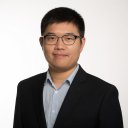
 Kai Shu
· 1 previous affiliation
- Emory UniversitySince 2024
- Assistant Professor · Since 2024
1 other author named Kai Shu: Kai Shu (6 papers)
Research Overview
Kai Shu focuses on data mining, social computing, and applied machine learning, with a particular emphasis on mitigating disinformation and ensuring the trustworthiness of artificial intelligence. His early research established foundational frameworks for fake news detection by integrating social context and explainability into computational models. Currently, his work investigates the safety, factuality, and reliability of large foundation models across complex domains such as healthcare, finance, and global governance.
Research Trajectory
Shu’s early trajectory is defined by foundational contributions to the research direction of Detecting Misinformation Beyond Stylistic Mimicry. In 2017, he introduced Fake News Detection on Social Media: A Data Mining Perspective, outlining the unique characteristics and challenges of identifying intentionally false information online. Recognizing that content alone is often insufficient for robust detection, his subsequent research incorporated auxiliary signals. With Beyond News Contents: The Role of Social Context for Fake News Detection (2019), he demonstrated how the social context of news dissemination can significantly improve detection accuracy. This approach was expanded to address model interpretability in dEFEND: Explainable Fake News Detection (2019), which utilized a sentence-comment co-attention network to highlight check-worthy sentences and user comments. To support the broader research community, he developed FakeNewsNet: A Data Repository with News Content, Social Context, and Spatiotemporal Information for Studying Fake News on Social Media (2020), providing a comprehensive dataset for computational analysis. Transitioning from detection to understanding user susceptibility, he collaborated on Causal Understanding of Fake News Dissemination on Social Media (2021), which applied causal inference to identify confounders in sharing behavior, contributing to the broader area of The Geometric Signature of Misinformation Spread.
Expanding his focus on robust data mining, Shu led the development of PyGOD: A Python Library for Graph Outlier Detection (2024), providing a unified API to streamline anomaly detection in graph-structured data. Concurrently, his research expanded to address the emerging challenges of large language models (LLMs). He participated in a large-scale collaborative effort to establish Position: TrustLLM: Trustworthiness in Large Language Models (2024), a comprehensive framework evaluating models across truthfulness, safety, and privacy, revealing critical trade-offs between model utility and over-alignment.
By 2025, his research heavily emphasized the evaluation, factuality, and domain-specific application of foundation models. In the financial domain, his group introduced Fin-Fact: A Benchmark Dataset for Multimodal Financial Fact-Checking and Explanation Generation (2025). In global governance, he guided Benchmarking LLMs for Political Science: A United Nations Perspective (2025), assessing models on complex diplomatic discourse and decision-making. In healthcare, he co-authored Beyond MedQA: Towards Real-world Clinical Decision Making in the Era of LLMs (2025), arguing for evaluation paradigms that move beyond simplified multiple-choice tests toward realistic clinical reasoning.
His 2025 work also addressed fundamental challenges in natural language understanding and recommendation systems. With Understanding and Tackling Label Errors in Individual-Level Nature Language Understanding (2025), he proposed new annotation guidelines to account for individual subjective perspectives, reducing label errors in tasks like stance detection. In recommendation systems, he developed Taxonomy-Guided Zero-Shot Recommendations with LLMs (2025), a framework to constrain and improve LLM generation using category information.
A major theme in his recent trajectory involves modifying and evaluating LLMs post-training. He investigated the efficacy of surgical model updates in Can Knowledge Editing Really Correct Hallucinations? (2025), introducing the HalluEditBench benchmark to demonstrate that current editing techniques struggle with generalization and reasoning. He extended this localized update approach to user preferences in Towards Effective Model Editing for LLM Personalization (2025), mitigating catastrophic forgetting and high computational costs. Additionally, he contributed to the growing area of Evaluating Generative AI with Large Language Models by co-authoring From Generation to Judgment: Opportunities and Challenges of LLM-as-a-judge (2025), a comprehensive survey on using LLMs for automated scoring and assessment. Continuing his focus on rigorous evaluation, he participated in TrustGen: A Platform of Dynamic Benchmarking on the Trustworthiness of Generative Foundation Models (2026), a modular system designed to track the rapid evolution of generative models across multiple modalities, highlighting the narrowing gap between open-source and proprietary systems.
Current Directions
The most recent papers in the evidence indicate a strong focus on the rigorous evaluation and targeted modification of large foundation models. A primary current direction involves developing dynamic, multimodal benchmarks to assess LLM trustworthiness, factuality, and safety across complex domains such as clinical decision-making, financial fact-checking, and political science. Additionally, recent work investigates the mechanics of knowledge editing, exploring how localized parameter interventions can be used to correct hallucinations and personalize models without the computational overhead or catastrophic forgetting associated with full retraining. Finally, ongoing research addresses the methodological challenges of using LLMs as automated evaluators, seeking to improve the reliability of the "LLM-as-a-judge" paradigm in open-ended scenarios.
Profile updated
Loading new papers…
Other researchers whose papers cluster into the same research directions — a proxy for overlapping technical interests and shared intellectual neighborhoods.
See something wrong? Report a mistake