

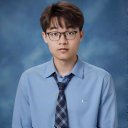
 Kai Ouyang
· 4 previous affiliations
- Tsinghua UniversityCurrent
- Current
- MS student · 2020–2023
- Efund2023–2024
- Researcher · 2023–2024
- SHOPEE2022
- Researcher · 2022
- Tencent (China)2021
- Algorithm researcher · 2021
Research Overview
Kai Ouyang focuses on recommender systems, information retrieval, and efficient deep learning architectures. The available evidence highlights a concentrated period of research in 2022, spanning session-based social recommendation models and mixed-precision network quantization. Recent work addresses the optimization of neural networks for adaptive inference alongside the development of sparse attention mechanisms for complex user interactions.
Research Trajectory
The available corpus of work for Kai Ouyang is highly concentrated, with all documented publications appearing in 2022. During this period, Ouyang's research proceeded along two primary parallel tracks: the development of advanced recommender systems and information retrieval techniques, and the optimization of deep learning models through network quantization.
In the domain of recommendation and retrieval, Ouyang led research on integrating social signals into sequential user modeling. As first author, Ouyang presented Social-aware Sparse Attention Network for Session-based Social Recommendation, which applied sparse attention mechanisms to handle the complexities of session-based social recommendation. This interest in modeling sequential user behavior and latent patterns was further explored in collaborative work. As a second author, Ouyang contributed to Modeling Latent Autocorrelation for Session-based Recommendation, addressing the internal dependencies within user interaction sessions. Additionally, Ouyang participated in information retrieval research, serving as second author on Diversify Search Results Through Graph Attentive Document Interaction, which utilized graph attentive networks to improve the diversity of search outputs.
Concurrently, Ouyang made significant contributions to the field of efficient deep learning, specifically focusing on the challenges of mixed-precision quantization (MPQ). A major hurdle in MPQ is the exponentially large discrete search space required to determine optimal layer-wise bit-widths, a process that traditionally consumes massive computational resources. As second author on Mixed-Precision Neural Network Quantization via Learned Layer-Wise Importance, Ouyang helped demonstrate that learnable scale factors within the quantizer can serve as effective layer importance indicators. This approach allows the network to naturally perceive numerical transformations during quantization-aware training, bypassing the need for exhaustive iterative search methods. Ouyang also contributed as a middle author to related work on dynamic inference, participating in the development of the Arbitrary Bit-width Network: A Joint Layer-Wise Quantization and Adaptive Inference Approach. This research proposed feeding different data samples with varying quantization schemes to accommodate inherent differences in recognition difficulty across samples.
Current Directions
Because the entirety of the provided evidence dates to 2022, Ouyang's most recent documented directions reflect the culmination of that year's output. The most recent papers in the evidence address the intersection of user behavior modeling and efficient neural architectures. Open problems in these areas include refining sparse attention mechanisms for social recommendation and advancing data-dependent dynamic inference to make mixed-precision quantization more adaptable to varying sample difficulties. Ouyang has also participated in broader machine learning applications, including task-oriented dialogue systems and clustering-based mixup techniques, suggesting an ongoing interest in improving both the efficiency and representational capacity of deep neural networks.
Profile updated
Loading new papers…
Other researchers whose papers cluster into the same research directions — a proxy for overlapping technical interests and shared intellectual neighborhoods.
See something wrong? Report a mistake