

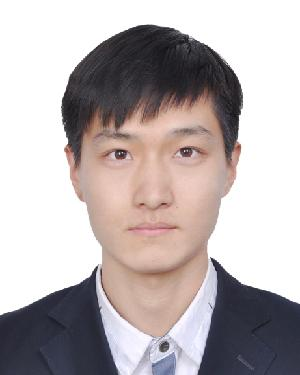
 Kai Han
· 5 previous affiliations
- TokenRhythm TechnologiesSince 2026
- Principal Researcher · Since 2026
- Huawei Technologies (China)2018–2026
- Principal Researcher · 2018–2026
- Chinese Academy of Sciences2019–2023
- PhD student · 2019–2023
- Peking University2015–2018
- MS student · 2015–2018
- Zhejiang University2011–2015
- Undergrad student · 2011–2015
3 other authors named Kai Han: Kai Han (Shanghai University of Finance and Economics · 131 papers), Kai Han (University of Hong Kong · 127 papers), Kai Han (Beijing University of Technology · 1 paper)
Research Overview
Kai Han focuses on the design of efficient neural architectures, vision transformers, and large-scale foundation models. His early work established foundational techniques for compressing convolutional networks and optimizing binary architectures for mobile deployment. More recently, he investigates parameter-efficient scaling, reasoning frameworks, and multimodal integration for large language models.
Research Trajectory
His early research addressed the computational bottlenecks of deploying deep learning models on resource-constrained devices. In 2019, he introduced an evolutionary search framework in Searching for Accurate Binary Neural Architectures, which automatically optimizes channel configurations to mitigate the precision loss typical of binary networks. Building on this theme of efficiency, he developed a novel approach to convolutional neural network (CNN) design in GhostNet: More Features From Cheap Operations. By applying inexpensive linear transformations to a set of intrinsic feature maps, this architecture generates redundant "ghost" features with minimal compute. This foundational work anchored his contributions to the research direction of Exploiting Feature Redundancy with Ghost Modules and the broader area of Linear Feature Synthesis for Efficient Neural Networks.
Transitioning into 2021, his focus expanded to knowledge distillation and the emerging paradigm of vision transformers. In Distilling Object Detectors via Decoupled Features, he presented a distillation framework that separates foreground and background features, demonstrating that background context is essential for reducing false positives in object detection. This focus on efficient knowledge transfer also aligns with his broader contributions to the research direction of Probabilistic Knowledge Transfer via Soft Labels. Concurrently, he explored architectural improvements for visual attention mechanisms. In Transformer in Transformer, he addressed the limitations of coarse patch division in standard vision transformers by modeling attention inside local patches, thereby capturing finer object details. He further bridged the gap between CNNs and transformers in CMT: Convolutional Neural Networks Meet Vision Transformers. This hybrid architecture combined the local feature extraction of CNNs with global dependency modeling, contributing to the research area of Hierarchical Feature Pyramids for Vision Transformers while maintaining high computational efficiency.
By 2023, his work synthesized these architectural insights across multiple domains. He provided a comprehensive overview of the field in A Survey on Vision Transformer. In the domain of object detection, his lab introduced a global fusion approach in Gold-YOLO: Efficient Object Detector via Gather-and-Distribute Mechanism, moving away from traditional recursive feature pyramids to achieve an optimal balance of speed and accuracy. He also directed research on self-supervised representation learning in Masked Image Modeling with Local Multi-Scale Reconstruction, which applied reconstruction tasks to multiple local layers to accelerate the learning process and improve inter-patch interactions.
In 2024, his research trajectory shifted toward the scaling and reasoning capabilities of large language models (LLMs) and multimodal systems. To address the performance plateau often seen in mobile networks, he collaborated on ParameterNet: Parameters are All You Need for Large-Scale Visual Pretraining of Mobile Networks, utilizing dynamic convolutions to increase model capacity without inflating inference costs. In the multimodal space, he participated in developing Free Video-LLM: Prompt-guided Visual Perception for Efficient Training-free Video LLMs, a training-free framework that selectively samples frames and regions based on user prompts to drastically reduce visual tokens. Concurrently, he explored test-time scaling for complex reasoning tasks in Forest-of-Thought: Scaling Test-Time Compute for Enhancing LLM Reasoning. By running multiple reasoning trees in parallel and employing dynamic self-correction with sparse activation, this framework significantly improved LLM performance on rigorous mathematical benchmarks, advancing the research area of Generalizing Model Pruning Across Diverse Neural Architectures.
His most recent work focuses on optimizing the training, architecture, and multimodal alignment of foundation models. In 2025, he introduced ROOT: Robust Orthogonalized Optimizer for Neural Network Training, an algorithm designed to stabilize LLM pre-training by overcoming the numerical instability of existing optimizers. He also addressed the memory constraints of scaling LLMs in VersatileFFN: Achieving Parameter Efficiency in LLMs via Adaptive Wide-and-Deep Reuse, proposing methods to maximize representational capacity without proportional hardware costs.
In 2026, his collaborative efforts yielded novel approaches to generative modeling and visual reasoning. He participated in the development of Beyond Masks: Efficient, Flexible Diffusion Language Models via Deletion-Insertion Processes, which replaces traditional masking in diffusion models with a deletion-insertion framework to accelerate training and inference. To improve spatial grounding in vision-language models, his team developed Circle-RoPE: Cone-like Decoupled Rotary Positional Embedding for Vision-Language Models, disentangling cross-modal positional information. Finally, he contributed to the research direction of Hierarchical Token Pruning for Efficient Transformers through PPE: Positional Preservation Embedding for Token Compression in Multimodal Large Language Models. This parameter-free operator allows compressed tokens to retain multiple original position IDs, preserving spatial and temporal structure even at extreme compression ratios.
Current Directions
The most recent papers in the evidence indicate a strong focus on the efficiency, alignment, and reasoning capabilities of large-scale foundation models. Recent work investigates novel optimization techniques for stabilizing LLM pre-training and architectural adaptations to maximize parameter efficiency without exceeding hardware memory limits. In the multimodal domain, current research addresses the structural integrity of vision-language models during token compression, ensuring that spatial and temporal information is preserved even at extreme compression ratios. Additionally, recent contributions explore alternative generative paradigms, such as replacing traditional masking with deletion-insertion processes to accelerate diffusion language models, and redesigning positional embeddings to improve cross-modal spatial grounding.
Profile updated
Loading new papers…
Other researchers whose papers cluster into the same research directions — a proxy for overlapping technical interests and shared intellectual neighborhoods.
See something wrong? Report a mistake