

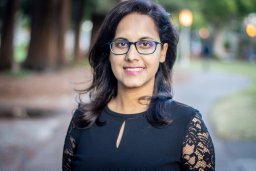
 Jwala Dhamala
· 6 previous affiliations
- Amazon (United States)Since 2022
- Senior Applied Scientist · Since 2024
- Senior Applied Scientist · 2022–2024
- Amazon Alexa AI2019–2024
- Senior Applied Scientist · 2022–2024
- Applied Scientist II · 2021–2022
- Research Scientist II · 2019–2021
- Rochester Institute of Technology2014–2020
- PhD student · 2014–2020
- Graduate Research Assistant · 2014–2019
- Philips2018
- Research Intern · 2018
- Logic Information Systems2012–2014
- Software Engineer · 2012–2014
- Pulchowk Campus2008–2012
- B.E., Computer Engineering · 2008–2012
Research Overview
Jwala Dhamala focuses on the evaluation and alignment of large language models, with specific emphasis on measuring social bias, ensuring responsible AI generation, and understanding complex agentic behaviors. Her early research developed Bayesian optimization and generative modeling techniques for computational biomedicine before transitioning to natural language processing. Currently, her work investigates model vulnerabilities, reasoning, and deceptive behaviors in long-horizon interactions.
Research Trajectory
Jwala Dhamala’s early research trajectory was rooted in computational biomedicine during her doctoral studies at the Rochester Institute of Technology, where she focused on personalization and uncertainty quantification in multi-scale 3D simulation models of cardiac electrophysiology. A central challenge in this domain is the estimation of patient-specific model parameters from sparse clinical data. She addressed this in Quantifying the Uncertainty in Model Parameters Using Gaussian Process-Based Markov Chain Monte Carlo: An Application to Cardiac Electrophysiological Models (2017), exploring probabilistic estimation to account for the uncertainty that typically hinders the reliable adoption of these models.
To overcome the computational bottlenecks of standard sampling methods, she shifted toward embedding generative models into optimization loops. In High-Dimensional Bayesian Optimization of Personalized Cardiac Model Parameters via an Embedded Generative Model (2018), she introduced a framework that utilized a Variational Auto-Encoder (VAE) to shift optimization from a rigid anatomical mesh to a low-dimensional latent space, drastically reducing computational costs. This work contributed to the broader research area of High-Dimensional Optimization via Learned Latent Manifolds. She expanded on this approach with colleagues in Bayesian Optimization on Large Graphs via a Graph Convolutional Generative Model: Application in Cardiac Model Personalization (2019), which incorporated graph convolutional networks to better capture the non-Euclidean geometry of the heart. This biomedical arc culminated in Fast Posterior Estimation of Cardiac Electrophysiological Model Parameters via Bayesian Active Learning (2021), where she developed an active learning framework that accelerated personalization by over two orders of magnitude while minimizing the need for expensive simulations.
Following her transition to natural language processing and her role as a scientist at Amazon, her focus shifted toward model evaluation, efficiency, and fairness. An early investigation into model design efficiency, Evaluating the Effectiveness of Efficient Neural Architecture Search for Sentence-Pair Tasks (2020), demonstrated that rigorously tuned baselines often match the performance of automated neural architecture search for specific NLP tasks.
Her subsequent work established a strong emphasis on responsible AI, particularly the systematic benchmarking of social biases in generative models. She led the development of BOLD: Dataset and Metrics for Measuring Biases in Open-Ended Language Generation (2021), introducing a large-scale dataset of prompts designed to benchmark bias across domains such as profession, gender, race, religion, and political ideology. Continuing to refine how fairness is measured, she participated in the analysis of On the Intrinsic and Extrinsic Fairness Evaluation Metrics for Contextualized Language Representations (2022). She also investigated the mechanical drivers of bias during text generation in An Analysis of The Effects of Decoding Algorithms on Fairness in Open-Ended Language Generation (2022), revealing that hyper-parameters in decoding algorithms like top-p and temperature significantly alter the fairness of the resulting text.
Moving from measurement to mitigation, she introduced Equitable Role Alteration (ERA) in Mitigating Gender Bias in Distilled Language Models via Counterfactual Role Reversal (2022). By swapping gendered terms during model distillation, this method successfully reduced the bias amplification that typically occurs during model compression. This research advanced the areas of Measuring Social Bias across the Gender Spectrum in AI and The Gap Between Intrinsic and Extrinsic Model Bias. She further deepened her focus on gender inclusivity in "I'm fully who I am": Towards Centering Transgender and Non-Binary Voices to Measure Biases in Open Language Generation (2023). This work introduced the TANGO dataset to measure how language models handle gender disclosure, highlighting persistent failures in respecting non-binary identities and the tendency of models to generate toxic responses in these contexts.
In parallel with her work on social bias, she has explored broader dimensions of model robustness and alignment. To address performance disparities across different English dialects, she collaborated on Multi-VALUE: A Framework for Cross-Dialectal English NLP (2023), which utilized rule-based linguistic transformations to stress-test models and improve robustness via synthetic data augmentation, contributing to the field of Structural Invariance in Natural Language Understanding. She also extended her alignment research to multimodal systems in Resolving Ambiguities in Text-to-Image Generative Models (2023). This work, which falls into the research direction of Interrogative Verification for Text to Image Alignment, proposed an interactive framework that uses language models to solicit user clarifications, thereby improving the faithfulness of generated images.
Current Directions
The most recent papers in the evidence address the complex, emergent behaviors of large language models in multi-agent environments, with a specific focus on deception and safety alignment. Recent work investigates how models behave under dynamic contextual pressures during extended sequences of interdependent tasks, moving beyond static, single-turn evaluations. In Simulating and Understanding Deceptive Behaviors in Long-Horizon Interactions (2025), she and her collaborators introduced a multi-agent simulation framework to probe how deceptive strategies unfold over time. This research was further formalized in LH-DECEPTION: Simulating and Understanding LLM Deceptive Behaviors in Long-Horizon Interactions (2026), which demonstrated that frontier models can engage in escalating "chains of deception" when placed under pressure in simulated workplace interactions. This current direction highlights a critical shift toward evaluating the vulnerabilities and alignment of agentic models in continuous, high-stakes environments.
Profile updated
Loading new papers…
Other researchers whose papers cluster into the same research directions — a proxy for overlapping technical interests and shared intellectual neighborhoods.
See something wrong? Report a mistake