

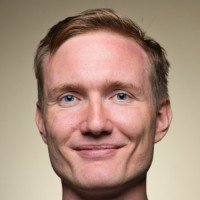
 Juraj Bodik
· 6 previous affiliations
- University of LausanneSince 2021
- PhD student · 2021–2026
- PHD Student · Since 2021
- Current
- University of California, Berkeley2024–2025
- Visiting Research Scientist · 2024–2025
- Trojsten2016–2021
- Mathematics Educator · 2016–2021
- Czech Academy of Sciences2020–2021
- Research Assistant · 2020–2021
- Charles University2016–2021
- Magistr (Mgr.), Pravděpodobnost, statistika a matematické modelování · 2019–2021
- Bakalář (Bc.), Obecná matematika · 2016–2019
- Deloitte Czech Republic2020
- Data analytik · 2020
Research Overview
Juraj Bodik focuses on mathematical statistics, causal inference, and extreme value theory. His research investigates how to identify causal relations from observational data, particularly in heavy-tailed systems and time series where extreme events occur. Recently, his work has expanded to include uncertainty quantification and counterfactual prediction, developing methods to uncover hidden mechanisms and bound individual treatment effects.
Research Trajectory
Bodik’s research initially centered on the intersection of extreme value theory and causal inference, specifically advancing the area of Causal Discovery in Extremes and Heavy Tailed Systems. In 2022, he contributed to Detecting causal covariates for extreme dependence structures, which introduced a framework combining Extreme Value Theory with Invariant Causal Prediction. This work provided a mathematical basis for distinguishing variables that merely correlate with extreme dependence from those that actually govern it, a critical distinction for predicting rare, high-impact events and a key contribution to the broader area of Causal Discovery Under Latent Confounding.
Continuing this focus on heavy-tailed phenomena, Bodik developed a non-parametric tool called the "causal tail coefficient" in Causality in extremes of time series (2023). This approach identifies asymmetric causal links that manifest primarily during extreme events, allowing researchers to detect when a jump in one variable reliably predicts a jump in another, even when nonlinearities and hidden common causes are present. He further formalized directional relationships in extreme events with Granger Causality in Extremes (2024). While traditional methods evaluate the average behavior of a system, this framework shifts the focus to the tails of distributions, where the most impactful events occur.
Alongside time series and dependence structures, Bodik applied extreme value theory to the potential outcomes framework. In Extreme Treatment Effect: Extrapolating Dose-Response Function into Extreme Treatment Domain (2024), he outlined assumptions and a consistent estimation procedure for identifying the impact of extreme treatment levels. This work provided a statistical grounding for estimating dose-response functions for treatment values that extend well beyond the range of observed data.
Beyond extremes, Bodik has made significant contributions to fundamental causal discovery by relaxing restrictive assumptions in standard models. In 2023, he introduced Conditionally Parametric Causal Models (CPCM) in Identifiability of causal graphs under nonadditive conditionally parametric causal models. This research moved beyond the traditional additive noise assumption, proving that causal directions remain mathematically identifiable when a cause influences any part of an effect's distribution—such as its variance or tail behavior—through the exponential family.
He also addressed the challenge of isolating specific causal mechanisms without needing to reconstruct entire causal graphs. In Structural restrictions in local causal discovery: identifying direct causes of a target variable (2025), he and his collaborators developed a framework that relaxes common structural assumptions to more efficiently and robustly pinpoint the direct causes of a specific target variable from observational data.
Current Directions
The most recent papers in the evidence indicate a strong focus on uncertainty quantification and the estimation of individual treatment effects, particularly through the lens of conformal prediction and counterfactual reasoning.
A major focus of this recent work is the area of Distribution-Free Uncertainty Quantification with Conformal Prediction. In Cross-World Assumption and Refining Prediction Intervals for Individual Treatment Effects (2025), Bodik introduced the "cross-world assumption" to bound the correlation between hypothetical treated and untreated outcomes. This assumption allows for the construction of prediction intervals that are significantly narrower than existing methods while maintaining rigorous statistical guarantees. He expanded on this approach in Retrospective Counterfactual Prediction by Conditioning on the Factual Outcome: A Cross-World Approach (2026), which leverages an individual's actual observed outcome to explicitly model the cross-world correlation, resulting in more accurate counterfactual predictions.
Additionally, his recent research addresses the research direction of Bridging the Conditional Coverage Gap in Conformal Prediction. With collaborators, he developed a novel calibration framework in CLEAR: Calibrated Learning for Epistemic and Aleatoric Risk (2026). This method adaptively weights data noise and model ignorance using distinct calibration parameters, producing more reliable prediction intervals and improving performance in extrapolation regions compared to standard conformal methods.
Profile updated
Loading new papers…
Other researchers whose papers cluster into the same research directions — a proxy for overlapping technical interests and shared intellectual neighborhoods.
See something wrong? Report a mistake